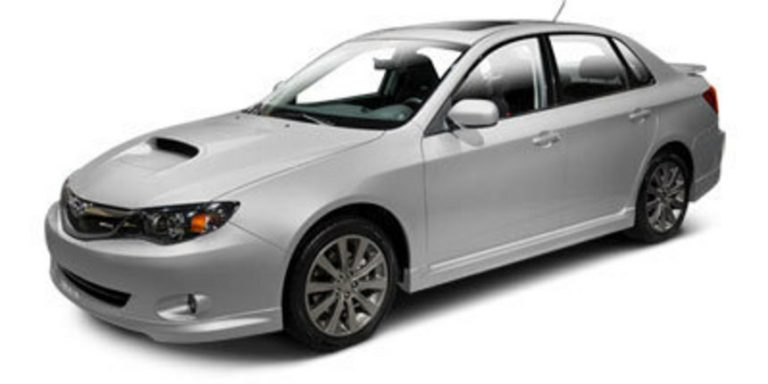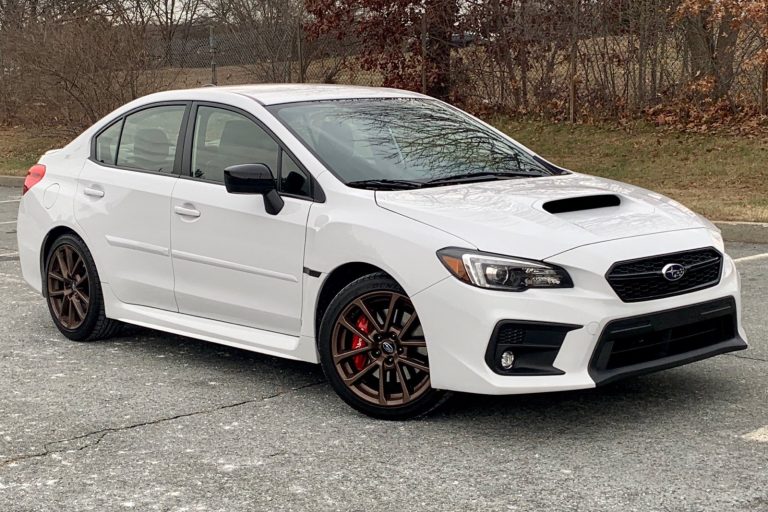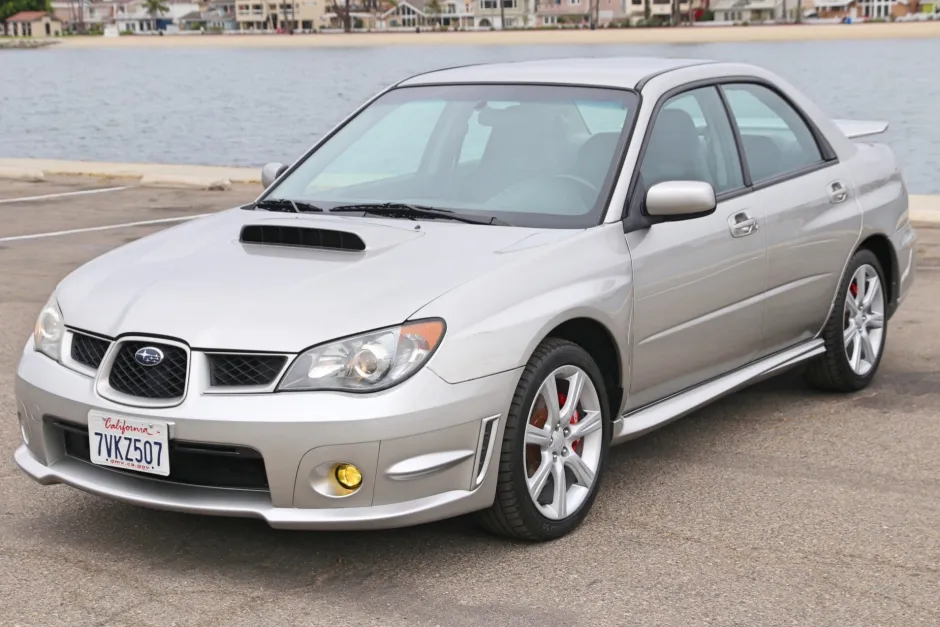
How the Subaru WRX gen 1 2002–2007 Transmission Actually Fails
Overview
This generation WRX drivetrain? Simple on paper. Not simple in real life.
You’ve got a longitudinal AWD layout, manual or automatic tranny bolted to a front diff, then a center system trying to keep all four wheels happy. Sounds rugged. And it is… until people start driving them like rally cars on stock parts.
I’ve seen dozens of these come through the shop. Same story over and over. Some last forever. Some grenade early. The difference usually isn’t design—it’s how they’re driven and maintained.
Two main setups:
- WRX with the 5MT or 4EAT
- STI with the 6MT and DCCD system
And just so it’s clear right out of the gate—the WRX and STI drivetrains are not even close in durability or cost when things go sideways.
Which Transmissions It Uses
WRX (Non-STI)
| Transmission Code | Type | Gears | Drive Layout | Engine Pairing | Years |
|---|---|---|---|---|---|
| 5MT | Manual | 5 | Full-time AWD (viscous center differential) | EJ205 / EJ255 | 2002–2007 |
| 4EAT | Automatic | 4 | AWD (electronically controlled center differential / VTD) | EJ205 / EJ255 | 2002–2006 |
WRX STI
| Transmission Code | Type | Gears | Drive Layout | Engine Pairing | Years |
|---|---|---|---|---|---|
| 6MT | Manual | 6 | AWD (DCCD with mechanical center differential) | EJ257 | 2004–2007 |
That’s it. No hidden options. No secret variants. If someone tells you otherwise, they’re guessing.
Main Failure Patterns
WRX 5MT — The Weak Link
Let’s not sugarcoat it. The 5MT is the problem child.
Stock power? Fine. Add boost, launch it a few times, or just drive it hard… things start going south.
- Transfer shaft bearing noise
This one is straight out of Subaru bulletins (03-68-12R, 03-70-12R). You’ll hear a high-pitched whine from the back of the tranny. Sounds like a supercharger almost. It’s not. It’s bearings eating themselves because preload and heat don’t play nice. - Reverse gear pop-out
TSB-backed issue. Excessive play inside the gear set. You put it in reverse, let off the clutch… and it kicks out. Annoying at first. Then it gets worse. - Cold clutch shudder
Early cars (2002–2003) had this bad. TSB 03-51-02R covers it. The whole drivetrain chatters on takeoff like it’s confused. Not just annoying—it beats up everything downstream. - Synchros getting chewed up
Service Bay Benchmark: I’ve torn these down with brass everywhere. 2nd and 3rd gear usually. People rush shifts or run heavier power, and the synchros just can’t keep up.
I’ve seen these trannies last 150,000+ miles (240,000 km). I’ve also seen them lunch gears under 60,000 miles (96,000 km). Same design. Different drivers.
WRX 4EAT — Old, Tough, Still Weird
This thing is basically a tank. Old-school automatic. Not exciting, but it survives.
Still has its quirks.
- Harsh AWD engagement
TSB 16-66-02. Customer says “it bangs when I take off in snow.” Yeah. It does. The transfer clutch grabs too aggressively because of TCU logic. Subaru’s fix? Updated control strategy. - Parking pawl recall (02V282000)
This one matters. Car goes into Park… but not really. Pawl doesn’t engage properly. Car can roll. Subaru fixed it with revised parts. If it hasn’t been done—walk away or verify it. - Case leaks at the stud area
You’ll see fluid weeping from the case. Not catastrophic. But ignore it long enough and you’ll be low on fluid, and that’s when the problems start stacking up.
These units don’t usually explode. They just get sloppy, dirty, and eventually tired.
STI 6MT — Strong, Expensive, No Mercy on Your Wallet
Completely different animal.
The STI 6MT is what the WRX should have had from the start. Beefy gears, better internals, smarter AWD system. You can beat on it… and it usually takes it.
- DCCD center diff wear
Field Observation: If the driver plays with DCCD settings like it’s a video game, or ignores fluid service, the center diff starts wearing out. Then things get weird—binding, uneven torque split, noise. - Differential wear
Service Bay Benchmark: The front helical and rear LSD units are solid, but they hate neglected fluid. Dirty oil = metal shavings = expensive rebuild. - AWD bind from tire mismatch
Industry Estimate: This is a classic Subaru killer. Slight tire size differences, even a few mm, and the system starts fighting itself. I’ve seen center diffs wiped out from this alone.
Failure rate is low. Repair bill is not.

Typical Repair Costs
| Component / Failure | Typical Cost (USD) | Notes |
|---|---|---|
| WRX 5MT rebuild | $2,500 – $4,500 | Depends how bad it grenaded |
| WRX 5MT replacement (used) | $1,500 – $3,000 | Rolling the dice on condition |
| WRX 4EAT rebuild | $2,000 – $3,500 | Usually high mileage units |
| TCU / AWD engagement fix | $400 – $1,200 | Electrical + control side repair |
| STI 6MT rebuild | $4,000 – $7,000+ | Specialist job, not DIY friendly |
| STI differential rebuild | $1,500 – $3,000 | Each diff, not both |
| Clutch replacement | $900 – $1,800 | Higher if flywheel is shot |
Best and Worst Years
| Year Range | Transmission Risk | Notes |
|---|---|---|
| 2002–2003 | High | Clutch issues, early 5MT weaknesses, recall exposure |
| 2004–2005 | Medium | Same bones, slightly better execution |
| 2006–2007 | Medium-Low | Improved synchro design, still not bulletproof |
| 2004–2007 STI | Low (High Cost Risk) | Strong but expensive when things break |
Warning Signs & Early Detection
- High-pitched whining from the rear of the tranny
- Grinding going into gear—especially 2nd or 3rd
- Shifter kicks out of gear under load
- Cold start clutch chatter
- Harsh AWD engagement at low speeds
- Fluid leaks around the case or axle seals
- Binding feeling in tight turns
If you catch these early, you’re fixing parts. If you ignore them, you’re replacing assemblies.
When to Walk Away
- Pops out of gear repeatedly
- Whining that gets louder with speed
- Mismatched tires on an AWD car (huge red flag)
- No paperwork on transmission work
- Multiple clutch jobs back-to-back
- STI with zero diff service history
You can tell a lot about the owner by the drivetrain alone. Seriously.
Ownership Reality
| Category | OEM Guidance | Real-World Outcome | Consequence |
|---|---|---|---|
| Transmission fluid | Standard service intervals | Service Bay Benchmark: Needs more frequent changes under AWD load | Bearing wear, synchro damage |
| Clutch lifespan | Normal wear component | Field Observation: Short life with turbo torque and aggressive driving | Frequent replacements |
| AWD system | No special attention | Industry Estimate: Extremely sensitive to tire differences | Center diff damage |
| 4EAT behavior | Adaptive operation | Service Bay Benchmark: Needs updated TCU logic to behave properly | Harsh engagement issues |
| STI drivetrain | Performance-focused | Field Observation: Expensive to maintain correctly | High repair costs |
Lawsuits, Complaints & Regulatory History
The big one here:
- NHTSA Recall 02V282000 (WWK-94)
2002–2003 models with 4EAT.
Parking pawl doesn’t engage properly.
Car can roll away.
Fix is straightforward—updated components.
Always verify by VIN. No exceptions.
Beyond that, no major lawsuits tied directly to these transmissions. But complaints? Plenty.
- Manual gear engagement issues
- Clutch vibration complaints
- Bearing noise reports
All of it lines up with what we see in the shop.
Bottom Line
This drivetrain isn’t bad. It’s just unforgiving.
The 5MT is the weak point. Push it hard, it breaks. The 4EAT is tougher but dated. The STI 6MT is solid… until you get the bill.
Maintain it properly, match your tires, change your fluids, don’t abuse it—it’ll last.
Ignore that? You’re looking at a very expensive lesson in AWD mechanics.