
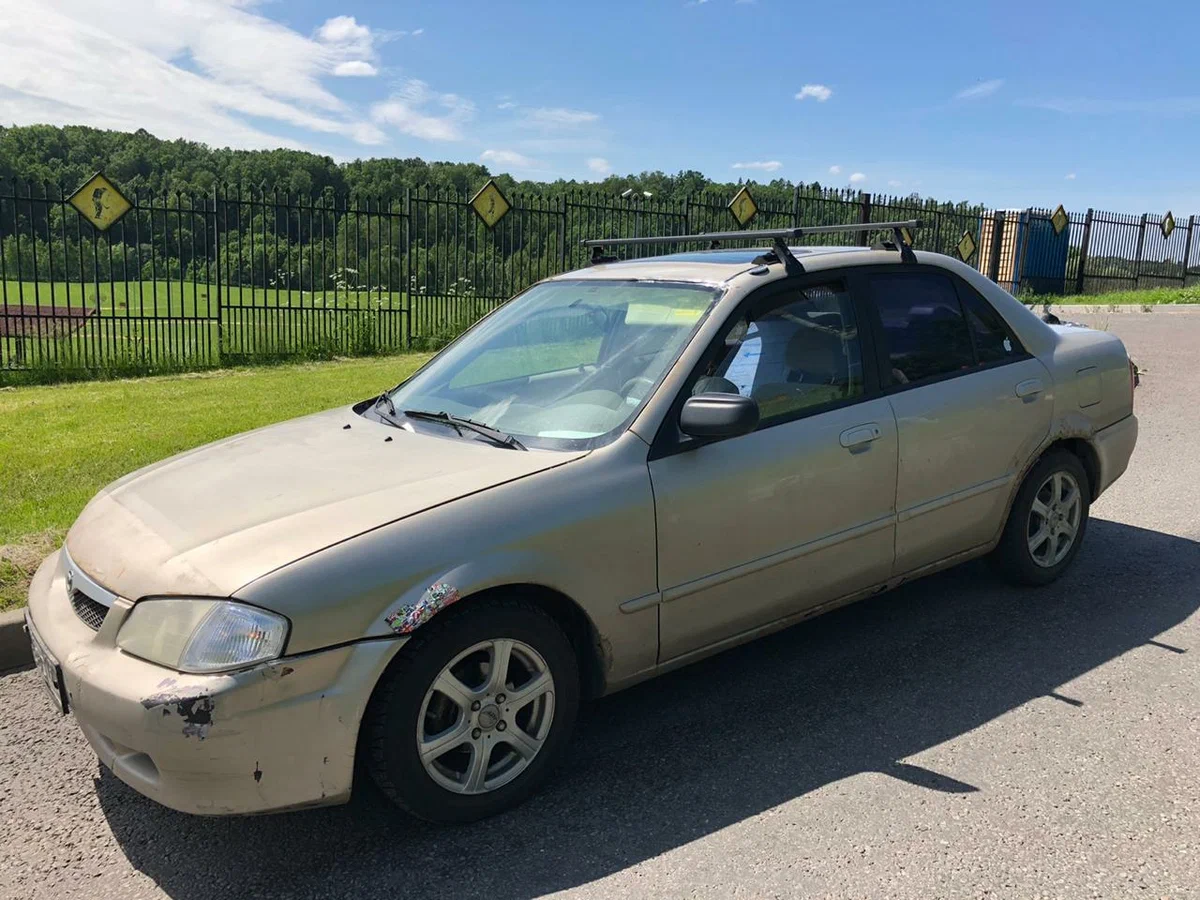
Transmission Issues, Recalls, and Complaints on the Mazda Protege gen 3 1999–2003
Overview
Simple car. Simple layout. Front-wheel drive, transverse transaxle, no AWD nonsense hiding underneath.
The 1999–2003 Mazda Protege (BJ chassis) keeps things old-school. Everything up front. No transfer case. No rear diff. No PTU waiting to empty your wallet. Just a compact FWD setup with either a 5-speed manual or the FN4A-EL 4-speed automatic bolted to the side of the engine.
I’ve worked on these since they were new. Back when they still smelled like fresh cloth seats and cheap plastic. The driveline itself? Not exotic. Not over-engineered. But not bulletproof either. It rewards maintenance. It punishes neglect. Hard.
There were no U.S. NHTSA recalls targeting the transmission or driveline on this generation. That matters. But Mazda did issue TSB 05-002/21 about cooler line contamination after automatic failure. That one’s real. And if you ignore it, the replacement tranny can grenade again in short order.
Which Transmissions It Uses
FN4A-EL
- Official code: FN4A-EL
- 4-speed electronically controlled automatic
- FWD layout
- Used with 1.6L ZM-DE and 2.0L FS-DE engines
- 1999–2003 production range
- No verified alternative automatic transmissions used
This is the only automatic offered. No 5-speed auto. No CVT experiment. Just this unit.
G15M-R
- 5-speed manual transaxle
- FWD
- Paired with 1.6L ZM-DE
- 1999–2003
F25M-R
- 5-speed manual transaxle
- FWD
- Paired with 2.0L FS-DE
- 1999–2003
The 2003 Mazdaspeed Protege used a 5-speed manual variant with a factory limited-slip differential integrated into the transaxle. No dual-clutch. No trick electronics. Just gears, bearings, synchros, and fluid.
Main Failure Patterns
FN4A-EL – Cooler Contamination After Internal Failure
This one burns people.
The tranny fails internally. Clutches wear. Planetaries get chewed up. Shavings everywhere. That debris flows into the transmission cooler and lines. The cooler has internal passages that trap metal. You rebuild the unit, bolt it back in, fill it with fresh fluid… and skip flushing the cooler.
Now you’ve got leftover metal waiting to circulate right back into your fresh rebuild.
TSB 05-002/21 addresses this exact scenario. Power flush the cooler and lines. Not a quick drain. Not compressed air. A real flush. I’ve seen rebuilt FN4A-EL units fail again in 10,000 miles (16,000 km) because someone did a band-aid fix instead of cleaning the system properly.
This isn’t a design defect. It’s a repair discipline problem. And it’s expensive.
FN4A-EL – Valve Body Wear and Shift Flare
After about 130,000–160,000 miles (209,000–257,000 km), these units start showing their age.
Delayed engagement into Drive. A little hesitation. Then you feel the 2–3 or 3–4 shift flare — engine revs climb, gear catches late. It’s hydraulic wear. Valve body bores get sloppy. Pressure control gets lazy. Clutches slip longer than they should.
Heat makes it worse. In heavy city driving, fluid temps creep past 200°F (93°C). Old fluid turns dark. Varnish builds up. Now you’ve got reduced line pressure and clutch packs working overtime.
I’ve seen plenty go past 180,000 miles (290,000 km) with routine fluid changes. I’ve also seen neglected ones start lunching gears before 140,000 miles (225,000 km). Maintenance makes the difference.
FN4A-EL – Torque Converter Clutch Shudder
Light throttle. 45 mph (72 km/h). Slight vibration. Feels like driving over rumble strips.
That’s torque converter lockup shudder. Usually shows up past 120,000 miles (193,000 km). Fluid breakdown is part of it. Converter clutch glazing is the other part. Sometimes a fluid exchange smooths it out. Sometimes the converter is done and you’re pulling the unit.
Ignore it long enough and the shudder turns into slip.
Manual Transaxles – Differential Bearing Wear
The manuals are tougher. No solenoids. No valve body.
But bearings still wear.
Beyond 150,000 miles (241,000 km), I start hearing differential carrier bearing growl. It changes under load. Quiet when coasting, louder when accelerating. Metal flakes show up in the gear oil if you drain it.
It’s gradual. Rarely catastrophic overnight. Still, if you let it go long enough, those shavings circulate through the box and synchros start complaining.
Mazdaspeed Limited-Slip Differential
The Mazdaspeed version adds a factory limited-slip differential inside the manual transaxle. Great for traction. Rough on parts if abused.
Hard launches. Shock loading. Modified boost setups. That’s when I’ve seen differential failures. Stock cars driven like normal commuters? Usually fine. Modified cars driven like race cars? Different story.
This isn’t a ticking time bomb. It’s a stress multiplier.
Axle Seals and CV Joints
At 120,000–170,000 miles (193,000–274,000 km), axle seals start weeping. Age. Heat cycles. Rubber gets hard.
Outer CV joints start clicking in turns around 130,000+ miles (209,000+ km). That’s just wear. Nothing dramatic. Replace the axle, move on.

Typical Repair Costs
Let’s talk money. Because that’s what people care about once the slipping starts.
| Repair Type | Parts (USD $) | Labor (USD $) | Total (USD $) | Basis |
| FN4A-EL rebuild | $1,800–$2,800 | $1,200–$1,800 | $3,000–$4,600 | Industry Estimate |
| Remanufactured replacement | $2,500–$3,800 | $1,200–$1,800 | $3,700–$5,600 | Industry Estimate |
| Torque converter replacement | $400–$900 | $700–$1,200 | $1,100–$2,100 | Service Bay Benchmark |
| Manual differential bearing overhaul | $300–$700 | $900–$1,500 | $1,200–$2,200 | Industry Estimate |
| CV axle replacement (per side) | $120–$350 | $150–$350 | $270–$700 | Service Bay Benchmark |
On a high-mileage Protege, a full automatic rebuild can cost more than the car is worth. That’s reality.
Best and Worst Years
No single year stands out as a disaster.
| Year | Transmission Options | Recall Overlap | Dominant Pattern | Relative Risk |
| 1999 | FN4A-EL / G15M-R | No | Age-related automatic wear | Medium |
| 2000 | FN4A-EL / F25M-R | No | Valve body wear | Medium |
| 2001 | FN4A-EL / F25M-R | No | Shift flare | Medium |
| 2002 | FN4A-EL / F25M-R | No | Standard aging | Low–Medium |
| 2003 | FN4A-EL / Manual w/LSD (Mazdaspeed) | No | LSD stress in modified cars | Medium |
Condition matters more than model year.
Warning Signs & Early Detection
- Delayed engagement into Drive or Reverse
- 2–3 or 3–4 flare under throttle
- Harsh warm downshifts
- Lockup shudder at steady cruise
- Growling noise that changes with load
- Axle seal leaks or grease sling
Check the fluid. Red and clear is good. Dark brown with metallic sparkle is bad. Burnt smell? Even worse.
I always tell buyers: spend the money on a pre-purchase inspection. Scan it. Drive it long enough to get it hot. A cold test drive hides problems.
When to Walk Away
- Multiple-gear slipping in the FN4A-EL
- No proof cooler lines were flushed after replacement
- Loud differential growl with metal in the oil
- Severe drivetrain vibration in Mazdaspeed trim
- Evidence of repeated rebuilds with no documentation
If repair cost is 60–70% of vehicle value, think hard. These cars are cheap now. Don’t throw good money at a bad core.
Ownership Reality
Manufacturers love long service intervals. Real life is harsher.
| OEM Guidance | Observed Field Outcome | Financial Impact |
| Extended fluid intervals | Fluid degraded by 60k–80k miles (96k–129k km) | Accelerated clutch wear |
| No mandatory cooler replacement | Residual debris causes repeat failure | Double rebuild cost |
| Minimal manual gear oil emphasis | Bearing noise past 150k miles (241k km) | $1,200–$2,200 repair |
| No LSD-specific service interval | Wear increases with aggressive driving | Full gearbox overhaul |
In my experience, automatic fluid exchanges every 40,000–60,000 miles (64,000–96,000 km) make a massive difference. The ones that get serviced live longer. The ones that don’t? They get noisy, then they slip, then they’re done.
Lawsuits, Complaints & Regulatory History
No verified U.S. class action lawsuits targeted this generation’s transmission.
NHTSA complaints mention slipping, delayed shifts, occasional failure. None escalated to an engineering analysis or recall for the drivetrain. That tells you something: this wasn’t a systemic defect crisis.
TSB 05-002/21 is still the most relevant document when you’re dealing with a rebuilt FN4A-EL. Skip the cooler flush and you’re gambling.
Bottom Line
This drivetrain isn’t flashy. It isn’t fragile. It’s old-school mechanical hardware that needs maintenance and decent repair practices.
The FN4A-EL automatic is sensitive to heat and contamination. Treat it right and it can pass 180,000 miles (290,000 km). Neglect it and it becomes a money pit.
The manuals are sturdy, with predictable bearing wear at high mileage. No drama. Just age.
The real danger isn’t hidden design failure. It’s shortcuts. Skipped maintenance. Cheap rebuilds slapped in without fixing the root problem.
Maintain it. Inspect it. Don’t ignore the early signs. That’s how you keep a Protege from turning into a repair bill on wheels.


