Mazda MPV gen 2 2000–2006 Transmission Reliability Under Real Ownership
Overview
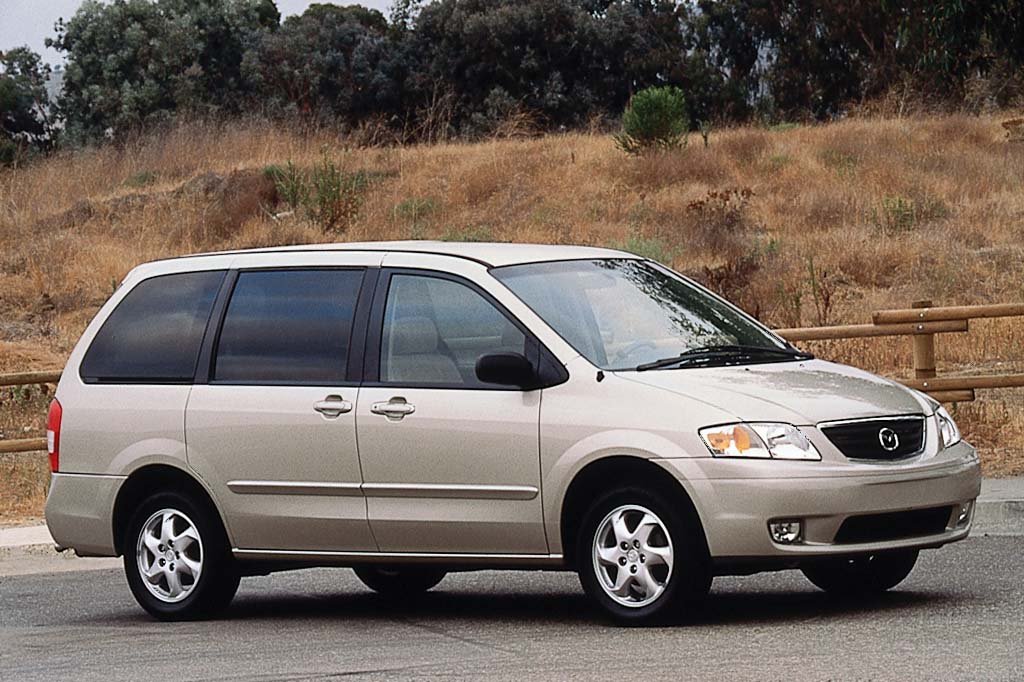
The 2000–2006 Mazda MPV. Second generation. Two completely different personalities depending on the year you’re looking at.
I’ve worked on these since they were still under factory warranty. Some were decent. Some were ticking time bombs with sliding doors.
Early trucks — 2000 and 2001 — got the GF4A-EL 4-speed automatic. Old-school. Hydraulic. Not fancy. They age like a basic appliance. Boring, and that’s good.
Then 2002 rolls in. New 3.0L V6. New 5-speed automatic — the JF506E, Mazda calls it JA5A-EL. More gears. More complexity. More failure points. That’s where things start getting expensive.
Before we get into broken parts and burnt fluid, we need to talk about MSP03. Mazda Special Service Program. TSB 05-006/14. Applies to certain 2003–2004 MPVs.
Symptom? Harsh 1–2 or 2–3 upshift during warm-up. Sometimes a weird 3–2 downshift when you lift off the throttle. Customers described it as the van “kicking.”
Root cause wasn’t mechanical. It was TCM calibration. Bad programming logic during cold-to-warm transition. Mazda’s fix was a reflash. That’s it.
Not a safety recall. No NHTSA recall campaign number. Just a manufacturer program. Owners had to check VIN eligibility through Mazda. If the reflash never got done, the clutch packs took the abuse. I’ve seen it.
So from the jump — you verify MSP03 on any 2003–2004 VIN. Always.
Which Transmissions It Uses
GF4A-EL
- 4-speed automatic transaxle
- Front-wheel drive
- Paired with 2.5L AJ V6
- Used in U.S. 2000–2001 model years
- No alternative transmissions offered in those years
This unit is simple. Conventional clutch packs. Conventional valve body. It doesn’t try to be clever.
JF506E (Mazda JA5A-EL)
- 5-speed automatic transaxle
- Front-wheel drive
- Paired with 3.0L AJ V6
- Used in U.S. 2002–2006 model years
- No alternative transmissions offered in those years
No manual. No CVT. No AWD setup in U.S. second gen. Just these two trannies. That’s the whole story.
Main Failure Patterns
MSP03 Shift Shock — Calibration Problem
Cold start. You pull out of the driveway. First shift hits hard. Second one worse. Feels like someone tapped you from behind.
That’s the calibration issue covered by MSP03. The TCM logic during warm-up was aggressive and confused. It commanded pressure spikes during temperature transition.
Short term? Annoying.
Long term? Worn clutches.
I’ve torn down units where the reflash was ignored for years. The 2–3 clutch pack showed early glazing. Not catastrophic yet, but worn ahead of schedule.
JF506E Valve Body Wear
This is the real story.
The JF506E valve body wears out. The bores oval out. Pressure control solenoids get lazy. Hydraulic integrity drops. Line pressure starts drifting.
Symptoms bounce around:
- Delayed Drive engagement
- Delayed Reverse
- RPM flare between 2–3
- Inconsistent shift timing
- Random harsh shifts
Service bay benchmark: 90,000–140,000 miles (145,000–225,000 km).
I’ve seen them fail earlier in heavy city use. Heat kills these. Stop-and-go, short trips, fluid never fully stabilizes. The aluminum casting wears fast once fluid oxidizes.
Mazda didn’t call for aggressive fluid intervals. Big mistake. Fluid shears down. Debris circulates. The valve body becomes a leaky mess.
Clutch Pack Failure — Secondary Damage
The valve body doesn’t fix itself. Once pressure gets unstable, clutches slip. Slip generates heat. Heat cooks friction material.
Then the van starts lunching gears.
You’ll see flare under load. Maybe no movement in one gear. Fluid smells burnt. Dark brown, sometimes with fine shavings in the pan.
Field observation: 110,000–160,000 miles (177,000–257,000 km) is common failure territory when maintenance was ignored.
Torching the Torque Converter
Lockup shudder. That annoying vibration at 45 mph cruising lightly on throttle.
Customers think it’s a misfire. It isn’t.
The torque converter clutch lining starts breaking down. Once it slips long enough, debris contaminates the whole unit.
Above 100,000 miles (160,000 km), I’ve seen this more often on vehicles that never had fluid serviced.
GF4A-EL — The Simpler One
The 4-speed is tougher. Not bulletproof. Just tougher.
Common aging signs after 150,000 miles (241,000 km):
- Firm 2–3 shift
- Slow Reverse engagement
- Solenoid fatigue
They don’t grenade as dramatically as the 5-speed. When they fail, it’s gradual. Predictable. Less drama.
Typical Repair Costs
Now the painful part.
| Repair Type | Parts (USD) | Labor (USD) | Total (USD) | Mileage Context |
|---|---|---|---|---|
| TCM Reprogramming | $0–$150 | $100–$200 | $100–$350 | Under ~120k miles |
| JF506E Valve Body Replacement | $700–$1,200 | $700–$1,400 | $1,400–$2,600 | 90k–140k miles |
| JF506E Full Rebuild | $2,000–$3,000 | $1,500–$2,500 | $3,500–$5,500 | 110k–160k miles |
| Reman Unit Installed | $3,000–$4,000 | $1,200–$2,000 | $4,200–$6,000 | Varies |
| Axle Shaft Seal | $20–$60 | $150–$350 | $170–$410 | High mileage seepage |
Drain and refill takes roughly 4–5 quarts (3.8–4.7 liters). Full dry fill runs about 8–9 quarts (7.6–8.5 liters). I always tell owners: fresh fluid is cheaper than a rebuild. By thousands.
Once the JF506E starts slipping, you’re rarely fixing it for a few hundred bucks. That’s fantasy.
Best and Worst Years
| Year | Transmission | Trend | MSP03 Exposure | Risk Level |
|---|---|---|---|---|
| 2000 | GF4A-EL | Stable aging | No | Low |
| 2001 | GF4A-EL | Normal wear | No | Medium |
| 2002 | JF506E | High failure clustering | No | High |
| 2003 | JF506E | High complaints | Yes | High |
| 2004 | JF506E | Improved if reflashed | Yes | Medium–High |
| 2005 | JF506E | More stable | No | Medium |
| 2006 | JF506E | Aging risk | No | Medium |
If I’m buying one for cheap family duty? I lean 2000–2001 every time.
Warning Signs & Early Detection
- Hard shift when cold
- Delayed Reverse
- Flare between gears
- Brown or burnt fluid
- Cruise shudder at 40–55 mph
Scan it. Always scan it.
Check adaptive shift data. Road test from dead cold. Don’t let the seller warm it up first. That’s a trick I’ve seen too many times.
If fluid temperature climbs past 220°F (104°C) under light highway load, something’s not right. Cooling issue. Internal slip. Either way, you’re headed toward money.
When to Walk Away
Slipping under moderate throttle? Walk.
Repeated harsh 2–3 shift after full warm-up? Walk.
No record of MSP03 on a 2003–2004 VIN? Investigate hard. If the owner shrugs, assume it wasn’t done.
Metallic shavings in the pan. Burnt smell. Dark sludge. That’s not a band-aid fix situation. That’s teardown territory.
These vans aren’t worth sinking $6,000 into unless you love them.
Ownership Reality
| OEM Position | Real Shop Experience | Cost Outcome |
|---|---|---|
| No aggressive fluid schedule | Fluid degrades by 60k–80k miles | Valve body wear accelerates |
| Calibration update fixes shift feel | Unflashed units stress clutches | Earlier rebuild required |
| Normal duty assumed | Urban heat cooks JF506E | Torque converter shudder, rebuild |
I’ve seen high-mileage units — 180,000 miles plus — survive when fluid was serviced every 30,000–40,000 miles (48,000–64,000 km). Clean fluid. No burnt smell. Smooth shifts.
I’ve also seen 105,000-mile vans with black fluid and a dead tranny. Same model. Different maintenance story.
Ford calls this “lifetime” logic on similar designs. Lifetime of what, exactly? Warranty period?
Lawsuits, Complaints & Regulatory History
No major U.S. class action targeting this transmission in this platform.
NHTSA complaint patterns cluster around 2002–2003 under powertrain categories. Themes are consistent:
- Slipping near 100,000 miles
- Harsh shifts
- Premature failure perception
No ODI investigation escalated to recall for internal mechanical breakdown. Regulatory action stopped at the MSP03 calibration program.
So this isn’t a legal disaster. It’s a maintenance-sensitive design with weak hydraulic tolerances.
Bottom Line
The 2000–2001 GF4A-EL vans are the safer mechanical bet. Simple, predictable, cheaper to own.
The 2002–2006 JF506E models? They can be fine. Or they can empty your wallet fast.
Maintenance decides the outcome. Heat and dirty fluid decide the failure speed.
Transmission condition matters more than engine mileage on this platform. I don’t care if the motor runs perfect — if the tranny is slipping, the van is worth parts money.
Buy smart. Inspect cold. Verify MSP03. And never assume smooth shifting on a warm test drive tells the whole story.