Mazda MX-5 Miata gen 1 1990–1997 Transmission Failures Seen in Real Service Bays
Overview
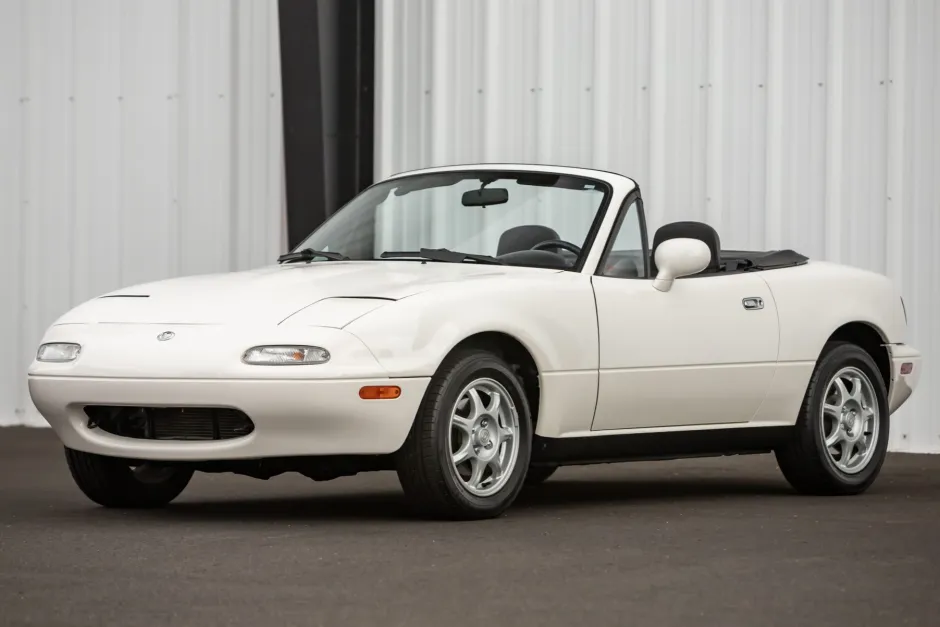
The 1990–1997 Mazda MX-5 Miata. NA chassis. Simple car. Rear-wheel drive. Lightweight. No nonsense.
From a drivetrain standpoint, this thing is refreshingly old-school. Longitudinal engine. Manual or hydraulic automatic bolted directly behind it. One-piece driveshaft. Rear differential tied together with the Power Plant Frame. No transfer case. No AWD clutches. No electronic trickery hiding bad engineering decisions.
I’ve worked on these cars since they were still under factory warranty. I’ve rebuilt their trannys on shop floors with gear oil dripping down my arms. I’ve inspected 250,000 Mile (402,000 km) cars that still shift clean. I’ve also seen early ones fight 2nd gear like they’re chewing gravel. It’s a mixed bag, but not a scary one.
This is strictly about transmission and driveline. No engine drama. No cooling system side quests. Just the parts that actually get power to the pavement.
Which Transmissions It Uses
Two transmission families. That’s it. No verified alternative transmissions used in the U.S. market.
- Mazda M15M-R
5-speed manual
RWD layout
1.6L B6ZE (1990–1993)
1.8L BP-ZE (1994–1997)
Production years: 1990–1997 - Jatco 4N71B (Mazda R4A-EL)
4-speed electronically controlled automatic
RWD layout
1.6L B6ZE (1991–1993)
1.8L BP-ZE (1994–1997)
Production years: 1991–1997
Most cars are manual. By a mile. The automatic exists, and when it’s maintained it’s fine, but the manual is the heart of this platform.
Main Failure Patterns
Early 5-Speed 2nd Gear Stiffness — TSB 004/92
Let’s start with the one real factory issue.
Early production cars built before April 1, 1991 had a tolerance problem in the 2nd gear synchronizer system. Mazda addressed it under TSB 004/92. The issue wasn’t mystery metal or exploding gears. It was clearance. The 2nd gear synchro ring and the 1–2 clutch hub sleeve were just a little too cozy.
Cold morning. Below about 50°F (10°C). You go for 2nd. It fights you. Feels stiff. Sometimes crunchy. Once the fluid warms up, it behaves.
I’ve driven dozens of early cars that do exactly that. Owners panic. They think the tranny is dying. Usually it’s just that early design stack-up.
Mazda revised the parts. If the updated components are installed, problem gone. If not, and you keep forcing it into gear, you’ll accelerate synchro wear. That’s when you start lunching gears.
Extension Housing Seal Squeak — TSB 006/93
This one’s weird.
Certain 1990–1992 cars developed a squeak from the rear of the manual transmission. Mazda released TSB 006/93. The extension housing oil seal material would chirp during rotation under certain temperature conditions.
It sounds worse than it is. It doesn’t mean the tranny is about to grenade. It’s just noise. Replace the seal with the updated design and move on.
Clutch Release Noise — TSB H003/95
Another classic misdiagnosis.
Idle. Clutch pedal out. You hear a squeal or chirp. Press the pedal, noise disappears.
Owners assume input shaft bearing failure. I’ve seen shops quote full transmission rebuilds over this. Most of the time, it’s lubrication at the clutch release fork contact point. Mazda addressed it in TSB H003/95.
Sometimes it is the release bearing. Sometimes it’s just dry metal-on-metal contact. A band-aid fix won’t last forever, but lubrication done correctly often stops the noise without tearing the whole thing apart.
High-Mileage Manual Wear
Now we’re talking real-world aging.
Once these cars cross 150,000 Miles (241,000 km), patterns show up. I’ve torn down plenty in the 180k–220k range.
- 3rd and 4th gear synchros worn thin
- Shift turret bushings degraded and sloppy
- Input shaft bearing developing highway-speed whine
Nothing shocking. No ticking time bomb. Just wear. Keep fluid clean — about 2.1 Quarts (2.0 Liters) capacity — and they last a long time.
Automatic Transmission — 4N71B / R4A-EL
This unit is old-school hydraulic with electronic shift control. No adaptive wizardry. No dual-clutch nonsense.
It lives or dies by fluid.
I’ve seen clean-fluid units go past 180,000 Miles (290,000 km). I’ve also seen neglected ones start slipping at 130,000 Miles (209,000 km).
- Delayed Drive or Reverse engagement
- 2–3 shift flare
- Front pump seal leakage
When they fail, they don’t usually explode. They just get lazy. Slippy. Mushy. And then you’re looking at a full overhaul.
Rear Differential Differences
The diff matters.
1990–1993 1.6L cars use a 6-inch ring gear rear differential. Smaller. Lighter. Still fine at factory torque — 100 lb-ft (136 Nm).
1994–1997 1.8L cars step up to a 7-inch ring gear. Stronger. Factory torque there is 110 lb-ft (149 Nm).
In stock form, both live long lives. Start shock-loading the 6-inch diff with clutch dumps and sticky tires, you’ll find its limits. I’ve opened up abused ones with chipped teeth and glitter in the oil.
The 7-inch unit? Much harder to hurt at stock power. Even the Torsen limited-slip versions hold up well when fluid is serviced — roughly 0.8–0.9 Quarts (0.8–0.85 Liters) capacity.
Typical Repair Costs
Let’s talk money. Because eventually, you will.
| Repair Type | Parts (USD $) | Labor (USD $) | Total (USD $) | Context |
|---|---|---|---|---|
| Manual 5-speed rebuild | 800–1,400 | 900–1,500 | 1,700–2,900 | 150k–220k Miles wear |
| Used 5-speed install | 900–1,800 | 700–1,200 | 1,600–3,000 | Salvage unit condition varies |
| Automatic overhaul (4N71B) | 1,500–2,200 | 1,200–1,800 | 2,700–4,000 | Fluid neglect common trigger |
| Clutch replacement | 500–800 | 600–1,000 | 1,100–1,800 | 100k–150k Miles typical |
| Rear differential replacement (used) | 700–1,400 | 400–800 | 1,100–2,200 | Abuse or high mileage |
| Axle shaft seal replacement | 40–80 | 200–350 | 240–430 | Age-related seepage |
Manual rebuilds are usually cheaper than automatic overhauls. That’s reality.
Best and Worst Years
| Year Range | Engine | Transmission | Driveline Concern | Relative Risk |
|---|---|---|---|---|
| 1990–Early 1991 | 1.6L | M15M-R | Cold 2nd gear stiffness (TSB 004/92) | Moderate |
| 1991–1993 | 1.6L | M15M-R | Normal aging wear | Low |
| 1994–1997 | 1.8L | M15M-R | Stronger 7-inch differential | Low |
| All Years | 1.6L / 1.8L | 4N71B | Fluid sensitivity | Moderate |
If you want the safest bet, grab a 1994–1997 1.8L with the 5-speed and 7-inch diff. That setup is tough.
Warning Signs & Early Detection
- 2nd gear fights you when cold
- Grinding on 3rd or 4th under load
- Clutch chirp at idle, disappears when pedal pressed
- Automatic hesitates going into Drive
- Diff whine that rises with road speed
- Gear oil leaks at axle seals
When I inspect one of these for a buyer, I always drive it cold. That tells the truth. I check the magnetic drain plug for shavings. A light paste is normal. Chunks are not.
When to Walk Away
Multiple gears grinding? Walk.
Automatic slipping under light throttle? Walk.
Diff howling like a siren at 60 Miles per hour (97 km/h)? Walk.
Heavy metal fragments in gear oil? That tranny is already eating itself.
There are too many clean examples out there to buy someone else’s disaster.
Ownership Reality
| Topic | OEM Guidance | What I See in Shops | Cost Consequence |
|---|---|---|---|
| Manual fluid interval | Long service interval, minimal emphasis | 30k–60k Mile changes dramatically reduce synchro wear | Avoids 1,700–2,900 USD rebuild |
| Automatic fluid | Extended interval guidance | Neglect leads to clutch pack wear and shift flare | 2,700–4,000 USD overhaul |
| Clutch noise | Component replacement if persistent | Often lubrication-related per TSB H003/95 | Prevents unnecessary clutch job |
| Differential service | Low emphasis in routine schedules | Fresh fluid extends bearing life | Saves 1,100–2,200 USD replacement |
Manufacturers love long service intervals. Less maintenance looks good on paper. In the real world, fluid breaks down. Heat cooks it. Metal shavings float around. Change it early and these drivetrains just keep going.
Lawsuits, Complaints & Regulatory History
No U.S. recalls specific to transmission or driveline defects on 1990–1997 models.
Relevant bulletins:
- TSB 004/92 — 2nd gear cold shift stiffness
- TSB 006/93 — Extension housing seal noise
- TSB H003/95 — Clutch release noise guidance
NHTSA complaint data doesn’t show clustering that points to a systemic transmission defect. Most complaints are age-related. These cars are 25–35 years old now. Wear is expected.
No documented class action litigation targeting the manual or automatic transmission in this generation.
Bottom Line
This drivetrain isn’t fragile. It isn’t over-engineered. It’s simple and honest.
Early 1990–1991 cars can have that 2nd gear stiffness if the updated parts were never installed. Beyond that, most issues are maintenance or mileage driven.
The M15M-R 5-speed is sturdy. The 4N71B automatic is decent but unforgiving if ignored. The 7-inch differential in the 1.8L cars is strong. The 6-inch diff is fine unless you abuse it.
Keep fluid clean. Listen for noise. Don’t ignore shavings. Do that, and this generation’s transmission and driveline will probably outlast the rest of the car.