Dodge ProMaster gen 1 2014–present Transmission Failures Seen in Real Service Bays
Overview
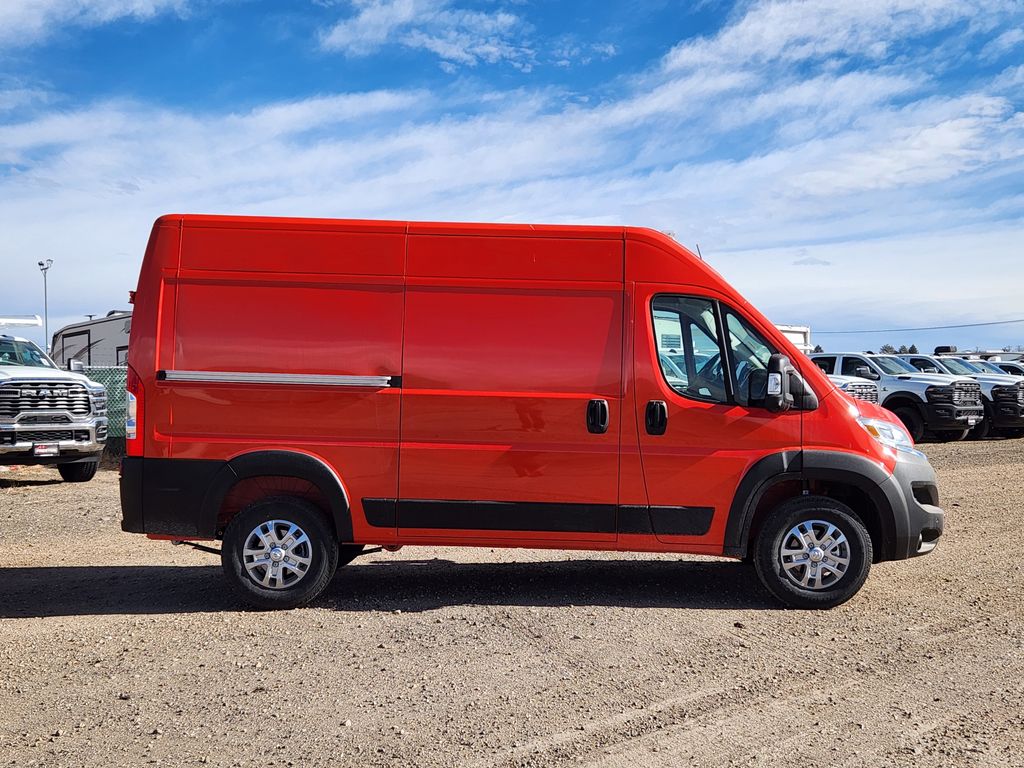
The U.S.-market first-generation ProMaster is a weird van by American standards, and that drivetrain layout is a big reason why. This thing is front-wheel drive. No long rear driveshaft. No rear differential doing the heavy lifting like an old-school full-size van. The tranny, final drive, and front axle output functions all live up front in one packed transaxle setup. Good for cargo floor height. Good for packaging. Bad when it starts making metal.
I’ve been around enough work vans to know what usually happens next. Small driveline complaints don’t always stay small on this platform. A little harsh engagement turns into a valve body conversation. A reverse issue turns into internal damage. A bit of metallic trash in the pan turns into a reman quote that makes the owner stare at the service writer like he’s speaking another language.
The regulatory history matters early with these. NHTSA recall 16V-461 covers certain 2016 ProMaster vans with the 3.6L gasoline engine and automatic transaxle, built from August 12, 2015 through April 15, 2016, because an improperly manufactured transaxle oil pump could cause loss of hydraulic pressure and loss of motive power. Then you’ve got NHTSA recall 23V-301 on 2019–2021 vans with the 62TE, where debris inside the transmission can keep the park pawl from fully engaging. That is not a cute little drivability complaint. That is a van-rolls-away problem. Before anybody buys one, or trusts one, or loads it with tools and parks it on a grade, the VIN needs to be checked through NHTSA and through the Ram dealer system.
When you strip away the marketing language and fleet sales fluff, this generation breaks into two real groups. The 2014–2021 gasoline vans run the 62TE six-speed. That’s the unit with the heaviest complaint and campaign history. The 2022-and-newer redesign switched to the 948TE nine-speed, and that brought its own early pattern with a small customer-satisfaction action tied to internal lubrication failure on a limited batch of 2022 vans. Early diesel vans used an automated manual transmission. Public OEM literature verifies the design and operation, but the public source set reviewed here does not publish a verified transmission model code for that diesel unit. So I’m not going to invent one just to make the chart look prettier.
Which Transmissions It Uses
For U.S. gasoline ProMaster vans, the verified transmission codes are pretty clean. The 2014–2021 3.6L Pentastar vans use the 62TE six-speed FWD transaxle. The 2022-present 3.6L Pentastar vans use the 948TE nine-speed FWD transaxle. No verified gasoline alternatives showed up in the public OEM and NHTSA material reviewed here.
| Transmission Model Code | Gear Count | Drive Layout | Engine Pairing | U.S. ProMaster Years | Verification Basis |
|---|---|---|---|---|---|
| 62TE | 6-speed | FWD | 3.6L Pentastar V6 | 2014–2021 | NHTSA recall and service documentation identify the ProMaster transmission as 62TE |
| 948TE | 9-speed | FWD | 3.6L Pentastar V6 | 2022–present | OEM and NHTSA service documentation identify the ProMaster transmission as 948TE |
| No verified public model code published in the reviewed source set | 6-speed | FWD | 3.0L EcoDiesel I4 | 2014–2016 | OEM owner literature verifies an automated manual transmission on diesel vans, but the public documents reviewed do not publish a transmission model code |
That split matters. A lot. I’ve seen buyers mash all ProMaster transmission complaints into one ugly pile, and that’s how people end up buying the wrong van with the wrong expectations. The 62TE and the 948TE are different animals. They fail differently, they react differently to abuse, and they do not carry the same regulatory baggage. Same story with the diesel automated manual. You can’t compare that unit to the gasoline automatics like they’re all just “the ProMaster transmission.” That’s lazy research and it leads to bad money decisions.
Main Failure Patterns
Start with the 62TE oil pump defect tied to recall 16V-461. FCA said an improperly manufactured transaxle oil pump could cause loss of transaxle hydraulic pressure while driving. That sounds sterile on paper. In the bay it’s not sterile. It’s messy. Hydraulic pressure is life inside an automatic. Lose it and the clutches stop applying correctly, lubrication gets compromised, heat spikes, and the whole unit can go from acting strange to flat dead in a hurry.
I’ve seen that kind of failure on front-drive units before. Once pressure drops, you’re not dealing with a harmless warning sign. You’re dealing with a tranny that can grenade itself if the conditions are wrong and the driver keeps trying to limp it home.
Then there’s the 23V-301 defect on certain 2019–2021 62TE vans. FCA’s Part 573 report says PCM software could cause premature lower clutch retainer failure, and that failure could generate metallic debris. Those shavings can interfere with park pawl engagement. This is exactly the kind of over-engineered nonsense that creates a ridiculous problem from two separate issues feeding each other. Software behavior. Mechanical failure. Debris circulation. Then the van says Park, sort of, maybe, unless the pawl is only half there.
That one bothers me more than a lot of ordinary transmission complaints because it crosses into straight safety territory. A customer says the van moved after being parked, you stop smiling and start checking VIN history and campaign status. Fast.
The recall procedures tell the story pretty clearly. Technicians are directed to evaluate reverse operation, scan for related faults, and decide whether the van needs a PCM flash, inspection, or replacement work. In my experience, once one of these starts acting weird in reverse, you don’t assume it just needs a band-aid fix. Reverse complaints on a commercial 62TE can be the first honest clue that the unit is lunching gears internally or shedding material where it shouldn’t.
Another documented 62TE issue is the V46 customer-satisfaction campaign covering certain 2016–2017 vehicles. FCA stated the transmission solenoid pack had to be replaced on involved vans. That points you toward an electrical-control failure mode, not pure hard-part destruction. Different kind of headache. These are the vans that show up with limp-in operation, odd shifting, or gear-command problems that don’t always feel catastrophic at first.
Still expensive. Still annoying. Still enough to wreck a week if the van makes money for a living.
For 2022 vans, the verified 948TE issue is Customer Satisfaction Notification ZD3. FCA said about 76 vehicles could experience internal failure due to lack of lubrication, starving bearings and pinions. The symptom list is blunt: no forward gear and grinding when put into gear. No ambiguity there. No soft language needed. If a nine-speed starts grinding and loses forward movement, you are well past “monitor and recheck next visit.” You are in replacement territory, or teardown territory, and neither one is cheap.
The repair path in the campaign is transmission replacement or internal repair followed by the 948TE verification test. That tells you exactly how serious the factory considered it. They didn’t slap on a software patch and send it out the door.
The driveline side of this platform is less dramatic, but it still matters, especially on loaded work vans. The owner maintenance schedule calls for CV joint inspection, and the front suspension inspection items include boot seals. That sounds routine because it is routine. But routine stuff gets ignored on fleet vans all the time. Then the boot tears, grease gets flung, dirt gets in, the joint starts clicking, and the owner who could have paid for a smaller job is now buying an axle.
That is how driveline maintenance usually goes on these. Not glamorous. Just expensive if you pretend it doesn’t matter.
Typical Repair Costs
Factory recall work is done at no charge while the campaign is open and the VIN qualifies. Outside campaign coverage, the money side gets ugly pretty quickly. There is no clean official national retail menu in the reviewed source set for every one of these repairs, so the numbers below are based on real service-bay pricing logic for U.S. independent and dealer-level commercial van work. That means the numbers reflect what owners actually tend to hear after diagnosis, not fantasy internet pricing from somebody who forgot labor exists.
| Repair Type | Typical Cost Basis | Typical Total Cost | What Usually Drives the Number |
|---|---|---|---|
| 62TE diagnostic workup with scan data and fluid inspection | Service Bay Benchmark | $180–$450 | Labor time, scan depth, pan inspection, road test |
| 62TE solenoid pack replacement | Service Bay Benchmark | $700–$1,400 | Pan removal, fluid, solenoid pack, relearn procedures |
| 62TE internal repair after reverse or park-related failure | Industry Estimate | $2,500–$4,500 | Internal hard-part damage, cooler cleaning, shop policy on rebuild depth |
| 62TE complete replacement | Service Bay Benchmark | $4,000–$6,500 | Reman or new unit source, labor, fluid, cooler service, programming |
| 948TE complete replacement | Industry Estimate | $5,500–$8,500 | Parts availability, programming, adaptation procedures, commercial labor rates |
| Front axle shaft replacement | Service Bay Benchmark | $350–$900 per side | Axle quality, corrosion, alignment needs, labor access |
Here’s the jump people forget. The first symptom is rarely the expensive part. The expensive part is when you confirm internal metal, no-drive complaints, reverse failure, or enough contamination that nobody with sense wants to just toss parts at it and hope. Once a ProMaster gets to that stage, shops start talking about cooler-line cleaning, teardown authorization, replacement unit sourcing, warranty paperwork, and whether the customer wants to gamble on a partial repair. That is when the conversation changes.
Fast.

Best and Worst Years
If you rank these vans by hard public evidence instead of internet folklore, the roughest years are easy to spot. The 2016 gasoline vans deserve attention because of recall 16V-461 and the oil-pump hydraulic-pressure loss issue. The 2019–2021 gasoline vans are the ones I look at hardest because of 23V-301 and the park-pawl debris problem. Those are the years with the heaviest documented transmission-specific risk.
The early 2022 nine-speed vans are a separate case. Smaller campaign population. Different transmission. Different symptom pattern. Still real.
| Model Year Group | Primary Transmission | Documented Transmission Risk | Why It Ranks There |
|---|---|---|---|
| 2014–2015 gasoline | 62TE | Moderate | No major transmission safety recall in the reviewed source set, but still part of the broader 62TE service environment |
| 2016 gasoline | 62TE | High | Recall 16V-461 for transaxle oil pump loss of hydraulic pressure |
| 2017–2018 gasoline | 62TE | Moderate | V46 solenoid-pack campaign affects part of this period, but less severe than the park-pawl recall years |
| 2019–2021 gasoline | 62TE | Highest | Recall 23V-301 for premature lower clutch retainer failure, debris, and incomplete park-pawl engagement |
| 2022 gasoline | 948TE | Moderate | Small but verified ZD3 lubrication-failure campaign |
| 2023–present gasoline | 948TE | Lower documented regulatory exposure so far | No transmission safety recall in the reviewed source set for these later years |
In my experience, a clean 2017 or 2018 gasoline van with real records can be an easier buy than a 2019–2021 van that looks nicer but has fuzzy recall history and vague transmission paperwork. Same goes for later nine-speed vans. I’m not afraid of them on principle. I just want proof. Clean VIN history. Clean road test. No grinding story. No mystery replacement note with no part numbers attached.
Warning Signs & Early Detection
On 62TE vans, the warning signs that deserve immediate attention are pretty plain: weird reverse operation, harsh or delayed engagement, limp-in behavior, and anything that makes the van feel sketchy in Park. The 23V-301 service documents tie reverse checks and related diagnostic logic to the park-engagement defect path. That means reverse complaints on the affected years are not something you shrug off because “these commercial vans all shift a little rough.”
No. They don’t all do that.
On the 948TE vans, the red-flag combo is grinding when you put it into gear and loss of forward movement. Those are the exact symptoms called out in ZD3. If a used 2022 van has that in its history, I want repair documentation, I want a scan, and I want to know whether the replacement unit was installed properly and verified correctly. Without that, the van may drive fine for ten minutes and still be a ticking time bomb for the next owner.
Driveline wear is more basic but still worth checking carefully. Torn outer boots, grease sling, clicking on turns, axle play. The usual stuff. The difference is that on a heavy front-drive work van, small driveline neglect stacks up faster than people think. Catch the boot early, maybe you save the joint. Ignore it, now you’re buying the whole axle and probably paying extra labor because nothing wants to come apart nicely.
| Warning Sign | Most Likely Area | Why It Matters | Recommended Verification |
|---|---|---|---|
| No reverse or erratic reverse | 62TE internal failure path | Can overlap with 23V-301 defect logic and internal damage | VIN recall check, scan report, road test, transmission inspection |
| Vehicle movement after selecting Park | Park pawl engagement | Potential safety defect | Immediate VIN recall verification and dealer evaluation |
| Limp-in operation or stuck gear | 62TE control system / solenoid pack | Can indicate V46-type control fault or internal failure | Scan data, solenoid diagnostics, fluid inspection |
| Grinding and no forward movement | 948TE internal lubrication failure | Published symptom set for ZD3 | Stop driving, scan, verify campaign history |
| Grease at inner fender or clicking on turns | Front CV axle / boot | Joint contamination and axle wear | Visual inspection and axle play check |
When to Walk Away
I walk away quickest from 2019–2021 gasoline vans with unresolved 23V-301 recall status, shaky transmission history, or any story involving reverse problems, odd reverse engagement, or movement in Park. That mix is bad news. Known safety defect plus possible internal damage plus an owner who may or may not understand what already happened. That is how people overpay for a problem van.
I also get cautious with 2016 vans if there is no paperwork showing recall 16V-461 completion. A repaired recall unit is one thing. A hard-used fleet van with missing records and a mystery trans history is something else completely. On a commercial rig, undocumented tranny history matters almost as much as mileage, sometimes more.
Then there are the 2022 vans with any grinding or no-forward-gear history. I don’t care if the seller says it was “all taken care of.” Fine. Show me. Show the work order. Show the campaign completion. Show the replacement details. Show the scan report. Without that, you’re guessing, and guessing on a late-model nine-speed replacement bill is an expensive hobby.
Ownership Reality
This is where the factory view and the real-world view start drifting apart. The owner literature does not present the gasoline automatic as some magical forever-fill unit. It says transmission fluid and filter changes belong in the maintenance schedule, and it also says contamination or disassembly requires service. Good. That’s grounded. But in real service life, especially with hot-route delivery use, constant stop-and-go, heavy payloads, and drivers who spend all day bumping curbs and idling in traffic, fluid condition can go downhill long before an owner thinks the van is “due” for attention.
I’ve seen dozens of work vans maintained on paper and still abused in practice. Two different things.
| OEM Guidance | Real-World Outcome | Cost Consequence |
|---|---|---|
| Transmission fluid and filter service is scheduled maintenance, not a forever-fill promise | High-load commercial use usually benefits from earlier fluid-condition monitoring and more conservative service timing | Skipping fluid checks can turn a manageable service issue into an internal repair |
| Recall repairs address the covered defect at no charge | A recall repair does not erase wear already created by prior operation with the defect | Owners can still face post-campaign transmission expenses outside the recall scope |
| Front driveline inspection is part of routine maintenance | Boot damage is easy to miss on work vans until grease loss becomes obvious | Late discovery often means replacing the axle instead of only servicing the boot |
| Warranty coverage is strongest when problems happen early and documentation is complete | Many transmission problems show up after heavy commercial use and after standard coverage has narrowed | Repair authorization, teardown reports, and service history become financially important |
Owners get burned here because they assume “maintained” means protected. It doesn’t. A van can have invoices, fluid top-offs, and routine visits, and still be marching toward a costly internal failure because nobody looked at the pan, nobody paid attention to reverse behavior, nobody documented the early shift complaint, nobody checked whether the recall was completed correctly. That’s how the cheap path disappears.
And once a unit starts shedding shavings, the band-aid fix phase is over.
Lawsuits, Complaints & Regulatory History
The strongest public record on this platform is regulatory, not lawsuit-driven. The two big anchors are NHTSA recall 16V-461 for loss of hydraulic pressure from an improperly manufactured oil pump on certain 2016 vans, and NHTSA recall 23V-301 for incomplete park-pawl engagement caused by metallic debris from premature lower clutch retainer failure on certain 2019–2021 vans. Those two actions define the transmission risk story on this generation more than anything else.
The 23V-301 Part 573 report is one of those documents worth reading carefully because it shows the shape of the defect development. FCA documented customer assistance records and warranty claims before the recall, then tied the issue to premature lower clutch retainer failure linked to PCM software. That kind of paper trail matters. It separates random wear from a repeatable defect pattern with a real engineering root cause.
Outside the safety recalls, there are customer-satisfaction actions that still mean something in the used market. V46 required replacement of the 62TE solenoid pack on involved vehicles. ZD3 addressed internal 948TE lubrication failure on a limited 2022 population. These are not just paperwork fluff. When a manufacturer launches a formal campaign on a transmission issue, I pay attention. So should buyers.
Complaint history also makes more sense when you read it in layers instead of as internet noise. First check the VIN for open recalls and completed recalls. Then check dealer campaign history. Then scan the van. Then read the repair orders. That order matters. I’ve seen vans drive okay on a short route and still have a file full of clues telling you the drivetrain story is not over.
Bottom Line
Strictly from the official record, the first-generation U.S. ProMaster is not one simple transmission story. The 62TE years carry the heaviest verified risk, with 2016 and 2019–2021 standing out for the worst reasons. The 948TE years are different. Lower safety-recall exposure in the reviewed source set, but early 2022 vans still carry a real lubrication-related campaign.
For owners, the practical problem is not just whether the van still moves under its own power. It’s whether the transmission history is solid enough to predict the next bill with some honesty. For buyers, the smart move is to separate 62TE vans from 948TE vans, verify campaigns by VIN, and treat reverse complaints, park complaints, grinding complaints, and no-forward-gear history as serious pricing and inspection problems.
That’s the way I’d look at one in the shop. No fluff. No excuses. Just the drivetrain, the paperwork, the symptoms, and the money trail.