
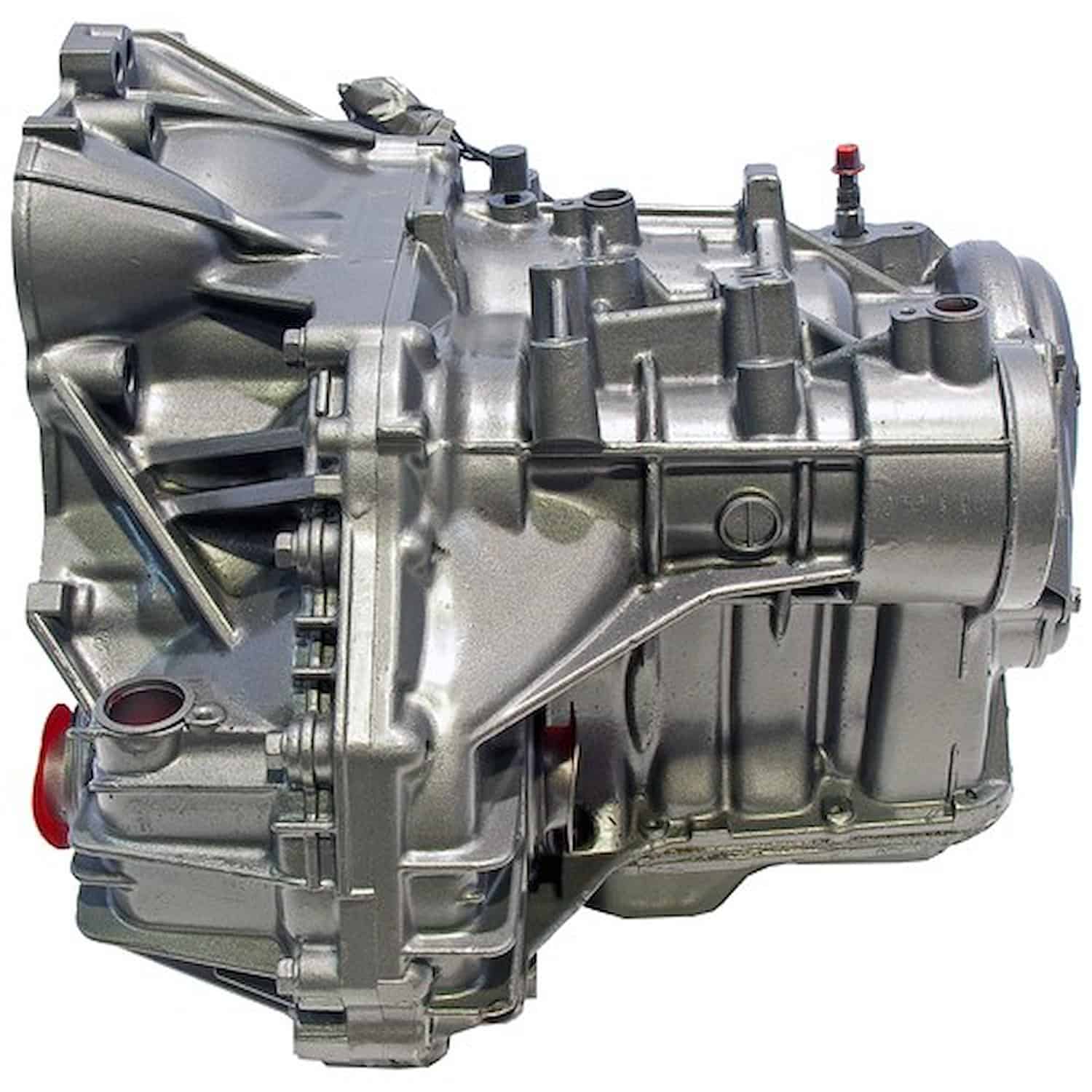
Toyota A760E 6-Speed Automatic Transmission: Reliability and Failure Analysis
The Toyota A760E is one of those transmissions that looks simple enough on paper, then you get inside one, drive one with a real complaint, tear one down after a hot-slip failure, and realize Toyota tightened everything up compared with the older 5-speed stuff. More control. More precision. Less forgiveness. That’s the whole personality of this tranny.
It was built as a longitudinal 6-speed automatic for rear-wheel-drive applications, and the point was never just “add another gear.” That’s the lazy way to describe it. The real move was better ratio spread, better fuel efficiency, more lockup control, finer shift scheduling, better use of engine torque, and a cleaner hydraulic strategy when everything is working like it should. When it is. Big difference there.
In rebuild shops, I’ve seen dozens of these. Most of them were not grenaded in some spectacular way. They weren’t lunching gears and spitting metal through the pan like an abused performance unit. Usually it’s slower than that. Pressure loss. Valve body wear. Converter clutch instability. Dirty fluid. Bad fluid level. Somebody ignored a small symptom until it wasn’t small anymore. Same old story. Different gearbox.
This unit can be very good. It really can. Clean shifts, solid ratio use, good converter behavior, decent durability when the fluid stays suitable and the hydraulic side stays tight. But once wear starts in the valve body or the pressure-control side gets sloppy, this transmission system can turn from “pretty refined” into “why is this thing acting weird only when it’s hot?” real fast. That’s how a lot of A760E complaints start. Not with a bang. With a shrug.
And that’s why this unit matters to techs, advanced DIY owners, used buyers, fleet people, anybody dealing with one. The A760E doesn’t always hide its problems forever. It whispers first. Then it gets expensive.
Technical Specifications & Identification
The A760E is a longitudinal 6-speed electronically controlled automatic in Toyota’s A760 family. Rear-wheel drive only. The related A760F is the 4WD version, while selected all-wheel-drive Lexus applications use the related A760H. That distinction matters because too many people act like the family code is close enough. It isn’t. Close enough is how wrong parts get ordered, wrong assumptions get made, and a decent repair turns into a comeback.
It uses Toyota Genuine ATF WS. That part is not optional. Not “similar fluid.” Not universal fluid with some nice label slapped on the bottle. WS. Toyota specifically warns against mixing WS with older T-IV or DEXRON-type fluids. I still see people get lazy here. Bad idea.
| Specification | Data |
|---|---|
| Transmission code | A760E |
| Configuration | Longitudinal electronically controlled automatic |
| Drive layout | Rear-wheel drive |
| Gear count | 6 forward speeds |
| OEM fluid | Toyota Genuine ATF WS |
| Reviewed Tundra total fluid capacity | 11.6–12.3 US Quarts (11.1–11.6 Liters), depending on towing-package cooler configuration |
| Capacity variation | Depends on vehicle, converter, cooler hardware, and application; verify the exact repair manual |
| Torque rating | Not officially published by Toyota in standard service literature |
Gear Ratios
| Gear | Ratio |
|---|---|
| 1st | 3.520:1 |
| 2nd | 2.042:1 |
| 3rd | 1.400:1 |
| 4th | 1.000:1 |
| 5th | 0.716:1 |
| 6th | 0.586:1 |
| Reverse | 3.224:1 |
The ratio spread tells you a lot about what Toyota was doing here. First is low enough to get the mass moving without making the converter do all the ugly work, and the upper gears are stacked to keep cruise RPM down while still letting the lockup strategy do its thing. Good design. Tight design. Also less tolerant when the pressure side goes soft, because the apply timing has less room to be sloppy.
Identification on the bench still matters. Pan shape, case casting, connector layout, serial tag, application cross-check. Don’t guess. In my experience, the guys who guess on Toyota and Lexus transmissions are the same guys who later call the parts supplier angry because the solenoid arrangement or pan kit doesn’t match what they “thought it was.” Thought is cheap.
Selected Vehicle Applications & Platform Coverage
The following are selected applications rather than a complete global fitment list. A760E identifies the rear-wheel-drive version. Related AWD and 4WD configurations may use A760H or A760F, while other engines in the same vehicle can use a different transmission family entirely. Verify the code by drivetrain, engine, production date, VIN, and transmission serial number.
- Lexus IS 350 Gen 2 2006–2013, selected RWD configurations
- Lexus IS 350C 2010–2013, selected RWD configurations
- Lexus GS 350 Gen 3 2007–2011, selected RWD configurations
- Lexus GS 350 Gen 4, selected 2013 RWD configurations
- Toyota Tundra Gen 2 2010–2014, selected 4.6L 1UR-FE 2WD configurations
- Toyota Sequoia Gen 2 2010–2014, selected 4.6L 1UR-FE 2WD configurations
Do not assume that every IS 350 or GS 350 uses A760E. AWD versions may use A760H. Do not assume that every Tundra or Sequoia uses A760E either. The 4.6L 2WD application is the relevant one in the reviewed coverage, while 4WD versions use A760F and many 5.7L vehicles use the AB60 family.
Mechanical Architecture & Design Philosophy
This gearbox uses front, center, and rear planetary gearsets tied together through multiple clutch packs, brake elements, one-way clutches, and a converter-fed hydraulic system that depends on pressure being right, not close. That’s one of the biggest differences between a unit that survives and a unit that slowly cooks itself.
In the reviewed Tundra A760E configuration, the planetary gear unit uses three planetary gearsets, four clutches, four brakes, and four one-way clutches. The clutch stack arrangement is not flimsy. You’ve got real friction capacity here, enough area to handle the intended torque load, and enough control authority in the hydraulic side to make the transmission feel cleaner than the older truck automatics when it’s healthy.
That’s the good side. The bad side is that once the hydraulic side starts leaking internally, or the control valves wear enough to smear the apply events, those friction plates stop living the life they were designed for. Then the paper tells on everybody.
The oil pump is driven by the torque converter and feeds the whole transmission system—line pressure, lubrication, cooler flow, and clutch-apply circuits. No pressure, no life. Sounds basic because it is basic, and people still miss it. They’ll chase a random shift complaint, swap a sensor, maybe do a drain and fill, maybe clear the code and send it, all while the actual problem is the unit can’t hold consistent pressure once the ATF gets hot and clearances start working against it. Seen that more times than I care to count.
The reviewed Tundra A760E configuration uses a 3-element, 1-step, 2-phase torque converter with lockup and a published stall torque ratio of 1.80. Converter specifications can vary by application, so do not assume the exact same converter characteristics for every Lexus and Toyota version using the A760E code.
That converter matters a lot more than owners think because converter behavior on this unit is tied straight into shift feel, heat, and clutch life. When the converter clutch starts acting up, the rest of the tranny doesn’t get a free pass. The whole thing can start carrying extra heat load.
Electronically, Toyota went ECM-based here. The ECM watches speed sensors, throttle and load inputs, ATF temperature, range position, and other operating data, then commands the valve body through a 9-solenoid arrangement. More control. More granularity. Also more chances for contamination, hydraulic wear, or electrical faults to make the system feel ridiculous.
Cooling hardware varies by application. In the reviewed Tundra setup, an ATF warmer is standard. Vehicles equipped with the towing package add an air-cooled ATF cooler and a transmission oil thermostat. Lexus IS and GS applications do not automatically share the same cooler layout, so identify the actual vehicle hardware before diagnosing flow or capacity.
That tells you Toyota treated temperature management as part of the system, not some afterthought. Ignore the cooler circuit after a serious internal failure and you may be setting up the next repair bill.
Normal Operation vs Failure Symptoms
A healthy A760E feels tight. That’s the word. Tight.
Not harsh. Not lazy. Not confused. Just tight. The shifts should be quick enough to feel controlled without giving you that neck-snap nonsense some people mistake for “strong.” Drive engagement should be prompt. Reverse should come in without a long delay. Converter lockup should be smooth, and under light-throttle cruise the unit should feel settled, not hunting around like it can’t make up its mind.
When the A760E starts going bad, the early symptoms are easy to dismiss because they don’t always look dramatic. Maybe there’s a slight delay into Drive first thing in the morning. Maybe the 2-3 feels a little stretched when it’s warm. Maybe a partial-lockup shudder shows up at light throttle and disappears if you tip in harder. Maybe the owner swears it only happens after twenty minutes on the freeway. That’s classic.
Heat is often the divider. Cold behavior can hide clearance-related leakage. Hot behavior can expose it. A unit that behaves normally cold but begins slipping, flaring, delaying engagement, or cycling the converter clutch as the ATF reaches normal operating temperature may have temperature-dependent hydraulic leakage, valve-body wear, solenoid-control trouble, converter damage, or several faults stacked together.
The temperature itself does not prove a failure. An ATF temperature around 180°F (82°C) can be within a normal operating range depending on the vehicle, load, and conditions. What matters diagnostically is whether the complaint appears or becomes materially worse as the transmission warms up.
Converter complaints on this unit get misdiagnosed all the time. The owner says it feels like a tire shake. Or a misfire. Or a driveshaft issue. Maybe. Sometimes. But on some A760E complaints, the converter clutch or lockup-control system is the one making the mess, and the rest of the vehicle gets blamed first because people don’t want to think transmission. I’ve seen that movie enough.
Electrical faults can show up before the driver feels severe operating changes. Sometimes that’s the best gift the transmission gives you. A temperature-sensor code. A pressure-control code. A shift-solenoid performance code. Handle it early and maybe you prevent secondary friction damage. Ignore it and keep driving, and poor control can turn into heat and wear.
Failure Analysis
The A760E usually doesn’t fail like a cartoon. It deteriorates. That’s more dangerous in a way, because people keep driving it.
One major service-bay failure path is hydraulic: valve-body wear, pressure loss, control drift, converter slip, and eventually friction-element distress. That does not mean Toyota published statistics proving that hydraulic wear causes most A760E failures. It means hydraulic integrity is one of the main areas that needs attention when a higher-mileage unit starts showing temperature-dependent shift complaints.
Once the pressure side starts slipping away from specification, clutch engagement gets lazy. Not always enough to feel like a big flare right away. Sometimes it’s just longer apply time. Longer apply time means more slip. More slip means more heat. More heat means the friction plates start shedding material, and now the oil is carrying friction dust and wear debris through the same valve body that was already struggling. Great setup for a bad ending.
Valve-body wear is an important diagnostic area on higher-mileage A760E units. Not because the design is garbage. Because the control strategy depends on crisp hydraulic response. Once regulator circuits, accumulator-control circuits, boost areas, brake-control circuits, or solenoid-feed circuits develop enough leakage, the shift personality can get messy. Some shifts harsh. Some soft. Some flare. Some bang.
Converter clutch failure isn’t always a full dramatic failure either. It can start as TCC cycling, partial shudder, light-throttle instability, rising fluid temperature, and a customer complaint that sounds vague until you actually drive it long enough. Then the pattern shows up.
A lot of shops don’t drive problem transmissions long enough. They move them around the lot, maybe go one block, scan for codes, then guess. That’s how good units get condemned and bad units get missed.
Internal clutch damage can come later in the chain. Once pressure control is unstable and converter behavior is sloppy, the friction plates start absorbing what should have been clean hydraulic control. They overheat. They glaze. They burn. On failed cores, you can often see the timeline. Darkened fluid. Debris in the pan. Fine particles first, then uglier material. The transmission was trying to tell somebody for a while.
Electrical faults matter too, but not because they’re always the initiating failure. A bad ATF-temperature signal can affect control strategy. A weak solenoid can make the valve body look worse than it is, or internal leakage can make the solenoid look worse than it is. That’s why you diagnose the whole system, not just the code description.
| Failure Type | Possible Root Cause | Typical Mileage | Notes |
|---|---|---|---|
| Clutch pack wear | Low hydraulic pressure, overheated ATF, delayed apply, or prolonged slip | Not published by Toyota | Usually progressive and often tied to an earlier hydraulic, sealing, converter, or control problem |
| Valve body wear | Hydraulic circuit wear, contamination, internal leakage, or valve-to-bore clearance loss | Not published by Toyota | Can create inconsistent shift timing and mixed hot/cold symptoms |
| Pressure-control fault | SLT control problem, regulator wear, restricted circuit, solenoid fault, or unstable line pressure | Not published by Toyota | Can cause soft shifts, harsh shifts, slip, delayed apply, or overheating |
| Converter clutch failure | Heat, converter wear, unstable lockup control, low pressure, or fluid contamination | Not published by Toyota | Can show up as shudder, cycling, or slip under light load |
| Electrical fault | Sensor, wiring, connector, ECU, or solenoid circuit failure | Not mileage-based | Can appear before major mechanical symptoms or alongside internal wear |
Failure Frequency — Service Bay Observation
Toyota does not publish A760E population-wide failure-frequency statistics. The classifications below are service-bay observations, not OEM reliability data.
| Failure Type | Service Bay Observation — Not OEM Frequency Data |
|---|---|
| Valve body wear | Frequently encountered in higher-mileage valve-body and rebuild work |
| Pressure-control issues | Regularly encountered during hydraulic and solenoid diagnosis |
| Converter problems | Encountered often enough to justify full converter and lockup-control diagnosis |
| Clutch pack failure | Regularly found after prolonged slip, pressure loss, or overheating |
| Hard-part failure | Reported less frequently than hydraulic and friction-element complaints in normal stock applications |
For used buyers, this matters because a transmission that still “drives okay” can already have a costly problem if the hot behavior is wrong. For shops, it matters because band-aid fixes get real expensive when the root issue is hydraulic wear and somebody just adds fluid or replaces one solenoid and hopes for the best.
Valve Body, Mechatronics & Solenoids
This is where the A760E earns or loses its reputation. The valve body is the brains-with-fluid part of the unit, and when it starts wearing, everything gets weird.
The A760E family uses a 9-solenoid layout: S1, S2, S3, S4, SR, SL1, SL2, SLT, and SLU. That gives the ECM a lot of control over shift timing, clutch engagement, lockup timing, line pressure, and the overall feel of the gearbox. Good when clean and hydraulically tight. Ugly when contaminated, worn, or electrically compromised.
Main wear zones discussed in transmission-industry technical material include regulator circuits, solenoid-modulator circuits, accumulator-control areas, boost circuits, brake-control circuits, and smaller leak paths that people underestimate until they’ve vacuum-tested a worn valve body and watched the numbers go soft.
That’s when the theory turns into shop reality. A few worn bores, some internal leakage, and suddenly the tranny acts like it has five different problems at once.
SLT matters because it participates in line-pressure control. When that part of the system goes off the rails, the rest of the transmission can stop making sense to the casual observer. Harsh one moment, lazy the next, converter unhappy, clutch engagement smeared, heat going up.
SLU is closely tied to torque-converter clutch control. Fair enough. But a converter-related DTC or shudder does not prove that the converter alone is the complete cause. Worn pressure-control hardware, valve-body leakage, incorrect fluid level, and internal clutch or converter damage can overlap.
S1, S2, S3, S4, SL1, SL2, SLT, and SLU circuits can all matter depending on the exact code and operating complaint. The important thing is not to diagnose by acronym alone. A solenoid code does not automatically mean “replace solenoid and go home.”
The valve body can create the complaint. The solenoid can create the complaint. Wiring can create the complaint. Fluid level can create the complaint. Internal leakage can create the complaint. Sometimes two or three at once. Welcome to modern automatics.
And yes, assembly quality matters a lot. Dirty rebuild work on an A760E valve body is asking for trouble. Contamination left in passages, questionable solenoids reused because someone wanted to save money, poor separator-plate handling, overlooked wear in critical circuits—it all comes back. This is not a unit that loves shortcuts.
Technical Service Bulletins
| TSB / SSM | Issue | Repair / Use | Affected Units |
|---|---|---|---|
| L-SB-0084-08 | Automatic transmission serial-number identification and location | Verify transmission serial number and model code before service or replacement work | Multiple Lexus automatic transmissions, including selected A760E and A760H applications |
| T-SB-0260-08 | Remanufactured automatic transmission serial-number location | Use the identification procedure to verify the correct remanufactured unit | Multiple Toyota transmissions, including selected Tundra and Sequoia A760E/A760F applications |
Those bulletins are not glamorous, but they matter. Identification matters. On these units, bad information and wrong parts create very real failures. Seen it too many times to pretend otherwise.
The fluid-level procedure also matters, but it must come from the exact Toyota or Lexus repair manual for the vehicle. A fluid-level bulletin written for another transmission family should not be used as proof of the A760E procedure.
Reliability by Production Year
People always want a clean year-by-year answer. Which years are bad. Which years are safe. I get it. But the A760E isn’t that neat, and the reviewed Toyota and Lexus material does not provide a population-wide reliability ranking by production year.
Application differences matter more than a simple calendar table. A Lexus RWD version may use different calibration, cooling hardware, converter specifications, and fluid-level temperature range than a Toyota truck application. AWD and 4WD versions may use A760H or A760F instead of A760E.
| Application Group | Documented Difference | Practical Meaning |
|---|---|---|
| Lexus RWD applications | A760E with model-specific calibration, converter setup, and overflow-level temperature procedure | Verify model, drivetrain, serial number, and ATF temperature window before service |
| Lexus AWD applications | Often use the related A760H rather than A760E | Do not order transmission parts by vehicle name alone |
| Tundra and Sequoia 4.6L applications | A760E for selected 2WD vehicles and A760F for selected 4WD vehicles | Fluid capacity and cooling hardware can depend on the towing package |
| All production periods | No OEM-supported “best year” or disaster-year ranking was identified | Condition, drivetrain, fluid level, service history, and previous repair quality matter more than an invented year score |
In my experience, give me a boring, well-maintained early unit over a later one with mystery service and “it only acts up sometimes.” A suspicious late unit is still a suspicious unit.
In 2026, age and previous service quality dominate the conversation. A clean history, correct fluid, proper level, normal hot operation, and no unexplained repairs matter more than whether the case was cast in one supposedly perfect year.
Fluid Level & Condition Check
No dipstick. And that alone has caused an absurd amount of bad service.
The A760E uses a temperature-based overflow procedure to set the fluid level. That means the transmission must be in the correct application-specific temperature window, the vehicle must be level, the engine and selector procedure must be followed, and the tech has to stop pretending that dumping back in whatever came out is precision service. It isn’t.
The correct temperature window is not universal across all A760E vehicles. Reviewed procedures include approximately 102–120°F (39–49°C) on one Lexus GS application and approximately 127–138°F (53–59°C) on a Tundra application. Other Toyota or Lexus applications may use a different range.
Use the exact repair manual. Do not average two procedures together and invent one temperature that feels close enough.
Too low a fluid level can reduce hydraulic stability, lubrication, and cooler flow. Too high a level can increase churning, foaming, and temperature. Both mistakes happen because people want this to be simpler than it is.
Fluid condition tells part of the story. Correct WS fluid supports the hydraulic and solenoid system the way Toyota designed it. Contaminated fluid can carry friction material, varnish, and wear debris through the valve body.
Dark fluid alone isn’t an automatic death sentence. Burnt odor, substantial clutch material, visible metallic debris, or ugly pan contamination—that’s different. That’s evidence.
When I check one of these, I care about hot behavior and physical evidence more than I care about somebody saying “it was serviced recently.” Great. By whom. With what fluid. At what temperature. Using what process. “Recently” doesn’t mean much when the last service was cheap and sloppy.
Preventive Maintenance Program
This transmission likes correct fluid at the correct level. That’s the maintenance program in one sentence.
Toyota and Lexus maintenance guidance does not provide one universal replacement interval for every A760E application. Some Lexus material describes ATF WS as not requiring routine flushing or replacement during the vehicle’s normal service life and emphasizes inspection rather than scheduled exchange.
The more aggressive intervals below are independent service-bay recommendations for owners planning long-term use. They are not a universal Toyota or Lexus maintenance requirement.
In my experience, a 30,000–50,000 Miles (48,000–80,000 km) fluid service window can make sense depending on use. Heavy heat, towing, repeated city driving, aggressive load cycles, and uncertain history push me toward the shorter side. Light use with stable temperatures and clean operating history may justify a longer interval.
But fluid service is not a rebuild. It will not repair burnt clutches, damaged converter friction material, serious valve-body wear, or a failing pump.
Pan inspection matters when the history is unknown or internal damage is suspected. Cooler inspection matters. A contaminated cooler circuit after an internal failure can damage the replacement transmission too. If there was serious internal failure, the cooler system needs a model-specific contamination procedure, not a casual shrug.
The reviewed Toyota material describes a felt-type strainer as maintenance-free in normal service. That does not mean it should be ignored when the pan is removed for diagnosis, contamination assessment, or overhaul. It means there is no universal routine strainer-replacement interval for every owner.
| Service Item | Independent Preventive Strategy — Not a Universal OEM Schedule | Purpose |
|---|---|---|
| Fluid replacement | Consider every 30,000–50,000 Miles (48,000–80,000 km), adjusted for use, history, and the vehicle’s maintenance schedule | Maintain correct fluid condition and remove suspended contamination |
| Pan inspection | As needed on unknown-history vehicles or when symptoms and contamination justify removal | Check debris type, friction material, and internal wear evidence |
| Cooler and cooler-line inspection | At major transmission service and after any internal failure | Identify leakage, restriction, poor heat rejection, and contamination risk |
| Strainer inspection | When the pan is removed for diagnosis or overhaul | Evaluate restriction, damage, and contamination; no universal routine replacement interval is documented |
| Fluid level verification | Any time fluid service or transmission-related repair is performed | Prevent underfill or overfill-related operating problems |
Ownership Cost Estimates
Costs vary by vehicle, region, labor rate, parts source, diagnostic depth, and whether transmission removal is already included in another repair. The figures below are broad industry estimates, and parts-versus-labor scope varies.
| Repair Scenario | Broad Industry Cost Range | Comment |
|---|---|---|
| Correct WS fluid service with temperature-based level adjustment | USD $200–$400 | Depends on fluid quantity, local labor rate, and procedure complexity |
| Valve body diagnosis and repair | USD $700–$1,800 | Depends on wear, solenoids, testing, labor depth, and whether the valve body is salvageable |
| Torque converter replacement as part of major transmission work | USD $500–$1,000 additional parts and service cost | A standalone replacement costs more because the transmission must be removed |
| Complete rebuild | USD $3,000–$5,500 | Higher when converter, valve body, hard parts, or contamination cleanup add to the job |
| Replacement unit installed | USD $3,800–$6,500 | Depends on source quality, warranty, programming needs, fluid, and labor |
That price table is why early diagnosis matters. A proper fluid-level correction or contained valve-body repair is manageable. Once the clutches are burnt and the converter is contaminated, the number changes fast.
Diagnostic Trouble Codes Reference
The A760E gives you useful codes, but only if you read them like a tech and not like a parts-cannon operator.
A code is a clue. Not a sentence. P2714 does not automatically mean the whole transmission is dead. P2757 does not automatically mean slam a converter in it and call it done. P0705 does not automatically mean the range switch is the only thing wrong with the car. You still need to road-test it, watch temperature behavior, inspect the fluid, review freeze-frame data, and think.
Selected Application-Dependent Transmission DTCs
| DTC | Description | Possible Causes / Diagnostic Areas |
|---|---|---|
| P0705 | Transmission range sensor circuit fault | Range switch, adjustment, wiring, connector, power supply, or control input issue |
| P0711 | ATF temperature sensor performance fault | Temperature sensor, wiring fault, connector problem, implausible temperature change, or ECU input issue |
| P0748 | Pressure control solenoid electrical fault | SL1 circuit, wiring, connector, solenoid, or control-side electrical problem |
| P0751 | Shift solenoid performance fault | S1 stuck condition, hydraulic restriction, valve body fault, internal transmission fault, or electrical problem |
| P0756 | Shift solenoid performance fault | S2 stuck condition, hydraulic restriction, valve body fault, internal transmission fault, or electrical problem |
| P0761 | Shift solenoid performance fault | S3 stuck condition, hydraulic-control fault, internal transmission fault, or electrical problem |
| P0766 | Shift solenoid performance fault | S4 stuck condition, hydraulic-control fault, internal transmission fault, or electrical problem |
| P0776 | Pressure Control Solenoid B performance fault | SL2 stuck condition, restricted valve body circuit, hydraulic leakage, or internal transmission fault |
| P0778 | Pressure Control Solenoid B electrical fault | SL2 circuit, wiring, connector, solenoid, or control-side electrical problem |
| P0781 | 1–2 shift malfunction | Hydraulic apply problem, valve body fault, solenoid problem, pressure loss, or internal friction-element damage |
| P0894 | Transmission component slipping | Internal clutch slip, insufficient pressure, converter slip, overheating, or mechanical wear |
| P0973 | Shift solenoid control circuit low | S1 circuit short, wiring fault, connector problem, or solenoid fault |
| P0974 | Shift solenoid control circuit high | S1 circuit open, wiring fault, connector problem, or solenoid fault |
| P2714 | Pressure-control solenoid performance fault | SLT stuck condition, valve body restriction, regulator wear, hydraulic leakage, or internal transmission fault |
| P2716 | Pressure-control solenoid electrical fault | SLT circuit, wiring, connector, solenoid, or ECU control issue |
| P2757 | TCC pressure-control performance fault | SLU fault, restricted lockup circuit, low pressure, converter clutch damage, or internal hydraulic problem |
| P2759 | TCC pressure-control electrical fault | SLU circuit, wiring, connector, solenoid, or control-side electrical problem |
DTC availability and wording can vary by model year, market, and application. Use the repair manual for the exact vehicle rather than assuming every A760E stores the same complete list.
In practice, the codes need context. P2714 with ugly hot shifts and rising temperature trends, I start looking hard at line-pressure control, SLT operation, and valve-body leakage. P2757 with a light-throttle shudder and unstable converter behavior, now I’m thinking lockup control plus the rest of the hydraulic story. P0894 with burnt fluid and friction debris, well, that’s usually where the optimism starts dying.
Long-Term Upgrades & Reinforcements
The best upgrades for the A760E are not flashy. They’re reliability corrections. The boring stuff that actually works.
Valve-body restoration is a big one when wear is confirmed. Not some half-cleaned used valve body from a shelf, not some mystery reman with zero test data—real inspection and correction of worn circuits, plus proper evaluation of the solenoids. This is where the A760E either gets fixed properly or gets a band-aid fix.
Converter replacement or qualified remanufacturing matters on serious repairs. Reusing a questionable converter to save a few hundred dollars is cheap in the worst possible way. That old converter can carry contamination, weak lockup behavior, or thermal damage right back into the fresh build.
After internal failure, follow the application-specific contamination procedure. Flush serviceable cooler circuits using an approved method and replace coolers, thermostatic assemblies, or integrated cooler components that cannot be reliably cleaned. Do not assume every cooler can be saved by running solvent through it.
External cooling can help in heavy-use applications, towing duty, high ambient heat, and fleet work when the factory system is genuinely insufficient. Good move when done right. Not a cure-all. Installation must preserve proper flow, warm-up behavior, thermostat operation, and leak-free connections.
Software resets and initialization procedures after major work can matter, but only when the model-specific Toyota or Lexus repair procedure requires them. A reset does not repair a worn valve body or burnt clutch pack.
| Upgrade | Benefit | Use Case |
|---|---|---|
| Valve body inspection, rebuild, or restoration | Restores hydraulic control when bore wear or leakage is confirmed | Hot shift complaints, flare shifts, pressure-control codes, measured hydraulic wear |
| New or qualified remanufactured torque converter | Reduces contamination risk and restores lockup operation | Rebuilds, confirmed converter damage, shudder complaints, major internal repair |
| Application-specific cooler cleaning or replacement | Prevents repeat contamination and restores heat rejection | After internal failure, burnt-unit replacement, or confirmed restriction |
| Properly engineered external cooling support | Can improve thermal control under sustained severe load | Towing, fleet use, high ambient heat, or confirmed inadequate factory cooling |
| Required initialization, memory reset, or learning procedure | Restores correct control setup after covered component replacement | Only after repairs for which the exact Toyota or Lexus procedure requires it |
I’ll put it this way. New frictions alone don’t fix an A760E. If the hydraulic side is worn, if the converter is questionable, if the cooler is contaminated, if the valve body is tired, then the fancy rebuild kit is just expensive optimism.
FAQ (People Also Ask)
Is the A760E a reliable transmission?
Yes, generally. In my experience it’s a solid unit with precise control and good durability when it has the correct fluid level, suitable cooling, and no unresolved hydraulic or converter problems. It is less tolerant of sloppy service than some older automatics.
What is the most common A760E problem?
Toyota does not publish a single most-common failure statistic. In higher-mileage service work, valve-body wear, pressure-control complaints, and torque-converter clutch issues are important diagnostic areas.
What fluid does the A760E use?
Toyota Genuine ATF WS. Do not mix it with Toyota Type T-IV, DEXRON fluids, or unsupported universal substitutes.
How often should A760E fluid be serviced?
Toyota and Lexus do not provide one universal replacement interval for every A760E application. An independent service-bay strategy is approximately 30,000–50,000 Miles (48,000–80,000 km), adjusted for use, heat, towing, and ownership goals. This is not a universal factory schedule.
Can the A760E be rebuilt successfully?
Yes. It is rebuildable when the job is done correctly. Valve-body condition, converter condition, cooler cleanliness, correct WS fluid, application-specific level setting, and any required post-repair procedure all matter.
Does the A760E usually fail mechanically first?
Not necessarily. A major service-bay failure path begins with hydraulic leakage, pressure-control trouble, converter instability, or an electrical control fault, with mechanical friction damage developing later. Toyota does not publish statistics proving one universal sequence for every failure.
What does shudder mean on this transmission?
It may indicate torque-converter clutch instability, lockup-control trouble, pressure fluctuation, engine misfire, driveline vibration, or another operating problem. It needs diagnosis and should not be treated as automatic proof that the converter alone is bad.
Is a used A760E worth buying?
Only if the transmission code is verified, the history is credible, and hot operation is clean. A unit that feels fine for five minutes but begins flaring, shuddering, or delaying engagement once fully warm can be a very expensive gamble.
Engineering Verdict
The A760E is a good transmission. Sharp. Efficient. Strong enough for what it was designed to do. But it is not forgiving.
This tranny rewards correct WS fluid, application-specific level setting, good cooling, and proper diagnosis. It punishes neglect, unsupported fluid, sloppy valve-body work, incomplete contamination cleanup, and those classic owner statements like “it only does it once in a while.” Once in a while is how these often start.
From a Master Tech perspective, the big truth is simple. The A760E often gives warning signs before severe secondary damage develops. Shudder. Hot flare. Delayed engagement. Pressure-control codes. Strange lockup cycling. Pay attention early and the repair may remain limited to diagnosis, fluid-level correction, valve-body work, wiring, or converter-related service.
Wait too long and now you’re buying frictions, seals, labor, cooler work, converter work, and maybe hard parts too.
For used buyers, the best one is the boring one. Good records. Correct transmission code. Proper fluid. No hot complaints. No sketchy “recent service” with no details. For rebuilders, the job is straightforward but not forgiving: get the valve body right, get the converter right, get the cooler right, and get the fluid level right for the exact application.
Do that and this gearbox can run a long time. Miss it, and the bill gets ugly fast.


