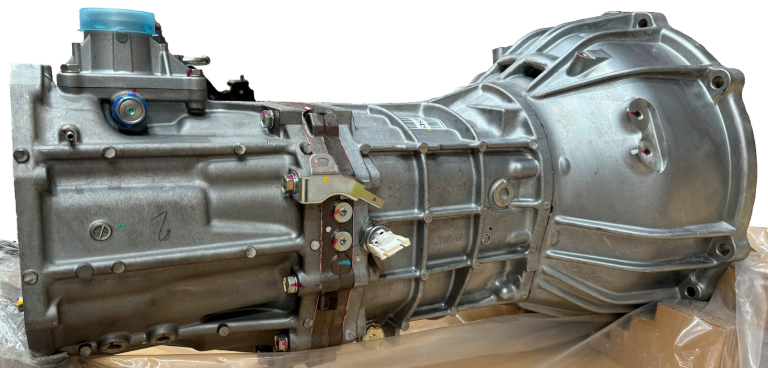
Toyota U151E 5-Speed Automatic Transmission: Reliability and Failure Analysis
The Toyota U151E is one of those transmissions that looks straightforward on paper and usually stays in the background when it is healthy.
Five forward gears. Electronically controlled hydraulic operation. Front-wheel-drive packaging. Toyota U150-series architecture. Nothing about that sounds especially fragile.
Problems begin when every shift complaint is blamed on old fluid or every pressure-control code is treated as proof of one failed solenoid.
A U151E can deteriorate through clutch slip, hydraulic leakage, converter distress, contamination, or continued operation with an incorrect fluid level. It can also develop a documented final-drive noise or an electrical and control problem that maintenance alone would not have prevented.
This is not a transmission that should be condemned from one harsh shift. It also should not be driven indefinitely with repeatable flare, delayed engagement, a strong burnt odor, or abnormal metal in the fluid.
Take care of it, identify the exact application, and diagnose the real fault. That is the personality of the U151E.
Technical Specifications & Identification
The U151E belongs to Toyota’s U150-series five-speed automatic transaxle family.
It uses planetary gear elements, friction clutches, brakes, one-way clutches, a lock-up torque converter, and electronically controlled hydraulic operation.
| Specification | Value |
|---|---|
| Transmission Code | U151E |
| Manufacturer / Family | Toyota U150-series / Aisin-related transaxle family |
| Transmission Type | Electronically controlled 5-speed automatic transaxle |
| Drive Layout | Front-wheel drive; related AWD applications may use a different transmission code |
| Gear Count | 5 forward speeds, 1 reverse |
| Control System | ECM-integrated Electronic Controlled Transmission operation on applicable vehicles |
| Torque Converter | Lock-up equipped |
| Fluid Type | Application-specific: earlier installations may specify Toyota ATF Type T-IV, while documented 2008–2013 Highlander U151E applications use Toyota ATF WS |
| Fluid Capacity | Vehicle- and service-operation dependent; dry fill, pan drain, converter work, and complete transaxle replacement require different quantities |
| Published Torque Rating | No single universal Toyota service-level input torque rating published for every U151E application |
Fluid identification is not a minor detail.
Toyota ATF WS and Type T-IV are not interchangeable. The correct specification must be confirmed through the VIN-specific Repair Manual, dipstick or fill-label information, model year, and transmission application.
Do not use a capacity copied from a different Camry, Highlander, Lexus, or U-series transmission as a refill target.
A routine drain does not remove all fluid from the torque converter, valve body, cooler circuit, and internal passages. Add the amount appropriate to the repair and then set the level through the correct vehicle-specific procedure.
Gear Ratios
Gear ratios and final-drive specifications vary with the exact U151E vehicle application.
| Item | Service Guidance |
|---|---|
| Forward Speeds | 5 |
| Reverse | 1 mechanical reverse range |
| Individual Gear Ratios | Use the Toyota or Lexus Repair Manual for the exact model, year, engine, and drivetrain |
| Final-Drive Ratio | Application-specific and not interchangeable across all U151E vehicles |
| Ratio DTC Diagnosis | Compare commanded gear, input speed, output speed, and model-specific specifications rather than using an unverified internet ratio table |
Publishing approximate ratios creates more risk than value. Incorrect figures can distort speed-data analysis and gear-ratio diagnosis.
Vehicle Applications & Platform Coverage
- Toyota Camry Gen XV30 — selected V6 configurations, primarily within later XV30 production; verify by VIN, engine, and transmission code
- Toyota Camry Solara Gen 2 2004–2008 — selected V6 front-wheel-drive configurations; four-cylinder versions use a different transmission
- Toyota Highlander — selected gasoline V6 configurations; U151E is officially documented in 2008–2013 service information, but exact application must be verified by VIN and drivetrain
- Lexus RX 330 2004–2006 — selected front-wheel-drive configurations; verify AWD applications and transmission code separately
- Lexus ES 330 Gen XV30 2004–2006 — verify by VIN and transmission identification
Not every vehicle within these model ranges uses the U151E.
Engine, front-wheel drive or all-wheel drive, production location, model year, and regional specification matter. Related U-series transmissions can look similar while using different parts, fluid specifications, final-drive ratios, and control strategies.
Always verify the transmission through:
- VIN-specific Toyota or Lexus parts information
- Transmission identification code
- Engine and drivetrain configuration
- Repair Manual application
- Existing part number when the unit has been replaced previously
Mechanical Architecture & Design Philosophy
This tranny reflects familiar Toyota engineering from the period: established mechanical architecture combined with electronic control intended to improve shift quality and fuel economy.
Inside, the U151E uses multiple planetary elements, clutch packs, brake elements, and one-way clutches to manage torque flow.
Main internal and control areas include:
- Forward and direct clutch assemblies
- Underdrive and overdrive-related elements
- Brake assemblies used to hold planetary members
- One-way clutches used during selected operating states
- Planetary geartrain and final-drive components
- Torque converter and lock-up clutch
- Oil pump, main control valve body, and pressure-regulation circuits
The oil pump is driven mechanically and supplies hydraulic flow. Actual line pressure is then regulated according to load, throttle input, selected range, commanded clutch operation, temperature, and internal leakage.
Low pressure at hot idle is not an inherent U151E characteristic. It may indicate an incorrect fluid level, worn pump, regulator leakage, valve body wear, seal leakage, or another hydraulic problem.
The torque converter lock-up clutch reduces converter slip during suitable driving conditions.
Possible converter-related symptoms include:
- Shudder under light cruise
- Repeated lock and unlock cycling
- Engine-speed fluctuation
- Lock-up circuit DTCs
- Burnt fluid or converter friction material
Those symptoms can overlap with engine misfire, ignition, fuel-control, mount, axle, and driveline complaints. Diagnosis should not begin with automatic converter replacement.
Transmission operation is integrated with ECM data. Incorrect throttle, speed, temperature, engine-load, or electrical input can affect shift scheduling and pressure command.
The mechanical design is generally durable, but no five-speed automatic is immune to incorrect fluid, low level, internal leakage, contaminated cooling circuits, or continued clutch slip.
Normal Operation vs Failure Symptoms
A healthy U151E should not draw attention.
Shifts should be controlled and consistent. Some shift feel varies with temperature, throttle input, adaptive values, vehicle load, and calibration.
| Condition | Normal Behavior | Possible Failure Symptom |
|---|---|---|
| 1–2 Shift | Controlled shift without prolonged flare | Delay, RPM flare, harsh catch, or repeated slip |
| 2–3 Shift | Smooth clutch handoff | Flare, impact, bind, or inconsistent engagement |
| 3–4 / 4–5 | Stable upshift under steady throttle | Hunting, hesitation, flare, or refusal to enter the commanded range |
| Drive Engagement | Prompt and controlled engagement | Extended delay, engine flare before engagement, or strong bump |
| Converter Lock-Up | Smooth application without sustained shudder | Shudder, cycling RPM, or lock-up-related DTC |
| Hot Operation | Consistent operation after warm-up | Symptoms that become repeatable or significantly worse as ATF temperature rises |
Hot operation can expose marginal hydraulic sealing because fluid viscosity changes with temperature.
Symptoms that worsen hot can support investigation of:
- Internal hydraulic leakage
- Incorrect fluid level or type
- Valve body wear
- Solenoid response
- Worn clutch seals
- Converter clutch distress
- Friction-element damage
- Electrical resistance or sensor problems
Temperature response alone does not identify one worn valve, seal, or solenoid.
Failure Analysis
Some U151E failures progress through hydraulic leakage, clutch slip, heat, and friction damage. Other complaints come from final-drive noise, electrical control, calibration, fluid identity, or component-specific wear.
The available Toyota service information does not support one universal mileage at which the valve body, converter, pump, or clutch packs fail.
Documented and Possible Repair Areas
| Repair or Diagnostic Area | Evidence Status | Notes |
|---|---|---|
| Final-drive whine on applicable Highlander vehicles | Officially documented | T-SB-0097-13 covers a whine above 35 mph on qualifying 2008–2013 Highlander vehicles |
| Valve body or hydraulic leakage | Condition dependent | Requires pressure, scan-data, fluid-level, electrical, and circuit diagnosis |
| Torque converter clutch concern | Condition dependent | Shudder or DTC does not identify one universal failed part |
| Clutch, piston, or seal wear | Condition dependent | Requires hydraulic or mechanical confirmation |
| Incorrect ATF specification or level | Service-related risk | T-IV and WS must not be treated as interchangeable |
| Hard-part or final-drive damage | Condition dependent | Abnormal noise, large metal particles, and measured damage carry more weight than fluid color alone |
Progressive Hydraulic and Friction Damage
A possible failure chain looks like this:
- Internal leakage or control problem reduces effective clutch pressure
- Clutch application becomes slow or unstable
- Slip creates heat
- Friction material and fluid deteriorate
- Contamination affects more hydraulic and mechanical components
Engineering inference: This is a mechanically credible progression, but it is not the cause of every U151E complaint.
A final-drive whine, electrical solenoid circuit fault, incorrect ECM input, wrong ATF, or damaged converter may follow a different path.
Service and Diagnostic Areas
| Area | Diagnostic Importance | Population Data |
|---|---|---|
| Clutch and seal condition | Important when flare, burnt odor, or friction debris is present | No official universal failure frequency published |
| Valve body and pressure regulation | Important with delayed engagement, pressure-control DTCs, or hot deterioration | No evidence that it is always the first U151E failure |
| Torque converter | Important with lock-up shudder, RPM cycling, or related DTCs | No official typical-failure mileage published |
| Pump and hydraulic supply | Evaluate through pressure and flow-related diagnosis where required | No defensible High/Moderate/Low population ranking available |
| Final-drive assembly | Central to the documented Highlander whine condition | Production-specific bulletin evidence available |
This unit can deteriorate progressively, but it is inaccurate to claim that it never experiences a discrete electrical, control, converter, or hard-part failure.
Valve Body, Mechatronics & Solenoids
The valve body is an important diagnostic area. Toyota does not publish evidence that it is the first or most frequent U151E failure across every application.
The main control manages:
- Line-pressure regulation
- Clutch and brake feed circuits
- Shift timing
- Torque converter clutch operation
- Lubrication routing
- Hydraulic compensation
The U151E uses multiple linear and on/off solenoids. Their exact names, connector terminals, resistance values, and circuit assignments must come from the Repair Manual for the exact model.
Do not copy a solenoid list from another U-series transmission and assume it applies unchanged.
Possible valve body and control concerns include:
- Valve or bore wear
- Sticking valves
- Internal leakage
- Solenoid electrical faults
- Solenoid performance outside the commanded range
- Separator plate or gasket damage
- Contamination after clutch or hard-part failure
Replacing one solenoid may correct a confirmed electrical or mechanical solenoid fault.
It will not repair a worn hydraulic bore, damaged separator plate, leaking clutch circuit, burned friction element, or incorrect ATF.
Technical Service Bulletins
| TSB | Issue | Repair | Affected Units |
|---|---|---|---|
| T-SB-0097-13 | Whine from the final-drive gear assembly above 35 mph | Confirm the noise and ATF level, repeat the road test after any level correction, install the specified 1.75-ounce console weight, and replace the transaxle when the bulletin applies | 2008–2013 Highlander vehicles within the stated production coverage |
T-SB-0097-13 applies to all 2008–2013 Japan-built Highlander vehicles and to North American-built vehicles produced before the listed production-change VINs.
The diagnostic sequence matters:
- Road-test the vehicle at operating temperature
- Confirm that the whine comes from the transaxle area above 35 mph
- Check the ATF level
- If the level was adjusted, repeat the road test
- If the noise remains and the bulletin applies, continue the published repair
- Replace the transaxle assembly
The console-weight step is part of Toyota’s complete procedure and should not be interpreted as a substitute for replacing a transaxle with the confirmed final-drive condition.
Older application-specific calibration updates may exist for selected Toyota vehicles, but the exact bulletin number, calibration ID, symptom, and production coverage must be verified through Toyota TIS before publication or repair.
Reliability by Production Year
Toyota does not publish a population-level good-year versus bad-year rating for the U151E.
| Production Period or Application | Documented Information | Limits of the Evidence |
|---|---|---|
| Earlier Camry, Solara, ES, and RX applications | Exact U151E fitment, fluid specification, calibration, and final-drive setup vary by vehicle | No universal Toyota reliability grade is available |
| 2008–2013 Highlander within T-SB-0097-13 coverage | Final-drive whine above 35 mph may require transaxle replacement | Does not mean every Highlander U151E develops the noise |
| North American Highlander production after the listed VIN changes | Toyota identifies a production change for the documented whine condition | Does not prove that every later transmission is free from unrelated faults |
| All U151E periods | Service history, fluid identity, level, symptoms, DTCs, and vehicle application remain central | Model year alone does not identify the failed component |
Calling the entire 2008–2013 period “stable” would ignore Toyota’s final-drive bulletin.
Calling all earlier units good or mixed would also imply reliability data that Toyota did not publish.
Fluid Level & Condition Check
Many U151E applications use a service dipstick, but the exact checking procedure and fluid specification must be confirmed for the vehicle.
Check the level:
- On level ground
- At the temperature specified by the Repair Manual
- With the engine and selector in the required operating state
- After cycling the selector through the specified ranges
- Using the correct dipstick markings and ATF specification
A red fluid color does not automatically prove that the correct fluid was installed. T-IV and WS must be identified by specification, not appearance.
| Finding | Interpretation |
|---|---|
| Fluid identity confirmed and condition consistent with service history | Positive evidence, but not proof that every hydraulic circuit is healthy |
| Darkened fluid | May reflect age or heat exposure; evaluate with odor, symptoms, and debris |
| Strong burnt odor | Raises concern for sustained heat, converter distress, or friction slip |
| Fine magnetic paste | Interpret according to amount, mileage, symptoms, and Toyota inspection guidance |
| Abnormal metal, chips, or flakes | Supports inspection for bearings, final-drive components, hubs, planetary parts, or other hard-part damage |
Fluid condition is evidence. It does not identify the failed component by itself.
Preventive Maintenance Program
Toyota maintenance guidance varies by model, fluid specification, market, and operating conditions.
The table below is an independent long-term ownership approach rather than one universal Toyota U151E schedule.
| Service | Interval or Trigger | Notes |
|---|---|---|
| ATF level and leak inspection | During routine service and whenever shift behavior changes | Verify the correct T-IV or WS specification before adding fluid |
| Drain and refill | Approximately 40,000–60,000 Miles (64,000–96,000 km) as an independent severe-use or long-term ownership strategy | Not a universal Toyota interval |
| Pan and strainer service | Condition-based or during applicable repair | The internal strainer is not a routine external “filter check” |
| Cooling circuit inspection | Whenever overheating, leakage, contamination, or major transmission repair occurs | Inspect cooler lines, heat exchanger, hoses, airflow, and restrictions |
| Calibration and learned-value procedure | After applicable programming, valve body work, or transaxle replacement | Follow Toyota’s exact initialization or reset procedure |
For ATF WS-equipped vehicles, Toyota’s published guidance calls for inspection at the scheduled interval rather than generic flushing.
Toyota also states that WS is not compatible with T-IV, should not be reused, and should not be mixed with unapproved substitutes or additives.
An owner may choose a shorter preventive drain-and-fill interval for towing, heat, stop-and-go use, or long-term ownership. That choice should be described as independent maintenance rather than a Toyota requirement.
Fresh ATF cannot repair burned clutches, a damaged final drive, a worn valve body circuit, or a failed torque converter.
Diagnostic Trouble Codes Reference
DTCs identify monitored electrical circuits or operating conditions. They do not always name the failed physical component.
Transmission Diagnostic Codes
| DTC | Monitor Area | Diagnostic Direction |
|---|---|---|
| P0743 | Torque converter clutch solenoid circuit electrical | Check the model-specific Toyota solenoid designation, wiring, connectors, resistance, ECM command, and lock-up hydraulic circuit |
| P0746 | Pressure-control solenoid performance or stuck condition | Evaluate electrical command, valve body operation, hydraulic response, ATF level, fluid identity, and internal leakage |
| P0748 | Pressure-control solenoid electrical circuit | Check wiring, connector condition, solenoid resistance, power supply, and ECM before replacing hydraulic components |
| P2714 | Pressure-control solenoid performance or stuck condition | Do not assume one failed solenoid; follow the model-specific Toyota diagnostic tree |
| P2716 | Pressure-control solenoid electrical circuit | Test the complete electrical circuit before replacing the solenoid or valve body |
A performance or stuck code may be caused by:
- Solenoid electrical or mechanical failure
- Valve body leakage
- Sticking hydraulic valve
- Incorrect fluid level or specification
- Damaged clutch circuit
- Internal seal leakage
- ECM or wiring problem
Save freeze-frame data, commanded gear, input and output speed, ATF temperature, and relevant learned values before clearing codes.
Long-Term Repair and Rebuild Considerations
There is no universal performance package that every U151E needs.
A proper rebuild or replacement job begins with exact identification and failure analysis.
- Confirm the transmission code and application
- Confirm whether the vehicle requires T-IV or WS
- Measure clutch clearances and inspect seals, pistons, steels, and frictions
- Inspect the valve body and pressure-regulation circuits
- Test solenoids rather than replacing them by code description alone
- Inspect the torque converter and replace or remanufacture it when damage is confirmed
- Inspect bearings, planetary components, and the final-drive assembly
- Clean or replace the cooler circuit when abnormal debris is present
- Use alignment pins and correct installation procedures
- Adjust the shift cable and complete required initialization or learned-value procedures
| Repair Area | Potential Benefit | Limits |
|---|---|---|
| Quality friction and seal kit | Restores damaged clutch elements when installed with correct clearances | Does not correct a worn valve body or damaged final drive |
| Measured valve body repair | Restores pressure integrity where hydraulic wear is confirmed | Should not be performed from assumption alone |
| Torque converter replacement or proper remanufacturing | Addresses confirmed lock-up or contamination problems | Does not repair internal transaxle clutch or gear damage |
| Cooler circuit cleaning or replacement | Prevents confirmed debris from returning to the repaired unit | Must follow Toyota and component-supplier procedures |
“Better clutch materials” alone do not guarantee longer life. Pressure control, clearances, cooling, converter condition, calibration, and assembly cleanliness all matter.
FAQ (People Also Ask)
Is the Toyota U151E reliable?
It can provide a long service life, but there is no Toyota population study giving one guaranteed reliability figure. Exact application, fluid specification, service history, operating conditions, and known production concerns matter.
What commonly damages a U151E?
Possible causes include incorrect or low ATF, hydraulic leakage, continued clutch slip, converter distress, valve body problems, contamination, and hard-part wear.
The officially documented Highlander final-drive whine is a separate production-related condition.
Can the U151E be rebuilt?
Yes. A successful rebuild must address the actual failure, valve body condition, torque converter, cooler contamination, clutch clearances, and final-drive components.
How long does a U151E last?
There is no guaranteed mileage. Some units reach high mileage, while others fail earlier because of application-specific defects, incorrect fluid, leakage, overheating, converter problems, or internal wear.
How much does U151E repair cost?
Industry Estimate: A broad U.S. rebuild or replacement range reviewed in 2026 is approximately USD $2,500–$4,500 or more.
Actual cost depends on the vehicle, region, torque converter, valve body, final-drive damage, parts source, and warranty coverage.
Can a fluid change fix slipping?
It may improve a complaint caused by incorrect level or degraded fluid behavior.
It cannot restore burned friction material, repair a damaged final drive, seal a worn hydraulic circuit, or correct an electrical fault.
Engineering Verdict
The U151E is a capable five-speed Toyota transaxle. It is not indestructible, and it is not accurately described as a transmission that fails only because the owner neglected fluid service.
The strongest official evidence in this guide is specific:
- Selected 2008–2013 Highlander vehicles can develop a final-drive whine above 35 mph
- The Toyota procedure begins with noise confirmation and ATF-level verification
- Qualifying vehicles receive a transaxle replacement under the bulletin repair path
- Those documented Highlander units use Toyota ATF WS
Other U151E complaints still require normal diagnosis of:
- ATF identity and level
- Valve body and pressure regulation
- Solenoid electrical circuits
- Torque converter clutch operation
- Clutch and seal condition
- Planetary and final-drive components
- ECM inputs and calibration
For technicians:
- Identify the exact transmission before ordering parts
- Do not mix T-IV and WS guidance
- Do not treat a DTC as a one-part diagnosis
- Confirm T-SB-0097-13 production coverage before applying it
- Save scan data before clearing codes
- Inspect the cooler circuit after internal failure
For owners:
- Verify which ATF the vehicle requires
- Do not ignore repeatable flare, delayed engagement, converter shudder, or abnormal noise
- Do not assume a fluid service can repair confirmed mechanical damage
- Check bulletin and warranty eligibility before approving a major repair
This tranny responds well to accurate service.
It responds badly to wrong fluid, parts swapping, and diagnosis based only on one symptom.