Hyundai-Kia D7UF1 7-Speed Dry Dual-Clutch Transmission: Reliability and Failure Analysis
Introduction
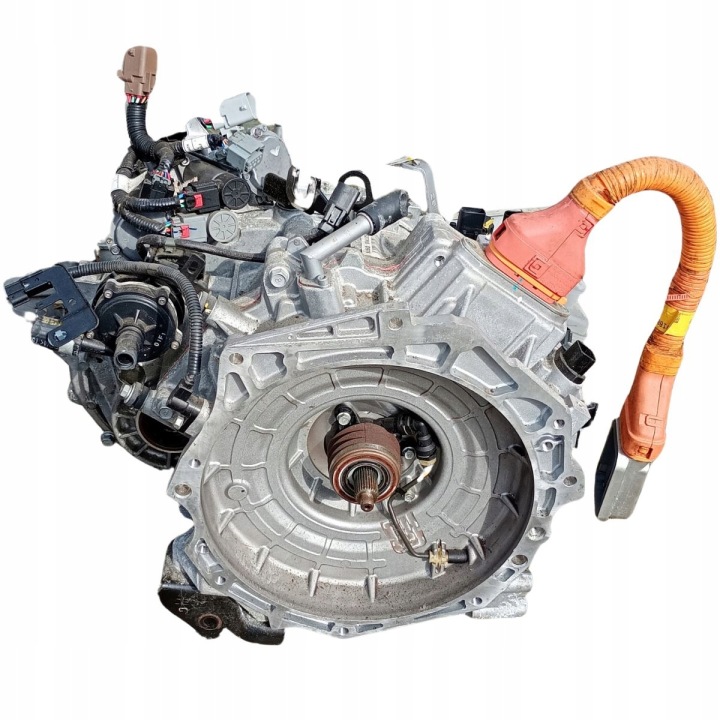
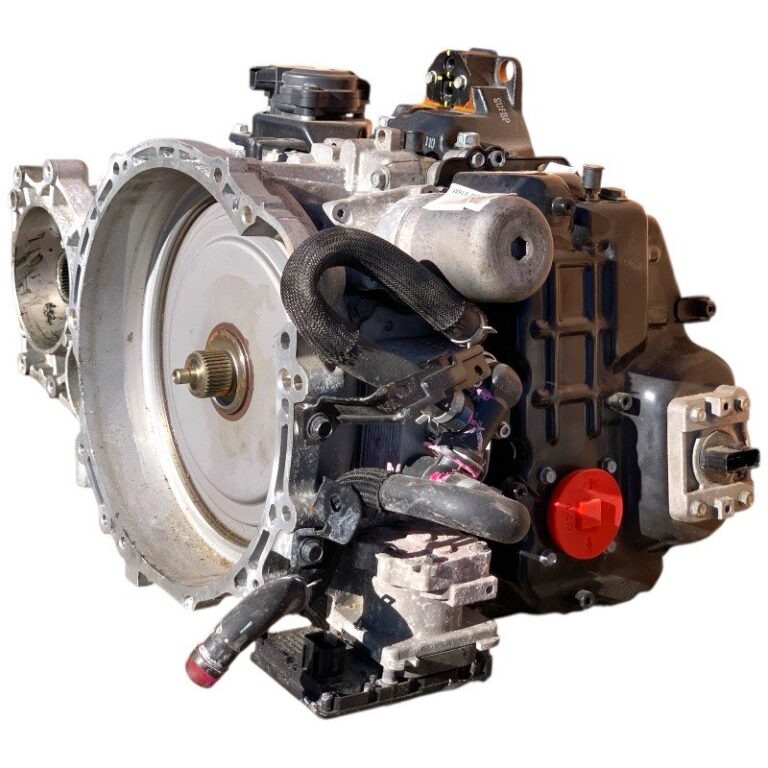
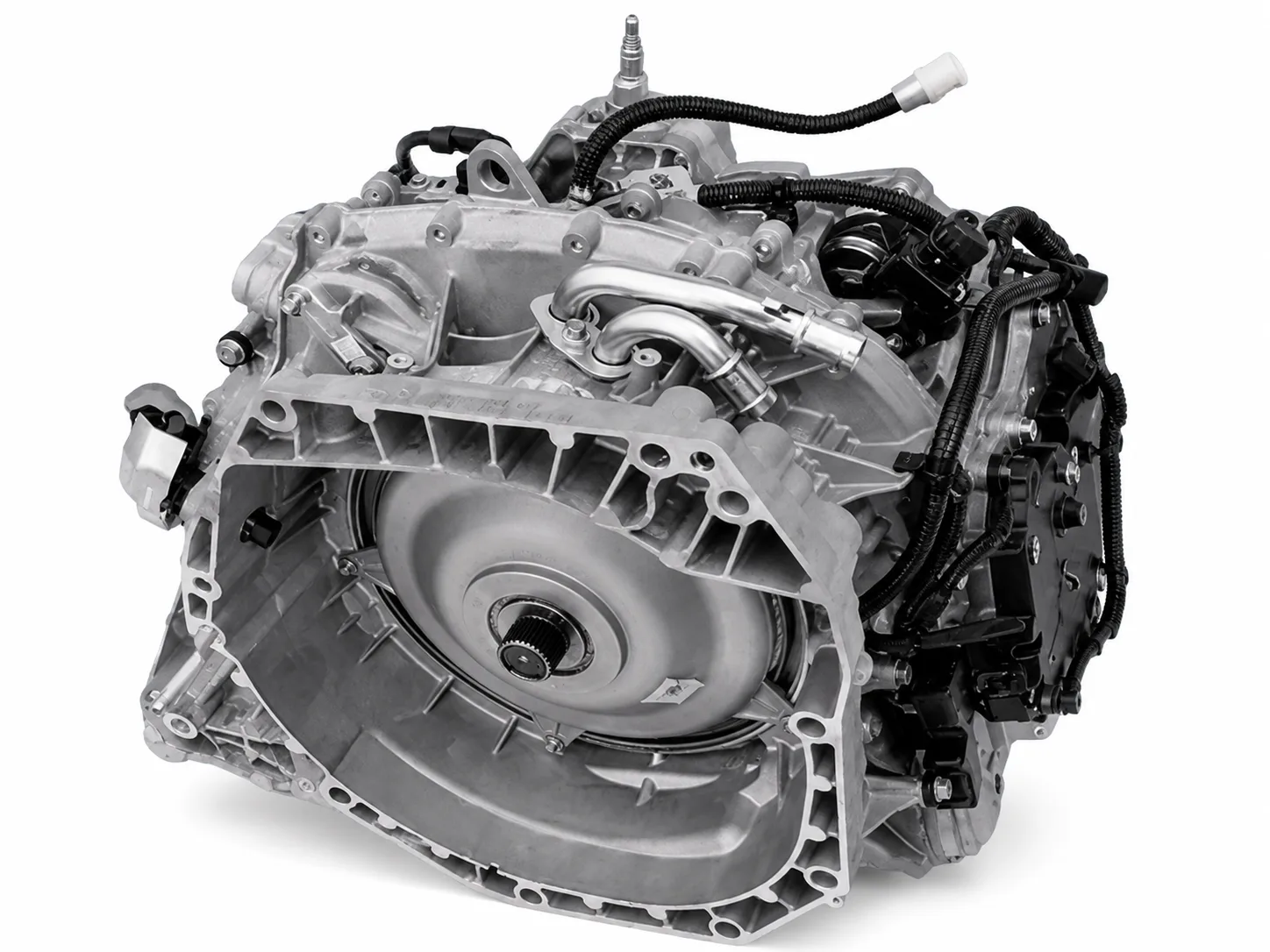
The Hyundai-Kia D7UF1 is a transverse seven-speed dry dual-clutch transmission developed for higher-torque Hyundai and Kia applications. Hyundai engineering material identifies the D7UF1 as the larger member of its dry 7DCT program, with a published maximum input-torque rating of 340 Nm. Unlike a conventional stepped automatic, it does not use a torque converter, planetary gearsets or a hydraulic valve body to perform shifts. Power flow is controlled through two dry clutches and an electromechanical gear-selection system.
The transmission appeared in Hyundai and Kia vehicles including the Sonata 1.6T, Tucson 1.6T, Kona 1.6T, Kia Optima 1.6T, Forte 1.6T and Soul 1.6T. Exact application must still be verified by model year, engine and transmission identification because Hyundai-Kia also used related seven-speed DCT variants.
The strongest service evidence for the D7UF1 concerns low-speed clutch judder, clutch and TCU service procedures, clutch-actuator adjustment, and a specific 2016 Hyundai Tucson recall involving TCM clutch-application logic. There is no defensible universal failure-mileage threshold or statistical failure rate for the transmission.
Transmission Identification
D7UF1
7-Speed Dry Dual-Clutch Transaxle
Dry dual-clutch transmission
7
Transverse transaxle; documented in 2WD and AWD applications
Electromechanical clutch and gear actuation
340 Nm maximum input torque
Hyundai Dymos
Technical Specifications & Identification
Hyundai’s engineering paper on the dry seven-speed DCT identifies the D7UF1 as the 340 Nm version of the design. The related D7GF1 was developed for a lower torque level and should not be treated as interchangeable with the D7UF1 simply because both belong to Hyundai’s seven-speed dry-DCT program.
The same engineering material states that mass production of the seven-speed DCT began in September 2014 at Hyundai Dymos in South Korea. Hyundai Motor Group’s later corporate history also places manual-transmission and DCT manufacturing with Hyundai Dymos before Hyundai Dymos and Hyundai Powertech were combined into Hyundai Transys in 2019.
This distinction matters because some secondary technical material attributes the D7UF1 to Hyundai Powertech. Hyundai’s own corporate and engineering information supports Hyundai Dymos as the original DCT production organization.
The D7UF1 uses two dry clutches. Hyundai lists an approximately 235 mm clutch for the odd-gear path and approximately 229 mm for the even-gear path. Clutch actuation is electromechanical rather than hydraulic, and clutch control is adaptive: the control strategy accounts for the relationship between actuator position and transmitted torque.
Gear ratios and final-drive ratios are application-specific. Hyundai documentation shows that different D7UF1 installations can use different ratio combinations, including differences associated with drivetrain configuration. A ratio set from one D7UF1-equipped model should therefore not be assumed to apply to another.
Vehicle Applications & Platform Coverage
The following applications have exact or cross-supported D7UF1 identification. The table is not intended as a complete worldwide application catalog.
| Vehicle | Model Years | Engine | D7UF1 Evidence |
|---|---|---|---|
| Hyundai Sonata LF/LFa | 2015–2019 | 1.6 T-GDI | Service documentation identifies D7UF1 with the 1.6T; Hyundai 7DCT service bulletin covers the corresponding application. |
| Hyundai Tucson TL | 2016–2018 | 1.6 T-GDI | Tucson service information identifies D7UF1, while Hyundai 7DCT documentation covers the 1.6T application. |
| Hyundai Kona OS | 2018–2021 | 1.6 T-GDI | Kona service information identifies D7UF1; Hyundai bulletin coverage confirms the relevant 7DCT application. |
| Kia Forte YDm | 2017–2018 | 1.6 GDI Turbo | Kia TRA085 explicitly lists D7UF1. |
| Kia Optima JFa | 2016–2020 | 1.6 GDI Turbo | Kia TRA085 explicitly lists D7UF1. |
| Kia Soul PS | 2017–2019 | 1.6 GDI Turbo | Kia TRA085 explicitly lists D7UF1. |
Identification Warning
Do not identify a D7UF1 from the presence of a seven-speed DCT alone. Hyundai and Kia used related 7DCT variants. Confirm the engine, model year and transmission identification before ordering clutches, actuators, internal parts or control components.
Mechanical Architecture
The D7UF1 is mechanically closer to an automated manual gearbox than to a conventional hydraulic automatic transmission. It uses fixed gear pairs, synchronizers, two power paths and two dry friction clutches. One clutch controls one input path while the second clutch controls the other, allowing the next ratio to be preselected before the active clutch is released and the alternate clutch is applied.
Hyundai’s engineering description places first, second, fourth and fifth gears on one output shaft, while third, sixth, seventh and reverse are located on the other. Some driving gears are shared: fourth and sixth share a driving gear, and second and reverse share another. This packaging reduces the overall size and number of individual gears required.
First, second and third gears use triple-cone synchronizers with carbon friction linings. Hyundai also describes needle-roller bearings for free-running gears, tapered-roller bearings at major shafts and the differential, and a roller bearing between the two input shafts.
Gear engagement is performed by electromechanical actuators. Electric shift motors perform gear movement, while selector solenoids are used in the gear-selection system. These solenoids should not be confused with the line-pressure, clutch-pressure or converter-clutch solenoids found in a conventional hydraulic automatic transmission.
Diagnostic Warning
The D7UF1 does not use the conventional hydraulic-control architecture of a planetary automatic. Diagnosing a D7UF1 complaint as a generic “valve-body problem,” “pressure-control solenoid problem” or torque-converter fault without identifying the actual DCT subsystem can lead to an incorrect repair path.
No Torque Converter or Conventional Valve Body
There is no conventional torque converter or torque-converter clutch. Launch from a stop is handled by controlled engagement of the dry clutch rather than torque multiplication through a fluid converter.
Likewise, no conventional hydraulic valve body, separator plate or line-pressure control system is part of the documented D7UF1 shift architecture. Targeted technical material does not establish a D7UF1-specific valve-bore wear mechanism or hydraulic pressure-regulator failure pattern. The relevant service systems are the dry clutch, clutch actuators, gear actuators, selector circuitry, TCU strategy, synchronizers and mechanical geartrain.
How the D7UF1 Controls Launch and Shifting
Dry-clutch control places greater importance on clutch adaptation and actuator position than a conventional torque-converter automatic. Hyundai’s engineering work describes adaptive clutch control based on the relationship between actuator stroke and clutch torque. Wear changes the mechanical relationship over time, and the control system must compensate for those changes.
This is why adjustment, calibration and relearn procedures are important after clutch or actuator work. A mechanical clutch-actuator setting that is out of specification can prevent the electronic learning procedure from completing correctly even when the replaced parts themselves are functional.
Kia TRA085 specifically addresses this on D7UF1-equipped Forte, Optima and Soul applications. The bulletin instructs technicians to adjust both clutch-actuator rods to 71.5–72.5 mm where applicable and then perform DCT learning.
OEM Documented · Kia TRA085
For the D7UF1 applications covered by TRA085, Kia specifies a clutch-actuator rod length of 71.5–72.5 mm. Mechanical adjustment is followed by the appropriate DCT learning procedure. An unsuccessful relearn after clutch or actuator service therefore should not automatically be interpreted as internal transmission failure.
Failure Analysis
The best-supported D7UF1 service concern is low-speed clutch judder. Other diagnostic possibilities exist, including gear-actuator, selector-supply and engagement faults, but the available evidence does not justify describing every possible DTC-related component as a recurring weak point.
| Condition | Symptoms | Supported Technical Basis | Verification / Repair Direction |
|---|---|---|---|
| Low-speed clutch judder | Repeatable vibration or shudder during low-speed launch or creep operation | Hyundai issued a dedicated judder inspection and TCU-update procedure and, where required, clutch replacement | Follow OEM judder test, verify calibration level, update TCU where applicable, retest and replace clutch only when bulletin criteria are met |
| Incorrect clutch-actuator adjustment | Poor engagement, poor post-repair operation or inability to complete DCT learning | Kia TRA085 specifies mechanical clutch-actuator rod adjustment for D7UF1 applications | Verify rod length and perform required DCT learning |
| 2016 Tucson TCM clutch-application logic condition | Delayed engagement and, under the recall conditions, failure to accelerate from a stop | NHTSA Recall 16V628 / Hyundai Campaign 149 | Confirm recall applicability and TCM software remedy |
| Gear referencing or engagement fault | Failure to reference or engage a commanded gear; possible loss of part of the gear range | D7UF1 diagnostic documentation includes gear-actuator and mechanical shift-system diagnostic areas | Use DTC-specific diagnostic procedure; do not assume a complete clutch or transmission failure from the code alone |
| Dual-mass flywheel deterioration | Possible rattling, banging or vibration | Industry technical guidance for D7GF1/D7UF1 calls for inspection of lateral movement, damper springs and drive teeth | Treat as an inspection point, not as a statistically established D7UF1 failure pattern |
Low-Speed Clutch Judder
Hyundai TSB 22-AT-007H addresses abnormal low-speed vibration or clutch judder on specific Hyundai seven-speed DCT applications, including Sonata 1.6T, Tucson 1.6T and Kona 1.6T models associated with the D7UF1.
The service path is important because it does not begin with automatic clutch replacement. Hyundai instructs technicians to evaluate the judder condition, apply the specified TCU software update where applicable and retest. If the condition remains within the bulletin’s replacement criteria after the update and inspection process, double-clutch replacement is then performed followed by the required learning procedure.
That distinction is useful for owners and technicians because a low-speed shudder does not automatically establish that the clutch assembly must be replaced. Calibration status is part of the OEM diagnostic path.
Diagnostic Path
Repeatable low-speed launch or creep judder
Dry clutch engagement / TCU clutch-control strategy
OEM judder test result, TCU calibration status, clutch condition and required learning procedure
Clutch Material Revision
TSB 22-AT-007H identifies a clutch-material change on specified earlier Sonata and Tucson applications. The bulletin references an earlier F833DS clutch and an updated F850 design. Kona applications covered by the bulletin used the F850 configuration from the start of production addressed by the document.
The revision is useful when evaluating previous repairs or identifying an installed clutch, but the presence of an updated part should not be converted into a claim that every earlier D7UF1 clutch was defective. The bulletin defines an OEM repair path for vehicles meeting its diagnostic criteria.
Clutch Actuator Adjustment and Failed Relearn
A D7UF1 that behaves poorly immediately after clutch or actuator work should not be condemned internally before mechanical adjustment and learning status are checked. Kia TRA085 provides a direct example: actuator rod length must be within the specified range before DCT learning is carried out.
This is a meaningful diagnostic distinction. A transmission that cannot complete adaptation because the clutch actuator was mechanically set incorrectly may require correction of the installation rather than replacement of the transmission assembly.
Dual-Mass Flywheel Inspection
Industry technical material covering D7GF1 and D7UF1 instructs technicians to inspect the dual-mass flywheel for excessive lateral movement, damaged or broken damper springs and worn drive teeth. A deteriorated flywheel can contribute to noise or vibration that may be mistaken for an internal DCT problem.
The available technical evidence supports the flywheel as a service inspection point, but it does not establish a verified mileage threshold or prove that dual-mass flywheel failure is a recurring D7UF1-specific defect.
Technical Service Bulletins
| Bulletin | Issue | Repair Direction | Affected Scope Relevant to D7UF1 |
|---|---|---|---|
| Hyundai 22-AT-007H | Low-speed DCT vibration / clutch judder | Judder inspection, TCU update, retest and double-clutch replacement when required, followed by learning | Specified Sonata LFa 1.6T, Tucson TL 1.6T and Kona OS 1.6T applications |
| Kia TRA085 | Clutch-actuator rod adjustment | Adjust both actuator rods to 71.5–72.5 mm and perform DCT learning | 2017–2018 Forte YDm 1.6T, 2016–2020 Optima JFa 1.6T, 2017–2019 Soul PS 1.6T; D7UF1 explicitly identified |
| Kia TRA083 | 7DCT judder | Judder inspection, double-clutch replacement where specified and TCU upgrade | Includes D7UF1-supported Kia applications, but the bulletin itself should not be used to identify every listed 7DCT vehicle as D7UF1 |
The bulletin history shows why D7UF1 diagnosis should separate software, adjustment and clutch-condition issues. Similar driver complaints can lead to very different repair scopes depending on whether the vehicle needs a calibration update, actuator adjustment or clutch replacement.
2016 Hyundai Tucson Recall
NHTSA Recall 16V628, Hyundai Campaign 149, applies to certain 2016 Hyundai Tucson vehicles equipped with the DCT. The recall documentation describes a TCM clutch-application logic condition that could occur under high ambient temperature and specific operating conditions.
The condition could cause delayed clutch engagement. If the accelerator was repeatedly cycled while the engagement delay was occurring, the vehicle could reach a state in which it would not accelerate from a stop. Hyundai’s remedy was TCM software reprogramming.
NHTSA Recall 16V628 · Hyundai Campaign 149
The recall covered certain 2016 Tucson DCT vehicles produced from May 20, 2015 through May 31, 2016. The remedy addressed TCM clutch-application logic through software reprogramming. Recall applicability should be confirmed by VIN rather than by model description alone.
The recall is particularly important during used-vehicle inspection because its failure mode is fundamentally different from worn clutch friction material or a failed gear actuator. A vehicle exhibiting the historical recall symptom should first have campaign completion and TCM software status checked.
Diagnostic Trouble Codes
D7UF1 diagnostic material includes fault codes relating to gear referencing, gear engagement and odd/even sensor-supply circuits. These codes are useful for identifying the diagnostic area, but their descriptions should not be interpreted as proof of a recurring component weakness.
| DTC | Description | Diagnostic Area |
|---|---|---|
| P192177 | Gear 2 System Referencing Failure | Gear Actuator 2 / mechanical gear-2 shift-direction system |
| P074B73 | Unable to Engage (Shift) Gear 3 | Gear-shift assembly, mechanical shift system and clutch-1 diagnostic path |
| P06B011 | Odd Sensor Supply Short to Ground | Odd-side sensor supply, gate-select actuator circuitry and associated wiring |
| P06B311 | Even Sensor Supply Short to Ground | Even-side sensor supply, gate-select actuator circuitry and associated wiring |
For example, an “unable to engage gear” code does not by itself prove that the corresponding clutch has mechanically failed. The D7UF1 has several layers between a TCU command and completed gear engagement: electrical supply, selector and shift actuators, mechanical selector movement, synchronization and clutch operation. The appropriate diagnostic tree should be followed before replacing the clutch or complete transmission.
Fluid & Service
D7UF1 gear oil is separate from the clutch friction system because the two clutches are dry. Application-specific Hyundai service information for the Sonata and Kona identifies API GL-4 SAE 70W gear oil and provides capacities around 1.9–2.0 liters depending on the application.
| Application | Fluid Specification | Published Quantity / Service Information |
|---|---|---|
| Hyundai Sonata D7UF1 application | API GL-4, SAE 70W approved DCT/MTF product | Approximately 1.9 L / 2.00 US qt in the referenced application |
| Hyundai Kona D7UF1 application | API GL-4, SAE 70W | Approximately 1.9–2.0 L |
Service Warning
Do not turn an application-specific capacity or maintenance schedule into a universal D7UF1 specification. Fluid quantity, service interval and maintenance requirements must be checked against the exact model, model year and market documentation.
Maintenance Intervals Are Application-Specific
A 2017 Hyundai Sonata maintenance schedule lists DCT-fluid inspection at 37,500 miles / 60,000 km / 30 months under the referenced normal schedule and replacement at 75,000 miles / 120,000 km under the listed severe-use schedule.
Kona service information provides a different schedule: inspection at 60,000 km / four years, with no normal replacement requirement shown in that referenced service schedule and a severe-use replacement interval of 120,000 km / 80,000 miles.
These differences are precisely why there is no defensible single “D7UF1 fluid-change interval.” Owners and technicians should use the schedule for the exact vehicle and market.
Repair and Rebuild Implications
D7UF1 repair decisions differ significantly from those for a conventional automatic transmission. There is no torque converter to replace and no traditional hydraulic valve body to rebuild. The principal service areas are the dry clutch assembly, clutch actuators, gear actuators and selector system, dual-mass flywheel, mechanical geartrain, synchronizers, TCU calibration and adaptation.
When a D7UF1 has been repaired previously, the quality of the completed learning procedure matters. Correct clutch installation without proper actuator adjustment and relearn can still produce poor operation. Conversely, a post-repair adaptation problem does not automatically mean that the newly installed clutch is defective.
Software history is also important. Hyundai’s judder and recall documentation shows that calibration can materially change the required repair path. A technician evaluating a used or previously repaired vehicle should determine whether applicable TCU updates and campaigns were completed before assuming that the remaining symptom is entirely mechanical.
No reliable repair-cost dataset was established for the D7UF1 research set, so fixed clutch-replacement, actuator-repair or complete-transmission replacement prices should not be treated as verified transmission-wide figures. Actual cost will vary substantially by vehicle, market and whether diagnosis identifies software, adjustment, clutch, actuator or internal mechanical work.
Used Vehicle Inspection
A D7UF1-equipped vehicle should be evaluated with particular attention to low-speed engagement quality, repair history and control-system status.
- Confirm the transmission code. Do not rely on “7-speed DCT” alone because Hyundai-Kia used related transmissions.
- Check low-speed launch repeatedly. Repeatable shudder or vibration during controlled launch deserves diagnosis under the relevant OEM procedure.
- Confirm TCU update history. This is especially important where Hyundai or Kia issued a judder-related update.
- Check recall completion on 2016 Tucson vehicles. Recall 16V628 / Campaign 149 should be verified by VIN.
- Review clutch-replacement history. Determine whether DCT learning and any required actuator adjustment were performed after the repair.
- Scan the TCU. Gear-reference, engagement and sensor-supply DTCs can materially change the diagnostic path even when the vehicle still drives.
- Listen for abnormal mechanical noise. Rattle, banging or vibration can justify inspection of the dual-mass flywheel as well as the clutch and transmission.
- Verify the correct lubricant. Use the specification and quantity for the exact application rather than a generic “DCT fluid” recommendation.
There is not enough verified evidence to assign the D7UF1 a universal “good mileage” or “bad mileage” threshold. Service history, calibration status, symptom reproducibility and the quality of prior clutch or actuator work are more defensible evaluation criteria.
Engineering Verdict
The D7UF1 is a technically distinct seven-speed dry DCT whose diagnosis depends on understanding its electromechanical architecture. Treating it like a conventional hydraulic automatic can lead directly to incorrect fault descriptions and unnecessary repairs.
Its most clearly supported service concern is low-speed clutch judder. Hyundai and Kia service information shows that diagnosis can involve software, clutch condition, mechanical actuator adjustment and relearn rather than one universal failure mechanism. The 2016 Tucson also has a specific TCM-related safety recall that should be separated from ordinary clutch-wear complaints.
For service or used-vehicle evaluation, the most important checks are exact transmission identification, TCU calibration and recall status, low-speed clutch behavior, actuator adjustment after prior repairs, stored DTCs and correct application-specific fluid service. No verified evidence supports a universal failure mileage, fixed D7UF1 service interval or transmission-wide failure-rate estimate.
Sources & Technical References
- Hyundai-authored engineering paper — More Efficiency with the Dry Seven-speed Dual-clutch Transmission by Hyundai, D7UF1 architecture, clutch dimensions, 340 Nm engineering rating, actuation and design.
- Hyundai Motor Group — Hyundai Transys, Powertrain Specialist, Hyundai Dymos / Hyundai Powertech production responsibilities and corporate history.
- Hyundai Motor America — TSB 22-AT-007H, low-speed DCT judder diagnosis, TCU update, clutch replacement procedure and clutch revision.
- Kia — TRA085, D7UF1 applications, clutch-actuator rod adjustment and DCT learning procedure.
- Kia — TRA083, seven-speed DCT judder inspection, clutch service and TCU upgrade procedure.
- NHTSA Recall 16V628 / Hyundai Campaign 149, 2016 Tucson DCT clutch-application logic condition and TCM software remedy.
- Hyundai Sonata LF service documentation mirror — D7UF1 Specifications, application identification and application-specific fluid data.
- Hyundai Kona service documentation mirror — D7UF1 Specifications, application identification, drivetrain-specific data and fluid capacity.
- Hyundai Tucson TL service documentation mirror, D7UF1 identification for the 1.6 T-GDI application.
- Gears Magazine / ATRA — The D7GF1 and D7UF1: A Closer Look at Hyundai/Kia DCTs, actuator and dual-mass-flywheel service observations.