
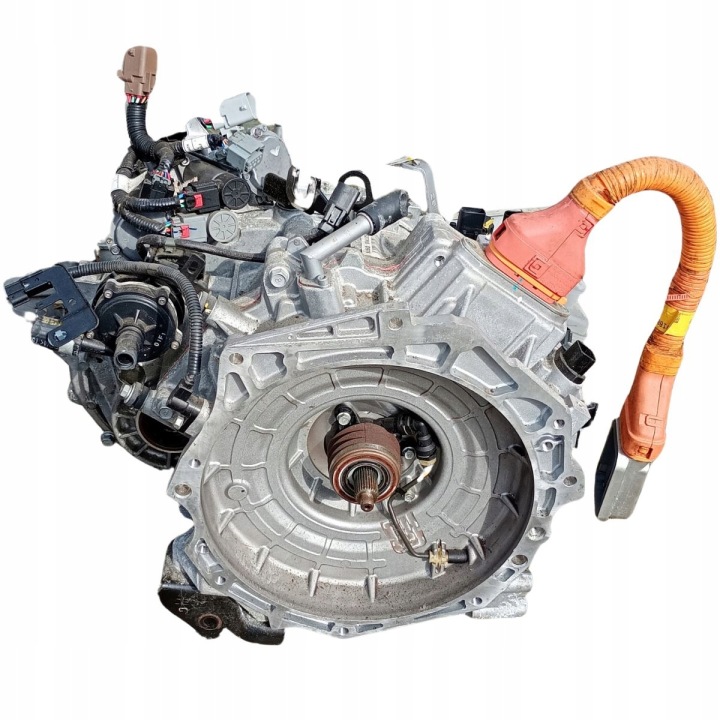
Hyundai-Kia D6KF1 6-Speed Dual-Clutch Transmission: Reliability and Failure Analysis
Introduction
The Hyundai-Kia D6KF1 is a six-speed dry dual-clutch transaxle used in documented Hyundai and Kia hybrid applications with the Kappa 1.6-liter GDI engine. Exact service documentation identifies the transmission in the Hyundai Ioniq AE and Kia Niro DE platforms.
The D6KF1 is fundamentally different from a conventional hydraulic automatic transmission. It uses a dry dual-clutch assembly, separate odd- and even-gear power paths, synchronized gearing and electronically controlled clutch and gear actuators. There is no torque converter in the documented D6KF1 architecture, and the available exact-variant service information does not identify a conventional automatic-transmission-style hydraulic valve body.
Transmission Identification
D6KF1
6-Speed Dry Dual-Clutch Hybrid Transaxle
6
Dry dual plate
Kappa 1.6 GDI / 1.6L hybrid applications
API GL-4, SAE 70W
1.6–1.7 L in verified Ioniq AE and Niro DE applications
Technical Specifications & Identification
Hyundai and Kia service information for the D6KF1 gives the following six forward ratios. These values should be kept separate from specifications published for similarly named or related Hyundai Transys transmissions unless an OEM source explicitly establishes equivalence.
| Gear | Ratio |
|---|---|
| 1st | 3.867 |
| 2nd | 2.217 |
| 3rd | 1.371 |
| 4th | 0.930 |
| 5th | 0.956 |
| 6th | 0.767 |
| Reverse | 5.351 |
Final-drive gearing is application-specific. Kia Niro DE service information lists a 4.438 final-drive ratio for 1st through 4th gears and 3.227 for 5th, 6th and reverse. Hyundai Ioniq AE documentation lists 4.188 for 1st through 4th and 3.045 for 5th, 6th and reverse. These values should not be combined into a single universal D6KF1 specification.
Identification Warning
Do not identify the transmission by vehicle model alone. Later hybrid applications can use revised transmission designations. Available SG2 technical documentation identifies a later unit as D6KF1-2, so D6KF1-2 service data, DTC information and component revisions should not automatically be transferred to the original D6KF1.
Hyundai Transys product material also lists a six-speed hybrid DCT designated D6F27H for Ioniq and Niro applications. However, the available documentation does not directly establish D6F27H as an alternative designation for D6KF1. There is also a published gear-ratio discrepancy between the D6F27H product brochure and exact D6KF1 service data. For that reason, D6F27H torque capacity, dry weight and other product specifications should not be quoted as D6KF1 specifications without additional OEM confirmation.
Vehicle Applications & Platform Coverage
The strongest exact-variant application evidence comes from Kia service information that explicitly identifies the D6KF1 transmission together with the Niro DE hybrid platform and Kappa 1.6L engine. Hyundai Ioniq AE service documentation likewise identifies the D6KF1 with the Kappa 1.6 GDI powertrain.
| Vehicle | Platform | Engine | Verified D6KF1 Evidence |
|---|---|---|---|
| Hyundai Ioniq Hybrid | AE | Kappa 1.6 GDI | Service documentation identifies D6KF1; Hyundai DCT fluid documentation separately covers the AE 1.6L hybrid application. |
| Hyundai Ioniq Plug-in Hybrid | AE | Kappa 1.6 GDI | D6KF1 service architecture is documented for the AE platform; Hyundai fluid documentation separately covers the AE PHEV 1.6L DCT application. |
| Kia Niro Hybrid | DE | Kappa 1.6L | Kia TRA085 explicitly identifies DE HEV, Kappa 1.6L and D6KF1. |
| Kia Niro Plug-in Hybrid | DE | Kappa 1.6L | Kia TRA085 explicitly includes DE PHEV with D6KF1; TRA092 provides additional model-year-specific coverage. |
Applications that cannot be verified as an exact combination of model, model year, engine and transmission variant should not be added to the D6KF1 application list simply because they use a Hyundai or Kia six-speed hybrid DCT.
Mechanical Architecture
The D6KF1 uses a dry dual-clutch arrangement rather than a torque converter. One clutch carries the odd-numbered gear path and the second clutch carries the even-numbered gear path. Service and industry component information describes two input-shaft paths, synchronized gears, output-shaft assemblies, shift forks and an integrated differential.
Clutch engagement is controlled electrically through the clutch actuator system. Gear selection is also electronically controlled through a gear actuator containing shift motors and select-solenoid functions. The transmission control module uses actuator and sensor feedback to control clutch engagement and gear selection and to maintain learned compensation values.
The presence of select solenoids does not make the D6KF1 equivalent to a conventional hydraulic automatic. Exact D6KF1 documentation does not identify the traditional pump-and-valve-body architecture normally associated with a planetary automatic transmission.
Hybrid Engine Clutch vs DCT Dual Clutch
The hybrid drivetrain also contains a separate engine-clutch system operated by a Hydraulic Clutch Actuator, commonly abbreviated HCA. That engine clutch is distinct from the D6KF1 dry dual-clutch assembly that selects and transfers power through the transmission’s odd- and even-gear paths.
Diagnostic Warning
Do not treat an HCA recall as evidence that the D6KF1 dry dual clutch has been recalled. The HCA is a separate hybrid engine-clutch subsystem. This distinction is important when reviewing recall history, estimating repair scope or evaluating a previously repaired vehicle.
Failure Analysis
The strongest D6KF1-related failure information comes from Kia service bulletins covering specific Niro DE operating complaints. These bulletins provide much stronger evidence than generic diagnostic possible-cause tables because they define an affected vehicle population, symptom and OEM repair path.
| Condition | Symptoms | Root Cause | Affected Scope | OEM Repair Direction |
|---|---|---|---|---|
| 4-to-3 downshift grinding condition | Approximately 1–2 seconds of “Grrrr” or grinding during 4-to-3 deceleration | Physical root cause not stated by Kia; bulletin identifies an affected double-clutch manufacturing-lot range | Selected 2018–2019 Niro DE HEV/PHEV vehicles produced August 10, 2018 through September 30, 2019; affected clutch lots 180810 through 190527 | Inspect applicability and clutch identification, then follow the bulletin replacement procedure and DCT learning requirements |
| Start-off shift impact / noise | Intermittent impact, clunk or abnormal shift-related noise when accelerating from a complete stop | Physical root cause not stated by Kia | Selected 2019–2020 Niro DE HEV/PHEV vehicles produced after January 11, 2019 | Reproduce the condition using the bulletin procedure; when confirmed, replace the DCT gear oil with the specified TGO-9 fluid |
4-to-3 Grinding: Kia TRA092
Kia TSB TRA092 addresses a distinctive grinding or “Grrrr” noise during a 4-to-3 downshift in a defined group of 2018–2019 Niro DE HEV and PHEV vehicles. The bulletin specifies a vehicle production period of August 10, 2018 through September 30, 2019 and identifies affected double-clutch manufacturing lots from 180810 through 190527.
Kia notes that the symptom may not be apparent on a new vehicle and may become noticeable at approximately 6,000 miles or more. That figure should not be interpreted as a general D6KF1 failure-mileage threshold. It is an applicability note within the bulletin for this specific condition.
OEM Documented · Kia TRA092
The bulletin ties a repeatable 4-to-3 grinding complaint to a specific Niro production window and double-clutch lot range. Kia supplies the inspection and replacement path but does not state the underlying physical defect mechanism.
Diagnostic Path
Repeatable grinding or “Grrrr” during the 4-to-3 coast-down shift
Double-clutch assembly within the TRA092 affected population
Vehicle production date, bulletin applicability and double-clutch manufacturing-lot identification
Start-Off Shift Impact or Noise: Kia TRA093
Kia TRA093 covers another, separate condition on selected 2019–2020 Niro DE HEV/PHEV vehicles produced after January 11, 2019. The complaint is an intermittent shift impact or abnormal noise while accelerating from a complete stop.
The bulletin instructs technicians to reproduce the symptom using its prescribed test procedure. When the condition is confirmed, Kia directs replacement of the DCT gear oil with TGO-9, using a fill quantity of 1.6–1.7 liters.
The service action should not be reverse-engineered into an unsupported root-cause claim. TRA093 does not establish that every start-off impact is caused by degraded oil, nor does it establish a generalized internal transmission defect.
Diagnostic Path
Intermittent impact or abnormal noise when starting from a complete stop
DCT operating condition covered by TRA093
Model year, production date and whether the symptom can be reproduced using the bulletin test procedure
Other Diagnostic Possibilities
The D6KF1 service troubleshooting material also lists internal bearing wear, synchronizer or gear wear, shift-fork wear, clutch-actuator motor or position-sensor faults and gear-actuator motor or select-solenoid faults as possible causes of certain symptoms. These entries are useful for diagnosis, but they are not evidence that those components are recurring D6KF1 weaknesses.
| Symptom Area | Possible System or Component Listed in Service Information | How to Interpret It |
|---|---|---|
| Transmission noise | Worn or damaged bearing | Diagnostic possibility, not an established recurring failure pattern |
| Hard or impossible shifting | Synchronizer, gear, hub sleeve or shift-fork wear | Diagnostic possibilities requiring inspection |
| Loss of odd or even gear operation | Clutch actuator motor or clutch-position sensing | Possible control/actuator fault; does not establish actuator failure without diagnosis |
| Gear-selection fault | Gear actuator motor or select-solenoid system | Possible diagnostic area rather than a confirmed recurring defect |
Technical Service Bulletins & Service Procedures
| TSB | Subject | Affected Scope | Key Service Action |
|---|---|---|---|
| TRA085 | DCT actuator rod-length adjustment | Niro DE HEV/PHEV, Kappa 1.6L, D6KF1 | Measure or adjust actuator rod length when applicable after clutch/actuator replacement and perform DCT learning |
| TRA092 | 4-to-3 grinding / “Grrrr” complaint | Selected 2018–2019 Niro DE HEV/PHEV vehicles within specified production and clutch-lot ranges | Inspect applicability and follow the specified clutch/DCT replacement procedure; perform required learning |
| TRA093 | Start-off shift impact or noise | Selected 2019–2020 Niro DE HEV/PHEV vehicles produced after January 11, 2019 | Confirm complaint using bulletin procedure and replace DCT oil with specified TGO-9 fluid when applicable |
Clutch Actuator Adjustment
Kia TRA085 is a service-procedure bulletin rather than evidence of a recurring transmission defect. It addresses correct clutch-actuator rod setup when the dual-clutch set and/or actuator are replaced separately. For the D6KF1 replacement setup, the bulletin specifies an 82.0–83.0 mm rod-length reference.
After applicable clutch or actuator work, the repair procedure includes DCT learning with Kia diagnostic equipment. A vehicle that received clutch-related repairs but did not receive the required setup and learning procedure deserves additional scrutiny if it subsequently shows engagement or shift-quality complaints.
Service Tool Warning
There is an OEM bulletin conflict concerning the special service tool shown for D6KF1 work. TRA085 identifies SST 09430-F0100 for the six-speed D6KF1 and 09430-C1302 for the seven-speed D7UF1, while TRA092 depicts/specifies 09430-C1302 during its Niro six-speed procedure. The current Kia service-information procedure should therefore be checked before selecting or ordering the tool.
Fluid & Maintenance
Verified D6KF1 service information specifies API GL-4, SAE 70W DCT gear oil. The documented service-fill quantity for the Ioniq AE and Niro DE applications reviewed here is 1.6–1.7 liters.
Kia service documentation lists approved examples including SK HK DCTF/HK SYN DCTF 70W, Shell Spirax S6 70W DCTF and GS Caltex DCTF HD 70W. The important service requirement is to follow the exact OEM specification and application-specific approval rather than substituting a generic manual-transmission or automatic-transmission fluid based only on viscosity.
Fluid Service Warning
Use the vehicle-specific OEM fluid specification and maintenance schedule. D6KF1 service intervals are application-, model-year- and market-specific. A severe-service interval from one Ioniq or Niro schedule should not be presented as a universal interval for every D6KF1-equipped vehicle.
Service Intervals
Hyundai Ioniq AE service documentation describes the DCT gear oil as requiring no scheduled replacement under the referenced normal-use schedule. Under the referenced severe-use schedule, replacement is specified at 120,000 km / 80,000 miles.
European Niro DE severe-service information also specifies DCT fluid replacement at 120,000 km / 80,000 miles under the listed severe operating conditions. Because maintenance schedules vary by market and model year, the owner’s manual or current OEM service schedule for the exact vehicle should remain the controlling reference.
Fluid Level and Refill
The documented Niro DE procedure requires the vehicle to be level before the filler plug is removed. The fluid level is checked at the fill opening, and servicing uses the same opening for refill. A new filler-plug gasket is specified during service.
Recalls and the Hydraulic Clutch Actuator
Two important hybrid-system recalls can be mistaken for D6KF1 transmission recalls because both involve a clutch actuator. They concern the separate hybrid Hydraulic Clutch Actuator rather than the D6KF1 dry dual-clutch assembly.
| Recall | Vehicles | Issue | Transmission Relevance |
|---|---|---|---|
| NHTSA 18V-260 / Hyundai Campaign 176 | Certain Hyundai Ioniq hybrid/PHEV vehicles within the campaign scope | HCA housing condition could damage an internal seal, allowing fluid intrusion and creating an electrical short/fire risk | Hybrid engine-clutch actuator issue; not evidence of an internal D6KF1 geartrain or dry dual-clutch defect |
| NHTSA 23V-534 / Kia SC276 | 2017–2022 Niro HEV and 2018–2022 Niro PHEV within the recall population | Fluid contamination of the HCA circuit board could lead to an electrical short and fire risk | Separate HCA subsystem; not a recall of the D6KF1 dual-clutch pack |
For used-vehicle evaluation, HCA recall completion should therefore be checked independently from D6KF1 transmission condition. A completed HCA recall does not establish that the transmission has been replaced or repaired, and a transmission repair does not establish that the HCA recall has been completed.
Used-Vehicle Inspection Points
For a D6KF1-equipped Ioniq or Niro, service history and symptom specificity are more useful than generalized claims about DCT reliability.
- On applicable Niro vehicles, pay particular attention to a repeatable grinding or “Grrrr” sound during the 4-to-3 coast-down shift and compare the vehicle’s production date with TRA092 coverage.
- For selected 2019–2020 Niro vehicles, investigate a repeatable start-off impact or noise against TRA093 rather than assuming that the transmission requires replacement.
- If the dual clutch or clutch actuator has previously been replaced, verify that the repair included the required actuator setup where applicable and DCT learning.
- Confirm that the documented DCT fluid is API GL-4 SAE 70W and that previous service records identify an appropriate DCT gear oil rather than a generic substitute.
- Keep hybrid HCA recall history separate from D6KF1 transmission-repair history.
- Do not use a generic Hyundai/Kia DCT diagnostic-code list to condemn the transmission. Exact model-year and transmission-variant applicability should be confirmed first.
Engineering Verdict
The D6KF1 should be evaluated as an electronically actuated dry dual-clutch transmission, not as a conventional automatic. That distinction changes both diagnosis and service strategy: there is no torque-converter failure path to investigate, and clutch/gear actuation, learned adjustment values, synchronizer hardware and exact shift-event symptoms matter more than generic automatic-transmission assumptions.
The strongest verified D6KF1 problem evidence is relatively specific rather than broad. Kia TRA092 identifies a defined Niro production population and clutch-lot range associated with 4-to-3 grinding, while TRA093 addresses a separate start-off impact/noise complaint with a prescribed oil-service repair path. Neither bulletin establishes that every D6KF1 develops those conditions, and neither supports a general failure-mileage estimate.
Correct identification is equally important. Original D6KF1 information should not be mixed with later D6KF1-2 data or with specifications published for D6F27H unless an OEM source explicitly establishes interchangeability. For servicing, the correct SAE 70W GL-4 DCT fluid, application-specific maintenance schedule, actuator setup where required and completion of DCT learning after relevant repairs are the most important verified procedural points.
Sources & Technical References
- Kia Motors America — TSB TRA085, DCT Actuator Rod Length Adjustment, D6KF1 identification, actuator setup and DCT learning procedure.
- Kia Motors America — TSB TRA092, 6-Speed Double Clutch or DCT Replacement, 4-to-3 grinding complaint, production scope, clutch-lot applicability and repair procedure.
- Kia Motors America — TSB TRA093, 6-Speed DCT Shift Impact/Noise Inspection and Oil Replacement, start-off shift-impact/noise condition and DCT oil service procedure.
- Hyundai Motor America — TSB 18-AT-002, Automatic Transmission ATF and DCT Gear Oil, Ioniq DCT lubricant specification.
- Hyundai Ioniq AE service-manual mirror — D6KF1 Specifications, exact transmission designation, gear ratios and application-specific service data. OEM Documentation Mirror.
- Kia Niro DE service-manual mirror — D6KF1 Specifications, dry dual-clutch specification, gear ratios and lubricant data. OEM Documentation Mirror.
- Kia Niro DE service-manual mirror — DCT Troubleshooting, OEM diagnostic possible causes for noise, shifting and actuator-related symptoms. OEM Documentation Mirror.
- NHTSA / Hyundai — Recall 18V-260, Campaign 176, Hydraulic Clutch Actuator recall information.
- NHTSA / Kia — Recall 23V-534, Campaign SC276, Niro Hydraulic Clutch Actuator recall population and defect description.


