
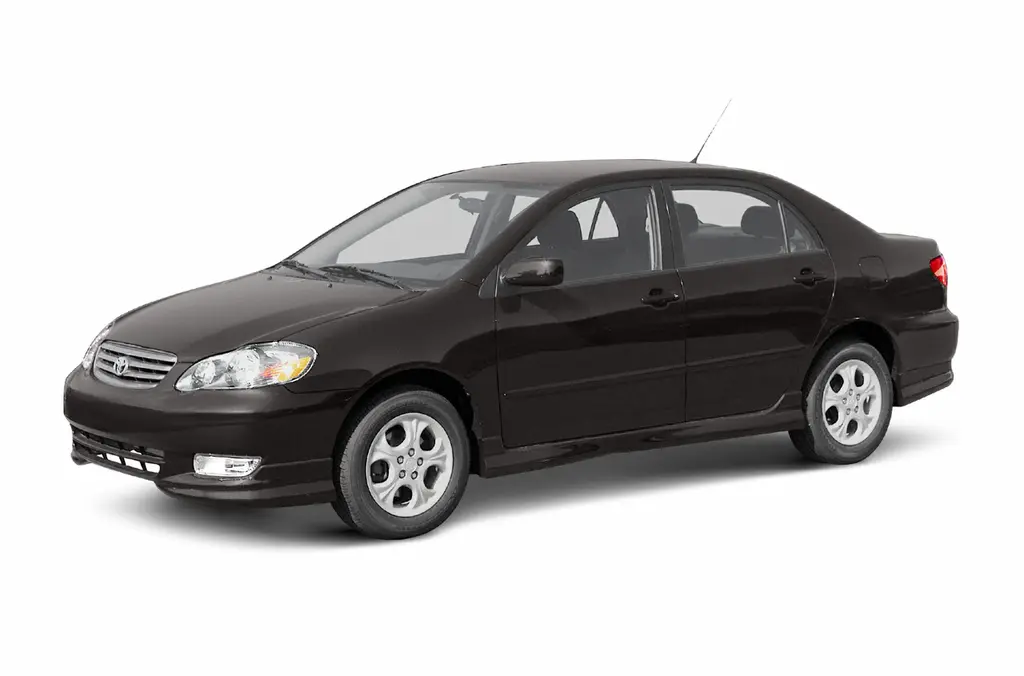
Toyota Corolla gen 9 2003–2008 Transmission: Common Issues and Expert Verdict
Overview
The 2003–2008 Corolla sold in the U.S. uses a straightforward front-wheel-drive transaxle layout. The important detail is the transmission code: the standard 1.8L 1ZZ-FE Corolla automatic uses the A245E, not the U341E.
That distinction matters because one of the best-known drivability problems on this generation is tied to the engine control module rather than to a mechanically defective transmission. Toyota issued both technical service information and a later federal safety recall covering ECM failures on certain 2005–2008 Corolla and Matrix models with the 1ZZ-FE engine and two-wheel drive.
For 2005–2007 automatic cars, Toyota TSB TC015-07 specifically addresses harsh shifting with DTC P2716. The bulletin directs diagnosis of the Corolla’s A245E pressure-control system and, for the covered condition, replacement of the ECM.
That is an important diagnostic distinction. A Corolla that suddenly starts shifting hard is not automatically showing evidence of a failed valve body, clutch pack or complete transmission.
Which Transmissions It Uses
A245E
- 4-speed electronically controlled automatic transaxle
- Front-wheel drive
- Used with the 1.8L 1ZZ-FE
- Used in U.S.-market ninth-generation Corolla models
- Toyota Genuine ATF Type T-IV
Toyota service documentation identifies the A245E in the Corolla throughout this generation. It is a conventional four-speed automatic with a torque converter, hydraulic valve body and electronically controlled shift and pressure solenoids.
C59
- 5-speed manual transaxle
- Front-wheel drive
- Used with the 1.8L 1ZZ-FE
- Gear oil capacity: approximately 1.9 L (2.0 US qt)
- Toyota specifies API GL-4 or GL-5, SAE 75W-90
C60
- 6-speed manual transaxle
- Used in the 2005–2006 Corolla XRS
- Paired with the 1.8L 2ZZ-GE
- Gear oil capacity: approximately 2.3 L (2.4 US qt)
- Toyota specifies API GL-4 or GL-5, SAE 75W-90
The XRS is the exception to the ordinary Corolla drivetrain. Its high-revving 2ZZ-GE and six-speed manual make it mechanically different from the 1ZZ-FE/A245E or 1ZZ-FE/C59 cars.
There is no CVT or dual-clutch transmission in the U.S.-market 2003–2008 Corolla lineup.
Main Transmission and Control Issues
Harsh Shifting and DTC P2716 — 2005–2007
This is the most important documented transmission-related issue on the ninth-generation Corolla.
Toyota TSB TC015-07 covers certain 2005–2007 Corolla and Matrix 2WD models equipped with the 1ZZ-FE engine and an automatic transaxle. Toyota describes a condition involving harsh shifting, an illuminated MIL and DTC P2716.
P2716 is defined as a pressure-control solenoid “D” electrical fault. On the A245E, Toyota identifies the relevant component as shift solenoid valve SLT. SLT is used by the ECM to regulate line pressure.
What makes this case unusual is that Toyota’s bulletin did not simply tell technicians to install a new solenoid or valve body. For the bulletin condition, the repair procedure calls for replacement of the ECM, followed by VIN registration and a road test.
That means a 2005–2007 Corolla with harsh shifts and P2716 should not be condemned as needing a transmission until the ECM history, applicable Toyota bulletin and electrical diagnosis have been checked.
ECM Safety Recall 10V-384 / Toyota Campaign A0J
The later federal safety recall is broader than the P2716 transmission bulletin.
NHTSA Recall 10V-384 covers certain 2005–2008 Corolla and Corolla Matrix vehicles equipped with the 1ZZ-FE engine and two-wheel drive. Toyota reported that cracks could develop at certain solder points or on varistors inside affected engine control modules.
Possible symptoms included:
- Check Engine Light illumination
- Harsh shifting
- Engine no-start
- Engine shutdown while driving
The recall remedy was to inspect the ECM production number and replace the ECM where required.
Notice what the recall does not establish: it is not a recall for defective A245E gears, clutch packs, torque converters or valve bodies. The safety defect is in the ECM.
For any 2005–2008 1ZZ-FE Corolla, recall completion should therefore be checked by VIN rather than assumed from model year alone.
P0741 — Torque Converter Clutch Performance
P0741 is a valid A245E diagnostic code, but it should not be interpreted as automatic proof that the torque converter has failed.
Toyota’s diagnostic procedure identifies several possible areas:
- shift solenoid valve SL;
- valve-body operation;
- torque converter clutch operation; and
- internal automatic-transaxle faults.
The correct diagnostic sequence matters. Toyota first instructs technicians to check for other DTCs, then inspect the SL solenoid, valve body and torque converter before condemning the complete transmission.
There is another ECM-related complication. Toyota service information for these cars warns that installing an incorrect ECM can itself result in P0741. ECM part-number and model-year compatibility therefore matter when a car has a history of computer replacement.
Shift-Solenoid and Gear-Ratio Codes
The A245E also monitors whether the commanded gear matches the actual gear. Codes such as P0751 and P0756 can involve the S1 or S2 shift-solenoid systems, the valve body or internal transmission components.
Again, the code identifies a failed test, not necessarily a failed transmission assembly. Electrical condition, solenoid operation, hydraulic control and internal operation need to be separated during diagnosis.
Axle and Differential Oil-Seal Leaks
The A245E has replaceable left- and right-side differential oil seals where the drive shafts enter the transaxle. Toyota provides service procedures for both.
On an older Corolla, any wetness around the inner CV joints should be checked rather than dismissed. A minor seep and an active leak are not the same thing, but continued ATF loss can eventually leave the transmission operating below the correct fluid level.
There is no defensible mileage at which these seals universally fail. Condition is more useful than odometer mileage.
What About A245E Valve-Body Wear?
Valve-body wear is possible in any high-mileage hydraulic automatic transmission, and the A245E service information clearly includes the valve body in diagnostic paths for several shift-performance faults.
But there is not enough OEM evidence to assign a statement such as “the A245E valve body normally fails at 150,000 miles.”
If an A245E has delayed engagement, shift flare, an incorrect gear ratio or unstable lock-up, diagnosis should be based on fluid condition, DTCs, commanded versus actual operation, solenoid testing and hydraulic/mechanical inspection.
A mileage number alone is not a diagnosis.
C59 and C60 Manual Transmission Issues
The C59 five-speed and C60 six-speed are conventional manual transaxles. On cars now roughly two decades old, bearing noise, worn synchronizers, clutch-related noise and oil leakage are all possible.
However, the evidence does not support assigning a universal failure mileage such as “C59 input bearings fail at 140,000 miles” or stating that every C60 develops a specific second-gear synchro defect.
If a manual Corolla is noisy, the operating condition matters:
- noise in neutral with the clutch engaged;
- noise only with the clutch pedal depressed;
- noise that follows road speed;
- noise confined to one gear;
- grinding during a specific shift; or
- noise that changes under acceleration and deceleration.
Those patterns help separate clutch-release components, shaft bearings, differential bearings, synchronizer problems and unrelated wheel-bearing noise.
Fluid Specifications
| Transmission | Fluid / Oil | Service Capacity |
|---|---|---|
| A245E automatic | Toyota Genuine ATF Type T-IV | Up to 3.0 L (3.2 US qt) drain and refill |
| C59 5-speed manual | API GL-4 or GL-5, SAE 75W-90 | 1.9 L (2.0 US qt) |
| C60 6-speed manual | API GL-4 or GL-5, SAE 75W-90 | 2.3 L (2.4 US qt) |
Toyota also lists an A245E dry-fill capacity of approximately 7.3 L (7.72 US qt) in later service information. That figure should not be confused with an ordinary drain-and-refill quantity.
For the automatic, Toyota’s owner’s manual does not prescribe a blanket 30,000- or 40,000-mile replacement interval for every owner. It states that ATF should be changed as necessary, with the maintenance guide identifying service according to operating conditions.
That is different from saying the fluid lasts forever. Fluid level, condition, leaks, operating history and the applicable maintenance schedule still matter. What should be avoided is presenting an invented universal interval as Toyota’s specification.
Current Repair-Cost Reality
Repair pricing varies substantially by location, labor rate and whether the shop installs a used, rebuilt, remanufactured or new assembly. For that reason, fixed national prices are misleading.
Current U.S. market examples in 2026 give a more useful scale:
| Repair | Approximate 2026 Market Example | Context |
|---|---|---|
| Automatic transmission fluid service | About $200–$350 | RepairPal examples vary by U.S. city |
| Axle shaft seal replacement | About $330–$470 | Typical Corolla estimate; location varies |
| Remanufactured A245E assembly | About $2,500–$2,750 | Transmission only; installation, freight and core charges may be extra |
| Complete transmission replacement | Can exceed $6,000 | Dealer-level estimates can be much higher than used or independent-shop alternatives |
On a 2003–2008 Corolla, the economically sensible repair can therefore range from an electrical or control repair to a used transmission rather than a dealer-priced complete replacement.
Year-by-Year Differences
| Model Years | Main Transmissions | Important Notes |
|---|---|---|
| 2003–2004 | A245E / C59 | Not part of Recall 10V-384/A0J |
| 2005–2006 | A245E / C59; C60 on XRS | 1ZZ-FE cars may fall within ECM campaign; automatic cars are within the model-year range of Toyota’s P2716 harsh-shift TSB |
| 2007 | A245E / C59 | 1ZZ-FE cars may fall within ECM campaign; automatic cars remain within TC015-07 |
| 2008 | A245E / C59 | Certain 1ZZ-FE 2WD cars remain within the ECM safety-recall population; TC015-07 itself covers 2005–2007 |
There is no useful reason to label one of these years categorically “best” or “worst” based on transmission design alone. Vehicle condition, recall completion, previous diagnosis and repair quality are more useful.
Warning Signs Worth Investigating
- New harsh shifting, especially with P2716
- Delayed engagement into Drive or Reverse
- RPM flare during an upshift
- P0741 or repeated shift-solenoid performance codes
- ATF leakage around the drive-shaft seals
- Burnt or heavily contaminated ATF
- Grinding or difficult engagement on a manual transmission
- New transmission or differential noise that changes with gear, load or clutch position
A scan is particularly important on the automatic because the ninth-generation Corolla has a documented history of ECM faults capable of changing shift behavior.
Before Replacing the Automatic Transmission
If a shop recommends a complete A245E replacement after one harsh-shift complaint, there are several things worth establishing first.
- Confirm that the car actually has the A245E.
- Read all engine and transmission DTCs.
- For 2005–2008 1ZZ-FE cars, check ECM recall completion by VIN.
- For 2005–2007 cars with P2716, review the Toyota ECM/harsh-shift bulletin history.
- Verify that the correct ECM part number is installed.
- Inspect ATF level and condition.
- Check for external leaks.
- Follow the Toyota diagnostic path for the stored code before condemning the entire transaxle.
That process will not save a mechanically damaged transmission, but it reduces the chance of replacing a good transmission because an ECM, electrical circuit or individual hydraulic-control component was misdiagnosed.

When a Major Transmission Repair Makes Sense
Internal repair or replacement becomes more defensible when diagnosis establishes an internal mechanical fault rather than merely a control code.
Examples include persistent slip with verified correct hydraulic/electrical control, significant internal debris, loss of a gear caused by internal damage, a failed torque converter confirmed through the diagnostic procedure or continued operation after substantial fluid loss.
At that point, compare the cost of a rebuild, remanufactured unit and known-good used transmission against the condition and market value of the vehicle.
Regulatory and Service History
The major federal action associated with transmission-like symptoms on this generation is NHTSA Recall 10V-384, Toyota Campaign A0J.
It is important to describe it accurately. The recall concerns defective engine control modules on certain 2005–2008 Corolla and Matrix 1ZZ-FE 2WD vehicles. Harsh shifting is one possible consequence, but NHTSA did not identify a mechanical defect in the A245E geartrain as the recall condition.
Toyota also issued TC015-07 for harsh shifting and DTC P2716 on certain 2005–2007 automatic Corolla and Matrix models. That bulletin likewise focuses on ECM correction for the documented condition.
Bottom Line
The standard automatic transmission in the U.S.-market 2003–2008 Toyota Corolla with the 1ZZ-FE is the A245E. The U341E attribution sometimes repeated online is incorrect for this application.
The most important documented shift problem on this generation is also easy to misdiagnose. Certain 2005–2007 automatic cars can develop harsh shifting and P2716 because of an ECM-related condition addressed by Toyota, while certain 2005–2008 1ZZ-FE 2WD cars fall within the broader ECM safety recall.
That does not mean every shift complaint is electronic. The A245E can still develop solenoid, valve-body, torque-converter or internal mechanical problems as it ages. The point is to diagnose those faults rather than infer them from mileage or from a single DTC.
For owners and buyers, the useful checks are straightforward: verify the transmission, scan for codes, check recall history, inspect the fluid and leaks, and investigate any repeatable shift abnormality before agreeing to a complete transmission replacement.



The 9th generation does not have U341E transmission. It has an A245E. This article is incorrect.
Thank you for catching this. You are correct — the North American 2003–2008 Corolla with the 1ZZ-FE automatic used the A245E, not the U341E. I checked the Toyota service information and have corrected the article accordingly. I appreciate you pointing out the error.