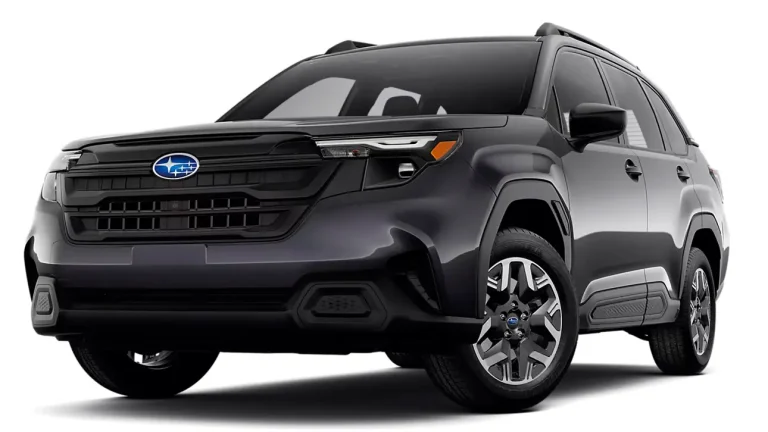
Subaru Outback gen 5 2020–present CVT Transmission Failures Seen in Real Service Bays
Overview
Every Outback from 2020 onward? Same story. CVT only. No traditional automatic, no dual-clutch, no manual safety net if things go sideways.
You’ve got two units here: TR580 behind the 2.5L, and TR690 behind the turbo 2.4L. Both are chain-driven CVTs with an integrated front diff and a multi-plate transfer clutch handling AWD. On paper, it’s clean. Efficient. Modern.
In the shop? Different tone.
The TR580 is usually fine. The TR690… that’s where things get interesting, and not in a good way—especially early builds.
Which Transmissions It Uses
| Transmission | Type | Drive Layout | Engine Pairing | Years | Notes |
|---|---|---|---|---|---|
| TR580 | Chain-driven CVT | AWD | 2.5L naturally aspirated | 2020–present | Lower torque unit, widely used across Subaru lineup |
| TR690 | Chain-driven CVT | AWD | 2.4L turbocharged | 2020–present | High torque version, tied to WRK-21 recall |
No alternatives. You’re buying one of these whether you like it or not.
Main Failure Patterns
TR690 — The Big One (WRK-21 / NHTSA 21V-955)
This is the problem everyone should know about before they even test drive the turbo model.
Subaru pushed out bad TCM programming on early 2020 units. Sounds harmless. It’s not. That calibration lets the chain slip more than it should, and once that starts happening, things go downhill fast.
I’ve seen units come in with early shudder, get ignored, and then—boom—internal damage. Not dramatic noise. Not instant failure. Just a slow, ugly death inside the tranny.
- Chain starts slipping
- Guide gets chewed up
- Metal shavings circulate
- Eventually it loses drive
At that point, you’re not fixing it. You’re replacing it.
Subaru’s fix is straightforward on paper:
- Reprogram the TCM
- Check for slip data
- Scope the chain guide
- Replace the whole unit if it’s damaged
If the recall wasn’t done, this drivetrain is a ticking time bomb. No exaggeration.
TR690 — Weird Behavior That Feels Mechanical (But Isn’t)
Now, separate issue. Different flavor.
You’ll get customers complaining about:
- Jerking when braking
- Odd engagement feel
- Sometimes a screech or chatter
Feels like internal damage. Most of the time it’s not.
This is calibration. Pressure control. Clutch timing. Subaru released updates for it, and I’ve seen plenty of cars cleaned up completely with a reflash.
But here’s the catch—some don’t respond. Those end up with TCM replacements. Expensive, annoying, but still better than a full CVT.
TR580 — The “Quieter” Unit
The 2.5L cars don’t get as much attention, and that’s because they don’t fail the same way.
There are chain slip diagnostic procedures in Subaru documentation, sure. But in real service bays, you don’t see these grenading left and right.
What you do see:
- Occasional hesitation
- Mild shudder under steady throttle
Most of the time? Software or fluid condition.
Long-term, high-mileage stuff—over 120,000 miles (193,000 km)—you start getting lazy engagement and worn behavior. Nothing shocking. Just wear.
Transfer Clutch — AWD Starts Acting Weird
This one catches people off guard.
Customer says: “Feels like it’s binding in parking lots.”
Yep. That’s the transfer clutch.
What’s happening:
- Clutch pack isn’t releasing cleanly
- Torque isn’t distributing smoothly
- You get a judder or hopping feeling in turns
Subaru’s own diagnostic trick is simple—disable AWD and see if it goes away. It usually does.
Fix? Replace the clutch pack. Not cheap, but not catastrophic either.
Propeller Shaft — Cheap Noise, Annoying Fix
Early 2020 builds had a squeal. Not loud, but sharp enough to make customers nervous.
Usually around 20 mph (32 km/h). Worse when it’s cold—around 15°F (-9°C).
That’s the center support bearing. And no, you can’t just swap the bearing.
Whole shaft. That’s the job.

Rear Differential — Rare but Real
Not common. But it shows up.
You’ll hear:
- Humming
- Whining that follows speed
If you isolate it properly and it’s the rear diff, Subaru says replace the unit. No internal rebuild guidance.
Typical Repair Costs
Let’s talk money. Because this is where people get blindsided.
| Component | Repair Type | Typical Cost (USD) |
|---|---|---|
| TR690 CVT | Full replacement | $7,500 – $10,500 (Service Bay Benchmark) |
| TR580 CVT | Full replacement | $6,000 – $8,500 (Service Bay Benchmark) |
| Transfer clutch | Clutch replacement | $1,500 – $3,000 (Service Bay Benchmark) |
| TCM | Replace + program | $900 – $1,800 (Service Bay Benchmark) |
| Propeller shaft | Complete assembly | $800 – $1,500 (Service Bay Benchmark) |
| Rear differential | Replacement | $1,200 – $2,500 (Service Bay Benchmark) |
That TR690 replacement number? That’s the one people don’t expect.
Best and Worst Years
| Year | Risk Level | Notes |
|---|---|---|
| 2020 (early build) | High | WRK-21 recall exposure, highest failure risk |
| 2020 (late build) | Medium | Updated programming, still early production |
| 2021–2022 | Medium-Low | Mostly software-related complaints |
| 2023–present | Low | No major transmission recalls identified |
Warning Signs & Early Detection
You don’t wait on these symptoms. You catch them early or you pay later.
- Shudder cruising between 25–60 mph (40–96 km/h)
- Delayed throttle response
- Jerking during braking
- Binding in tight turns
- High-pitched noise underneath
Scan data matters here. You need to see what the chain is doing, what the clutches are doing. Guessing doesn’t work.
When to Walk Away
Some cars just aren’t worth the gamble.
- No proof WRK-21 recall was done
- Any shudder during test drive
- Transmission already replaced with no paperwork
- AWD feels like it’s fighting itself
If the chain has started slipping and there’s data to prove it, you’re buying a future $8,000 problem.
Ownership Reality
| Category | OEM Guidance | Real-World Outcome | Consequence |
|---|---|---|---|
| CVT fluid | No regular service required | Fluid breaks down over time (Field Observation) | Wear increases, drivability drops |
| AWD system | No scheduled maintenance | Transfer clutch wear shows up in real use | Judder and replacement costs |
| Software | Updated as needed | Critical to system behavior | Old software = more problems |
| Warranty | 5 yr / 60,000 miles (96,000 km) | Failures often outside coverage window | High out-of-pocket cost |
| Driving load | No limits stated | Higher load stresses CVT (Industry Estimate) | Faster wear on turbo models |
Subaru calls the fluid lifetime. In the shop, we don’t treat it that way.
Lawsuits, Complaints & Regulatory History
Everything here revolves around one major event:
- WRK-21 (NHTSA 21V-955)
Chain slip. Internal damage. Potential loss of drive.
Then came the follow-up campaign (22V-485), making sure owners actually got the fix.
Complaint patterns line up clean:
- Shudder
- Hesitation
- Power loss
No major lawsuit tied specifically to this generation right now, but if you’ve been around Subaru CVTs for a while, this pattern feels familiar.
Always check the VIN. Always.
Bottom Line
This drivetrain isn’t junk. But it’s not forgiving either.
TR580 cars? Generally safe. Predictable. They age like most CVTs—slow wear, manageable issues.
TR690 turbo cars? Different story. Early ones especially.
If the recall is done, software is current, and it drives clean—you’re probably fine.
If not?
You’re rolling the dice on one of the most expensive failures in this segment.