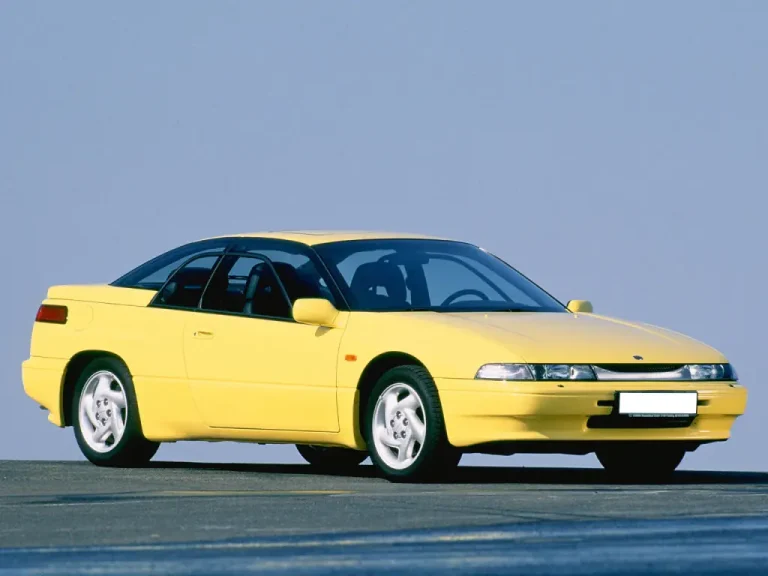
Subaru Legacy gen 5 2010–2014 CVT Transmission Failures Seen in Real Service Bays
Overview
This generation of Subaru Legacy… yeah, this is where things changed. Subaru went all-in on the Lineartronic CVT, and from a technician’s standpoint, that’s where the headaches started stacking up. Smooth driving, better MPG, sure—but under the car, it’s a different story.
You’re dealing with a chain-driven CVT tied into an AWD system using an electronically controlled transfer clutch. Sounds fancy. It is. Also over-engineered in a few key places. And sensitive. Very sensitive.
Right out of the gate, 2010 models had a real issue—NHTSA Recall 10V-196 (Subaru WVQ-27). The CVT cooler hose could split. Not seep. Split. Fluid dumps out, car loses drive, and if you keep your foot in it for even a short time, you’re cooking that tranny. I’ve seen units come in completely dry. Nothing left.
Then Subaru quietly backs it up with a 10-year / 100,000 mile (160,000 km) CVT warranty extension. That doesn’t happen unless there’s a pattern. Manufacturers don’t hand out coverage like that for fun.
Which Transmissions It Uses
| Transmission Code | Type | Drive Layout | Engine Pairing | Years Used | Notes |
|---|---|---|---|---|---|
| TR690 | Chain-driven CVT | AWD (Active Torque Split) | 2.5L H4 (EJ25) | 2010–2012 | First rollout version; more torque converter complaints |
| TR580 | Chain-driven CVT | AWD (Active Torque Split) | 2.5L H4 (FB25) | 2013–2014 | Updated internals and valve body changes |
That’s it. No alternatives. If it’s an automatic Legacy from this generation, it’s one of these two CVTs. No fallback option. No “better” automatic hiding somewhere.
Main Failure Patterns
Torque Converter Lock-Up Issues (TR690)
This one shows up early. You’re rolling to a stop, RPM drops… and it feels like the engine is about to stall. Customers swear the engine is dying. It’s not.
It’s the torque converter staying locked when it shouldn’t.
Subaru documented it. Internal wear messes with the oil flow that releases lock-up pressure. So instead of disengaging smoothly, the drivetrain drags the engine down. Feels awful. Drives worse.
I’ve seen dozens of these. Same complaint every time.
Valve Body Problems (TR580)
Then Subaru “fixes” things with the TR580… and introduces a different issue. Classic.
Now you get shudder. Light throttle, low speed, coming to a stop—it starts shaking. Not violent, but annoying enough that owners notice right away.
Codes like P2757 and P2762 show up. That’s your clue. Control valve body isn’t managing lock-up pressure properly.
Subaru released updated valve bodies. It’s not a rebuild. It’s a swap.
Service Bay Benchmark: once it starts shuddering, it rarely fixes itself. It just gets worse.
Fluid Leaks — The Slow Kill
This platform loves to leak. Not big puddles at first. Just enough to cause problems later.
- Oil pump chain cover
- Torque converter case (mostly TR690)
- Input shaft seal
Here’s the problem—CVTs don’t tolerate fluid loss. At all. You lose pressure, you lose control, and then things start wearing in places they shouldn’t.
I’ve opened these up and found fine metal shavings. Not chunks. Just enough to tell you it’s been running unhappy for a while.
Pressure Sensor and Hydraulic Issues
P0841. That code comes up a lot.
People assume it’s just a sensor. Sometimes it is. Sometimes it’s not even close.
Could be:
- Sensor itself
- Wiring issue
- Valve body pressure control problem
- Internal hydraulic issue
This is where shops either get it right… or throw parts at it.
Service Bay Benchmark: same code, three different root causes depending on the car.

Cooler Hose Failure (2010)
Back to that recall. When that hose goes, it goes fast. Fluid loss is immediate. No warning, no slow leak.
I’ve seen drivers try to limp it home. Bad idea. You’re basically running the tranny dry.
Typical Repair Costs
| Repair Type | Typical Cost (USD) | Classification | Notes |
|---|---|---|---|
| Torque Converter Replacement | $1,200–$2,000 | Service Bay Benchmark | Common on early TR690 units |
| Valve Body Replacement | $1,200–$1,800 | Service Bay Benchmark | TR580 issue; includes relearn procedures |
| CVT Leak Repair (Reseal) | $800–$2,000 | Service Bay Benchmark | Labor-heavy; often requires removal |
| Sensor / Electrical Diagnosis | $300–$900 | Service Bay Benchmark | Depends on actual root cause |
| Full CVT Replacement | $4,500–$7,500 | Industry Estimate | Worst-case scenario; reman unit installed |
And yeah—misdiagnosis is expensive here. I’ve seen people replace a valve body when the transmission was already on its way out. Money gone. Problem still there.
Best and Worst Years
| Model Year | Transmission | Reliability Assessment | Classification | Notes |
|---|---|---|---|---|
| 2010 | TR690 | Low | Field Observation | Recall + early CVT issues |
| 2011 | TR690 | Moderate | Field Observation | Slight improvements |
| 2012 | TR690 | Moderate | Field Observation | Still same design underneath |
| 2013 | TR580 | Moderate | Field Observation | New system, new quirks |
| 2014 | TR580 | Moderate–Higher | Field Observation | Most sorted version |
If I had to pick one? 2014. Still not perfect. Just less annoying.
Warning Signs & Early Detection
These don’t usually fail overnight. They complain first.
- Shudder at low speeds
- RPM dropping too low when stopping
- Delayed engagement into gear
- Check engine light with CVT codes
- Fluid seepage under the car
Ignore those signs, and the repair bill jumps fast. CVTs don’t give second chances.
When to Walk Away
Some cars just aren’t worth the gamble.
- Active transmission codes
- Visible leaks + drivability issues
- No maintenance history
- Just out of warranty and already acting up
I’ve seen buyers get burned thinking “it drives fine.” Give it 20 minutes. Heat it up. That’s when the problems show.
Ownership Reality
| Category | OEM Guidance | Real-World Outcome | Classification | Consequence |
|---|---|---|---|---|
| CVT Fluid | No fixed interval | Breaks down with use | Field Observation | Wear inside valve body and pulleys |
| Warranty | 10yr / 100k miles | Failures often near limit | Field Observation | Owner pays big after coverage |
| Leaks | Monitor condition | Small leaks become big problems | Service Bay Benchmark | Pressure loss, internal wear |
| Diagnostics | Follow codes | Codes don’t tell full story | Service Bay Benchmark | Trial-and-error repairs |
| Repairs | Fix components | Sometimes full replacement needed | Industry Estimate | High ownership cost |
Subaru calls the fluid “lifetime.” In my experience, that’s optimistic at best. These transmissions are picky. Fluid condition matters more than most owners realize.
Lawsuits, Complaints & Regulatory History
No major class action tied specifically to this exact model range—but the complaint data tells the story.
- Recall 10V-196 — confirmed fluid loss risk
- Repeated NHTSA complaints about hesitation and drivability
- CVT warranty extension program
You don’t get all three of those without a pattern. It’s not one catastrophic flaw—it’s a bunch of smaller issues stacking up.
Bottom Line
This drivetrain isn’t garbage… but it’s not forgiving either.
TR690 units feel like early experiments. TR580 is better, but still not something I’d call bulletproof. Maintenance, diagnosis, timing—everything matters here.
Ignore problems? It will bite you. Hard.
Take care of it, catch issues early, and it can last. But this isn’t a “drive it and forget it” setup. Not even close.