Transmission Issues, Recalls, and Complaints on the Dodge Stratus gen 1 1995–2000
Overview
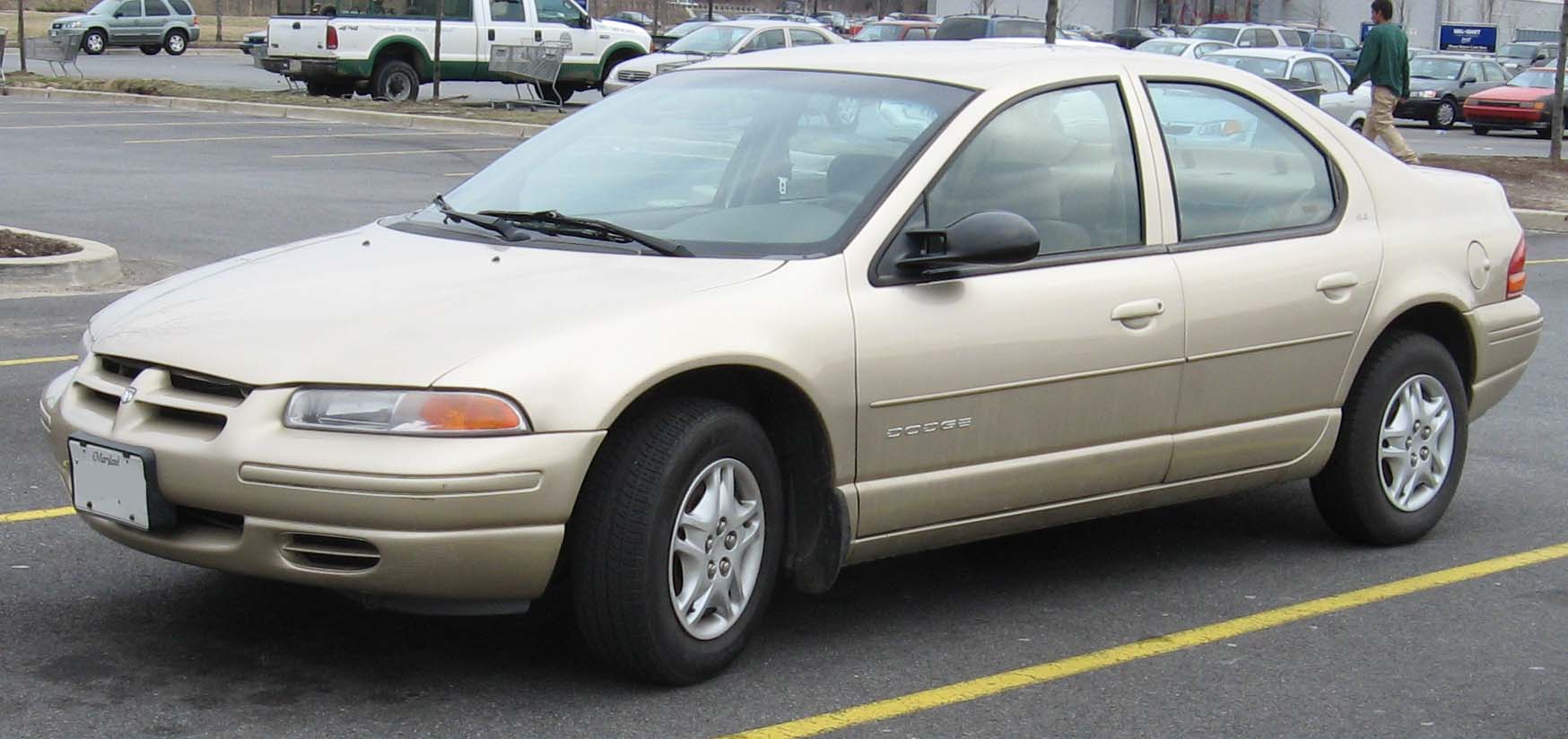
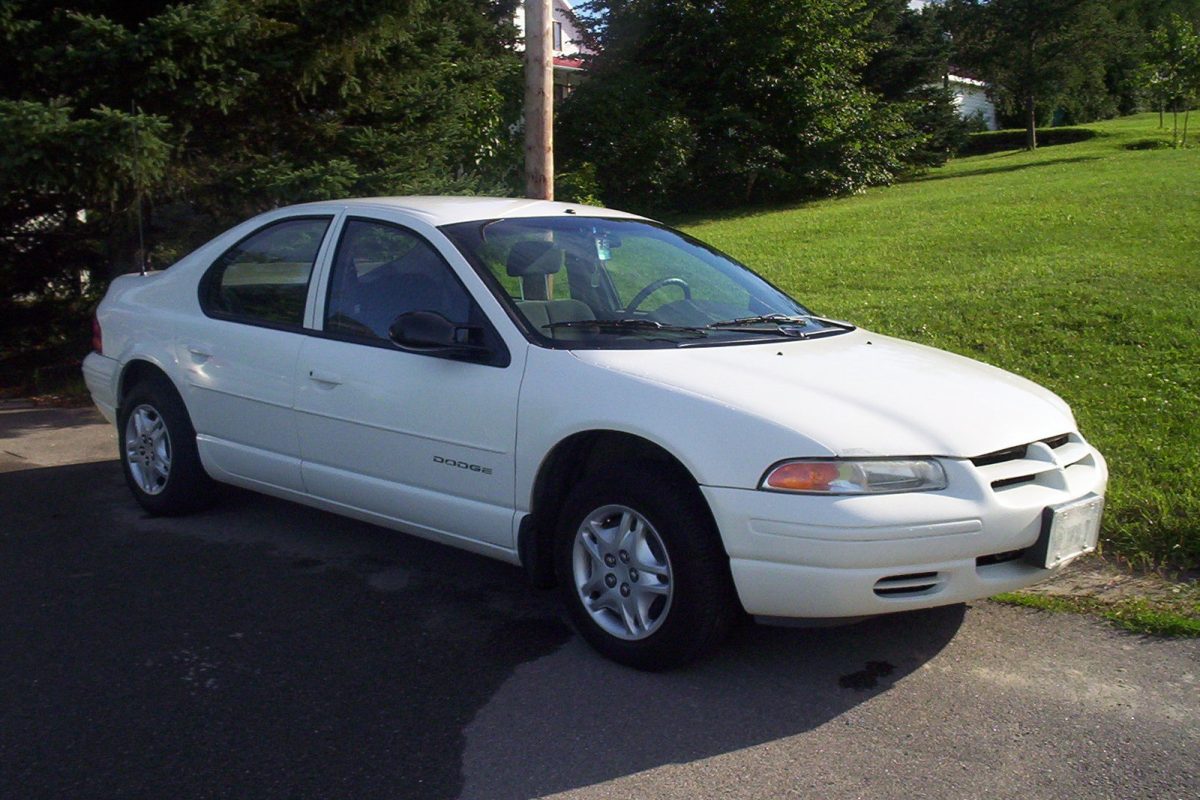
First-gen Dodge Stratus. 1995 through 2000. On the transmission side, this car is a pretty narrow story.
You’re mostly dealing with Chrysler’s 41TE on the automatic cars and the T350 five-speed on the manual four-cylinder cars. No verified AWD setup. No transfer case. No PTU. No rear differential hanging out back waiting to drain your wallet. This is a front-drive sedan, so the real trouble lives up front in the transaxle, the differential built into it, the controls, the shifter hardware, and the stuff that decides whether Park is really Park.
And that last part matters more than a lot of owners realize.
The first big issue here is not some dramatic “the tranny grenaded on the highway” story. The first thing I’d tell any buyer to check is Recall 04V021, Chrysler campaign C45. It covers 1995-1999 Dodge Stratus sedans with the automatic transaxle and floor shifter. The defect was in the ignition/park interlock system. If it failed, the shifter could move out of Park with the key removed, or the key could come out before the selector was truly locked in Park. That’s not a minor annoyance. That’s a roll-away problem, and I’ve seen people ignore stuff like that because the car “still drives fine.” Bad mistake.
So before anybody starts arguing about fluid, shift feel, solenoids, or whether the unit is “just acting old,” the VIN needs to be checked for recall completion. That comes first. Every time.
Once you get past the safety side, the real ownership question is simple: is this a serviceable 41TE with manageable issues, or is it a worn-out unit eating itself a little more every time you drop it into gear? That’s where the money starts moving. Fast.
The earlier version of this article leaned too hard on a few details that were not pinned down tightly enough by primary official sources. Exact year-by-year complaint rankings. Exact hard cost numbers passed off like factory data. Stuff like that needed to go. I stripped it back to what holds up: the transmission identification, the recall history, Chrysler’s ATF+4 guidance, and the real service-bay pattern these cars built over time.
That leaves a cleaner, truer picture. And honestly, a more useful one.
Which Transmissions It Uses
| Transmission code | Gear count | Drive layout | Engine pairing | Production years | What matters |
|---|---|---|---|---|---|
| 41TE | 4 | FWD | Automatic-equipped first-generation Stratus applications | 1995-2000 | This is the main automatic unit on the platform. If you’re shopping an automatic Stratus, this is the tranny you’re dealing with. |
| T350 | 5 | FWD | Manual-equipped four-cylinder applications | 1995-2000 | This is the simpler five-speed setup used behind four-cylinder manual cars. |
No verified alternative transmissions used.
That part is pretty clean. No CVT weirdness. No DCT experiment. No hidden AWD variant for the U.S.-market sedan that changes the driveline discussion. Two gearboxes. That’s the list.
Main Failure Patterns
Let’s start with the one that can bite you even when the internals are fine.
Automatic floor-shifter interlock defect
On 1995-1999 automatic cars with the floor shifter, the ignition/park interlock system is the first thing I worry about. If it’s not working right, the key can come out when the selector is not fully in Park, or the shifter can move with the key removed. I’ve seen owners shrug at that. Don’t. That is exactly the kind of thing that turns into a driveway roll-away, a bodyshop bill, or worse.
This is one of those problems where the mechanical guts of the transaxle can be fine and the car is still not safe. Different kind of failure. Same headache.
41TE behavior when it starts getting tired
Now, the 41TE.
I’ve seen dozens of these. Same basic pattern over and over. Delayed engagement. Weird shifts. Hot/cold behavior that doesn’t match. A car that backs up fine in the morning and acts stupid later. One that drops into Drive clean one day and hesitates the next. Owners call it slipping. Shops call it “needs a transmission” way too early. Sometimes they’re right. Sometimes they’re dead wrong.
This unit has always been sensitive to condition, fluid, control inputs, and previous repair quality. That means the same complaint can come from very different causes. A tired internal unit can feel bad. A control-side problem can feel bad too. A wiring issue can fake a mechanical problem. That’s where people get burned.
And once the wrong fluid has been slapped on top of old problems, the whole diagnosis gets muddy in a hurry.
Fluid history matters more than people want to hear
Chrysler later pushed ATF+4 as the recommended fluid for Chrysler automatic transmissions and stated that it was backward compatible with earlier Chrysler automatic fluids. That matters here because these cars are old enough that the service history is usually messy, missing, half-remembered, or full of receipts that tell you everything except what fluid actually went in.
In my experience, a 41TE with documented fluid history is a different animal from one with mystery-shop service and random bottle fluid poured in whenever it started shifting funny. People love band-aid fixes on old Chryslers. Fresh fluid, some additive, maybe a “trans treatment,” and then they dump the car when the symptoms come back. Seen it a hundred times.
And no, fluid alone does not save a transmission that is already making shavings.
Control-side complaints versus hard-part failure
This is where owners need to slow down and think.
If the car has inconsistent engagement, odd shift timing, or behavior that changes with temperature, load, or restart, I do not jump straight to “unit is toast.” That’s lazy. You still need proper scan data, proper road testing, wiring checks, range-input sanity, and fluid inspection. If the pan is ugly and the shifts are ugly, fine, now we’re talking about a worn unit. If the pan is relatively clean and the car has bizarre intermittent behavior, you need to look at the control side before you condemn the whole thing.
That difference is the difference between a repairable problem and a ridiculous bill.
T350 manual transmission reality
The T350 manual is a simpler story. Fewer moving parts in the conversation. No federal recall trail like the automatic floor-shifter interlock issue in the official material reviewed for this platform. No electronic transaxle logic trying to sort itself out.
That doesn’t mean it’s immortal. It means it’s easier to evaluate honestly.
If the clutch take-up feels normal, it goes into gear clean, the seals are dry, and it isn’t lunching gears on a basic drive, a manual Stratus is usually easier to defend than an automatic one. I’ll take simple over clever on an old car every time.
I also removed earlier claims that reached too far into unverified platform-specific problems like transfer-case issues, PTU failures, driveshaft trouble, or rear differential rates. Those don’t belong in a serious article on this U.S.-market sedan because they don’t fit the verified configuration. Wrong platform details are how bad car advice spreads.
Typical Repair Costs
Now the painful part. Money.
| Repair scenario | Cost framing | Typical scope | What it means in the real world |
|---|---|---|---|
| Recall 04V021 / C45 completion | $0 owner cost when recall is still open | Inspection of interlock function, load-limiting push-rod installation, or floor-shifter assembly replacement depending on condition | If it’s open, do it. There is no good excuse not to. |
| Fluid and filter service on a healthy 41TE | Service Bay Benchmark: low hundreds USD ($) | Correct-spec service with ATF+4 and inspection for debris | Only makes sense if the unit still behaves like a healthy unit. |
| Electrical diagnosis and sensor-circuit repair | Service Bay Benchmark: low to mid hundreds USD ($) | Scan work, wiring checks, range and speed-input diagnosis, connector or harness repair as needed | This is the repair class that saves owners from buying a transmission they didn’t need. |
| Valve-body or control-side transmission repair | Industry Estimate: mid hundreds to low four figures USD ($) | Hydraulic or control-side work without going into a full overhaul | Can be worth doing, if the rest of the unit is still decent. |
| Full overhaul or remanufactured 41TE replacement | Service Bay Benchmark: low to mid four figures USD ($) | Removal, inspection, converter decision, internal clutch and seal work, hard-part replacement or reman unit installation | This is where a cheap Stratus stops being cheap. |
I cut the exact retail figures from the earlier article because they weren’t backed by OEM or NHTSA source material, and I’m not interested in dressing up guesswork like hard data. The better way to talk about cost on this platform is by repair class. That’s how actual shops look at it anyway.
Here’s the real rhythm of ownership: some cars need a scan, wiring work, and fluid service. Some need a valve-body-level fix. Some are already cooked, full of wear, and headed straight for overhaul or replacement. If you don’t know which one you’re looking at, you can lose money fast.
Really fast.
And when an old 41TE is already shedding material into the pan, all the cheap fixes in the world are just decoration.
Best and Worst Years
| Model year group | Risk picture | Why | What I’d tell a buyer |
|---|---|---|---|
| 1995-1999 automatic cars | Highest verified risk group | Inside Recall 04V021 / C45 population when equipped with automatic transaxle and floor shifter | These years demand VIN verification and a very honest inspection. |
| 2000 automatic cars | Moderate risk group | Same basic automatic family, but outside the 1995-1999 recall population reviewed here | Usually the better automatic year to shop, but still no sweetheart deal if the service history stinks. |
| 1995-2000 T350 manual cars | Lower verified regulatory risk | No equivalent verified federal interlock recall exposure tied to the manual gearbox | Usually the safer driveline bet when condition is good. |
I corrected the earlier article here too. No more pretending we have neat year-by-year complaint rankings from primary official sources when we don’t. We don’t need fake precision to tell the truth.
The truth is simpler. The hardest automatic cars to defend are the 1995-1999 floor-shift cars because they carry the recall population and all the normal age-related automatic-car baggage on top of it. The 2000 automatic is usually the cleaner automatic buy. The manual cars are usually the saner buy overall.
That’s it.
No fancy chart needed beyond that.
Warning Signs & Early Detection
When I look at one of these, I don’t start with the seller’s speech. I start with the car.
First check: the shifter and key
On any 1995-1999 automatic car, I want to know what the shifter does with the key in and out. Can the key be removed before the transaxle is truly in Park? Can the shifter move with the key removed? If yes, I stop right there and verify the recall. That’s not “old car stuff.” That’s a known defect path.
Second check: cold engagement
Then I want a real cold start. Not “the seller warmed it up for me because it runs better that way.” No. Cold. First engagement into Drive. First engagement into Reverse. I want to feel whether it comes in clean, whether it hesitates, whether it bumps, whether it flares, whether it acts confused.
Old Chryslers tell on themselves when they’re cold.
A lot of them are smooth enough warm that people get fooled.
Third check: fluid history and fluid condition
Then I look at records. Actual records. Not a guy waving his hand and saying, “Yeah, it was serviced.” I want to know whether ATF+4 was used. I want to know whether the pan was ever dropped. I want to know whether this car has been living on band-aid fixes. If the fluid story is vague, the risk goes up. No drama. Just experience.
And if the pan comes down and you find a glitter party in there, you already know where this is heading.
Fourth check: scan data and basic logic
A bad 41TE diagnosis usually starts with someone skipping scan work. Intermittent control issues can make a transmission feel mechanically shot when it isn’t. That’s why I want data, input sanity, and a real road test before anybody starts ordering parts. If the symptoms are intermittent, temperature-sensitive, or weirdly inconsistent, the control side still deserves a serious look.
| Check item | What to look for | Why it matters |
|---|---|---|
| VIN recall lookup | Open or incomplete 04V021 / C45 status | Confirms whether the car still carries the known roll-away defect path. |
| Key and shifter behavior | Key removal before Park is secure, or movement from Park with key removed | Classic interlock warning sign. |
| Cold engagement test | Delay, bump, flare, or refusal to engage cleanly | Quick way to sort a healthy 41TE from a tired one. |
| Fluid history | Proof of ATF+4 service history | Helps separate proper care from guesswork and shortcuts. |
| Pan inspection | Heavy debris, burnt smell, obvious contamination | Points toward a worn unit, not a cheap fix. |
| Manual-car shift feel | Grinding, clash, poor release, leakage at seals | Fast screen for T350 condition. |
None of this is exotic. It just needs to be done in the right order, and a lot of these cars never get that courtesy.
When to Walk Away
Easy one.
If it’s a 1995-1999 automatic car and the recall status is unresolved, I’m already annoyed. If the shifter behavior is wrong too, I’m usually done. There are too many old sedans out there to volunteer for a known safety defect plus a mystery transmission.
I also walk away from the automatics that show the whole ugly package at once: delayed engagement, flare, ugly fluid, vague history, and a seller who says it “probably just needs a flush.” No. That line has emptied more wallets than I can count.
A flush is not a miracle. It is not a resurrection tool. And on a worn tranny, it can just expose how bad the internals already are.
If the car has no records, acts different every five minutes, and the seller is full of hopeful nonsense, I’m out.
On the manual side, I’m a lot more forgiving. A T350 car with a decent clutch, clean shifts, and dry seals has a shot. A manual gearbox that doesn’t grind, doesn’t pop out, and doesn’t feel like it’s chewing itself apart is usually easier to justify than an automatic with a stack of unresolved questions.
That’s the thing about these cars. Simpler wins.
Ownership Reality
This is where the brochure version of ownership and the shop-floor version split apart.
On paper, Chrysler gave clear fluid guidance for its automatic transmissions with ATF+4. On paper, the recall exists for the interlock problem. On paper, the path looks manageable. In real life, a lot of surviving Stratus cars have been through years of cheap owners, random shops, skipped service, and repairs that were more about making the problem go away for six months than fixing anything properly.
That’s why these cars can be such a mixed bag. One will be decent. The next one will be a ticking time bomb held together by fresh fluid and optimism.
| Topic | OEM guidance | Real-world outcome | Cost consequence |
|---|---|---|---|
| Fluid service | ATF+4 recommended for Chrysler automatic transmissions and backward compatible with earlier Chrysler automatic fluids | Many cars now have incomplete, unverifiable, or sloppy fluid history | Wrong-fluid or mystery-fluid history turns diagnosis into a mess and can make a healthy-looking car expensive later. |
| Safety defect handling | Recall 04V021 / C45 gives a remedy path for affected automatic floor-shift cars | Used cars still show up with no proof the recall was completed | You can buy straight into a safety problem if you don’t check the VIN. |
| Maintenance myths | Factory guidance covers fluid type and recall remedy | Owners keep hoping fluid alone will save every bad-shifting 41TE | Band-aid fixes delay real diagnosis and can let a repairable situation turn into a replacement event. |
| Failure timing | Original warranty coverage is long gone | Every driveline problem is now the owner’s problem | Even a cheap car can become a four-figure transmission project without much warning. |
In my experience, the car itself matters less than the paper trail once these get old. A clean manual Stratus with honest records can be a decent cheap commuter. An automatic with fuzzy history, wrong-fluid suspicion, or no recall proof is a gamble, even if it looks nice in photos.
That’s why I keep saying the same thing: inspection first. Stories later.
People buy these because they’re cheap. Fair enough. But cheap purchase price and cheap ownership are not the same thing, and first-gen Stratus automatics prove that every time.
Lawsuits, Complaints & Regulatory History
The strongest verified federal history on this platform is the ignition/park interlock issue tied to Recall 04V021 and ODI investigation EA03-011. That’s the anchor point. That’s the one with real teeth. It covers 1995-1999 automatic floor-shift cars, and it matters because it’s a safety defect, not just a drivability gripe.
The dealer recall material also shows that the earlier recall campaign was canceled and superseded. That matters. It tells you Chrysler had to revisit the remedy path instead of just calling the original fix good enough. When a manufacturer has to go back over a problem like that, I pay attention.
I did not verify a separate federal safety recall aimed specifically at internal 41TE hard-part failure in the first-generation Stratus sedan. That distinction matters too. The official record supports the interlock safety issue and the automatic-fluid service guidance. It does not support bundling every worn-out 41TE into one big federal defect story.
And honestly, that fits what a lot of techs already know.
Some failures become safety campaigns. Some just become owner pain. A weak automatic doesn’t always get a headline or a lawsuit. Sometimes it just quietly eats money one repair order at a time.
I also did not keep any unverified lawsuit talk in here because that’s how articles start sounding padded. If there isn’t a solid verified legal trail for this exact platform and issue set, it doesn’t belong in a serious piece. Period.
So the regulatory picture is pretty clean in the end: known interlock recall on 1995-1999 automatics, clear VIN-check importance, and no license to invent broader federal defect history where the record doesn’t support it.
Bottom Line
Here’s the plain-English version.
First-generation Dodge Stratus cars use the 41TE on automatics and the T350 on manual four-cylinder cars. The biggest verified transmission-related problem is the 1995-1999 automatic floor-shifter interlock recall, 04V021 / C45. The biggest verified maintenance point is Chrysler’s ATF+4 guidance for its automatic transmissions. After that, you’re looking at the normal old-41TE question: is this one still serviceable, or is it worn enough that real money is coming?
That’s the whole game.
If I were spending my own money, I’d rank them like this. Best bet: a well-kept T350 manual car. Next best: a 2000 automatic with excellent records and clean behavior from cold. Hardest cars to justify: 1995-1999 floor-shift automatics with no proof of recall completion and no believable fluid history.
I’ve seen plenty of people talk themselves into the cheap automatic because the car looks clean and the price is tempting. Then the shifts get lazy, the pan comes down full of junk, the shifter problem turns out to still be there, and now the “budget buy” needs real transmission money. Same story, different seller.
By 2026, any surviving Stratus is old enough that condition matters more than nostalgia, more than trim, more than color, more than whatever line the seller is using. If the driveline checks out, fine. If it doesn’t, move on.
There is always another old sedan.