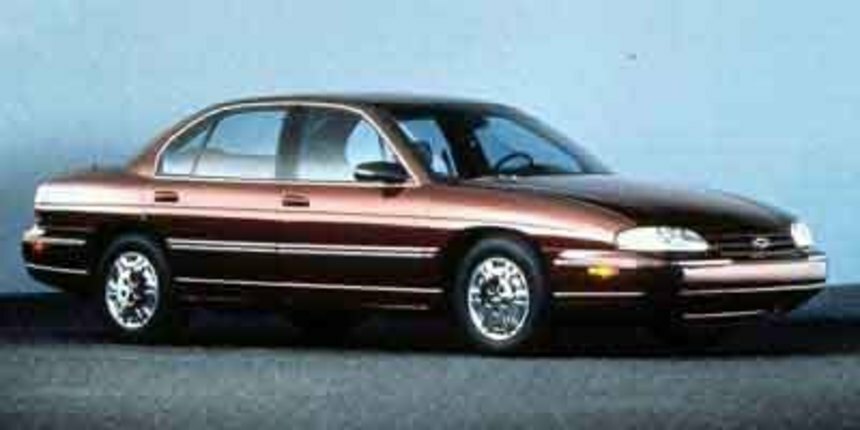
Chevrolet Lumina gen 2 1995–2001 Transmission: Common Issues and Expert Verdict
Overview
The second-generation Chevrolet Lumina (1995–2001) runs a pretty typical GM W-body drivetrain setup. Front-wheel drive. Transaxle layout. Everything stuffed together in one aluminum case — transmission, differential, final drive. All living the same life, sharing the same fluid.
So when people say “the transmission failed,” they’re usually talking about the whole assembly. The tranny, the diff gears, the hydraulic control system, the works.
I’ve worked on these cars since they were still showing up at dealerships under warranty. Back then they were commuter cars. Fleet cars. Rental units. Nothing exotic. Just cheap American sedans doing highway miles.
Today? The surviving ones are old. High mileage. Usually well past 150,000 Miles (241,000 km). That means the reliability conversation isn’t really about design defects anymore. It’s about wear. Fluid maintenance. And how hard the previous owners drove it.
Two transmissions matter on this platform.
The early cars used the 4T60-E. Then GM rolled out the updated 4T65-E around the 1997 model year. Same basic architecture, but a bit stronger and electronically refined.
Both are hydraulic automatic transaxles with electronic control solenoids running the show. Inside, clutch packs engage planetary gearsets while a valve body meters fluid pressure. When the hydraulics stay healthy, these units can live a long life. When the valve body starts wearing out, the whole thing gets messy fast.
GM even published a service bulletin about one of the known failure points — pressure regulator bore wear inside the valve body. That bulletin is PI1217. It deals with transmission fluid venting out of the case because internal pressure leaks past worn valve bores.
Strange leak. I’ve chased it more than once.
And if you don’t know the trick, you’ll swear the transmission case itself is cracked.
Which Transmissions It Uses
| Transmission Code | Gear Count | Drive Layout | Engine Pairing | Production Years | Notes |
| 4T60-E | 4-speed | FWD | 3.1L V6 | 1995–1996 | Early electronic GM W-body transaxle |
| 4T65-E | 4-speed | FWD | 3.1L V6, 3.4L V6, 3.8L V6 | 1997–2001 | Stronger internals and updated control strategy |
That’s it. No manuals. No AWD versions. No fancy dual-clutch setups.
Just two GM four-speed automatics running the entire generation.
Both are transverse units. Which means the differential sits inside the transmission housing, bathed in the same automatic transmission fluid. Axles slide directly into the side of the case.
If something leaks at the axle seal, you’re losing transmission fluid.
People forget that. Then the tranny runs low. Then the clutches start slipping.
Then the rebuild bill shows up.
Main Failure Patterns
Pressure Control Solenoid Wear
This one shows up all the time on the 4T65-E.
The pressure control solenoid — PCS — regulates line pressure inside the transmission. Basically it tells the hydraulic system how hard to clamp the clutch packs during shifts.
When that solenoid starts slowing down or sticking, the transmission computer panics. It cranks line pressure way up to protect the clutches.
The driver feels it immediately.
- Hard 1-2 shifts
- A big clunk shifting into Drive
- Delayed engagement
- Occasional flare between gears
I’ve seen dozens of these. Usually somewhere around 120,000 to 180,000 Miles (193,000–290,000 km).
Sometimes earlier if the fluid was never changed.
The annoying part? The solenoid itself is cheap. But getting to it is a pain. On the Lumina you often have to drop the subframe slightly just to pull the transmission side cover.
Labor explodes. Simple part, ridiculous job.
Valve Body Bore Wear
Now this one confuses a lot of techs.
Inside the 4T65-E valve body there’s a pressure regulator valve that rides inside a machined aluminum bore. Over time the valve starts wearing that bore bigger and bigger.
Hydraulic pressure starts leaking past it.
That leaking pressure dumps into a channel under the transmission vent. Which means fluid starts blowing out the vent on top of the case.
You pop the hood and see transmission fluid on the case. Looks like it’s coming from nowhere.
I’ve watched techs replace axle seals. Replace pan gaskets. Replace cooler lines. Total waste of time.
The problem lives inside the valve body.
GM documented it in bulletin PI1217. The fix is replacing the valve body or installing a sleeve repair kit to restore the bore clearance.
It’s one of those weird failures that makes sense only after you’ve seen it once.
General Valve Body Wear
Every hydraulic automatic eventually runs into this problem.
The valves ride directly in aluminum channels. Fluid moves through those passages thousands of times per minute. Over years of operation the valves wear their bores slightly larger.
Then pressure leaks internally.
Once that happens, the transmission gets inconsistent. One shift feels normal, the next shift flares or bangs. Sometimes cold operation gets sloppy.
- Delayed gear engagement
- Erratic shifts
- Occasional slipping
At that stage, throwing solenoids at the transmission is usually a band-aid fix.
A rebuilt valve body or a full rebuild is the real repair.

Axle Seal Leaks
This is the boring one.
Axle seals age. They harden. They leak.
On Luminas the CV axles slide directly into the transmission differential. The seals keep fluid inside the case while the axle rotates.
After years of heat cycles they get brittle.
Fluid starts seeping out around the axle shafts.
Not catastrophic. But if the owner ignores it long enough, the transmission runs low on fluid and things go downhill quickly.
Typical Repair Costs
Let’s talk money. Because this is where reality hits people.
| Repair Type | Parts Cost | Labor Cost | Total Cost (USD) | Notes |
| Transmission fluid & filter service | $80–$130 | $120–$200 | $200–$330 | Service Bay Benchmark |
| Axle seal replacement | $20–$60 | $150–$320 | $170–$380 | Axle removal required |
| Pressure control solenoid | $70–$160 | $450–$900 | $520–$1,060 | Subframe access makes labor heavy |
| Valve body replacement | $300–$600 | $450–$900 | $750–$1,500 | Common high-mileage repair |
| Full transmission rebuild | $1,300–$1,900 | $1,200–$2,100 | $2,500–$4,000 | Industry repair benchmark |
| Remanufactured transmission install | $2,100–$3,400 | $1,200–$1,900 | $3,300–$5,300 | Typical independent shop pricing |
For a car that might be worth $2,000 on a good day, that rebuild number hurts.
Which is why a lot of these cars get driven until the tranny grenades.
Best and Worst Years
| Year | Transmission | Reliability Pattern | Risk Level | Notes |
| 1995 | 4T60-E | Mostly aging wear now | Medium | Oldest surviving vehicles |
| 1996 | 4T60-E | Similar wear patterns | Medium | Last year before redesign |
| 1997 | 4T65-E | Early version of updated transmission | Medium | First year transition |
| 1998 | 4T65-E | More stable production | Lower | Refined calibrations |
| 1999 | 4T65-E | Generally solid | Lower | Few platform complaints |
| 2000 | 4T65-E | Typical high-mileage wear | Medium | Many fleet units |
| 2001 | 4T65-E | Standard aging patterns | Medium | End of generation |
Warning Signs & Early Detection
Transmissions rarely fail instantly. They usually warn you.
You just have to pay attention.
- Harsh gear changes
- Delayed engagement into Drive
- Fluid residue near the transmission vent
- Leaks near axle shafts
- Transmission related diagnostic codes
When I inspect one of these cars, I start simple.
Fluid condition. Fluid level. Road test.
Then I hook up a scan tool and watch the pressure commands during shifts. If the computer is commanding max pressure all the time, that usually means the PCS is wearing out.
Sometimes you’ll even see metallic shavings in the pan.
That’s when the conversation with the owner gets serious.
When to Walk Away
Buying a used Lumina today means you’re buying an old drivetrain. There’s no way around it.
Certain warning signs should stop the purchase immediately.
- Transmission slipping during acceleration
- Hard banging shifts
- Burnt fluid smell
- Fluid sprayed around the transmission vent
- Evidence of multiple past transmission repairs
One symptom might be manageable. Two symptoms together usually mean the tranny is already on borrowed time.
And once these gearboxes start lunching their clutch packs, the repair bill climbs fast.
Ownership Reality
GM’s maintenance guidance for these transmissions assumed ideal conditions. Nice highway driving. Clean fluid. Responsible owners.
Real life is uglier.
Stop-and-go traffic. Heat. People who never service the fluid.
| Maintenance Topic | Factory Guidance | Real Shop Experience | Cost Impact |
| Transmission fluid interval | Extended service schedules | 30k–50k Miles (48k–80k km) | Prevents valve body wear |
| Solenoid lifespan | Designed for long life | Often replaced after high mileage | $500–$1,000 repair |
| Valve body durability | Expected lifetime component | Wear develops with mileage | $750–$1,500 repair |
| Transmission lifespan | Long service life | 150k–200k Miles common rebuild point | $2,500–$4,000 rebuild |
In my experience, the cars that survive longest follow one simple rule.
Fresh fluid. Regularly.
Ignore the fluid and the tranny becomes a ticking time bomb.
Lawsuits, Complaints & Regulatory History
There hasn’t been a major class-action lawsuit targeting Lumina transmissions specifically.
Most complaints filed with NHTSA revolve around shift quality problems — harsh shifting, slipping, delayed engagement — usually on vehicles with serious mileage.
The one manufacturer service document worth mentioning is GM bulletin PI1217. It addresses fluid leaking from the transmission vent due to pressure regulator valve bore wear in the 4T65-E valve body.
Owners chasing strange fluid leaks from the top of the transmission should know about that bulletin.
It saves a lot of guesswork.
Bottom Line
The Lumina drivetrain is simple by modern standards.
Two transmissions. Conventional hydraulic automatics. No complicated electronics, no dual-clutch nonsense, no CVT belts waiting to explode.
The weak points are predictable — pressure control solenoids, worn valve bodies, and the occasional axle seal leak.
Maintain the fluid and the transmission might last a long time. Neglect it and the clutches start shedding material, metal shavings circulate through the system, and eventually the gearbox grenades.
That’s the reality of these old GM transaxles.
Not perfect. Not terrible either.
Just mechanical machines that respond directly to how well — or how poorly — they were maintained.