

How the Chevrolet Tracker gen 2 1999–2004 Transmission Actually Fails
Overview
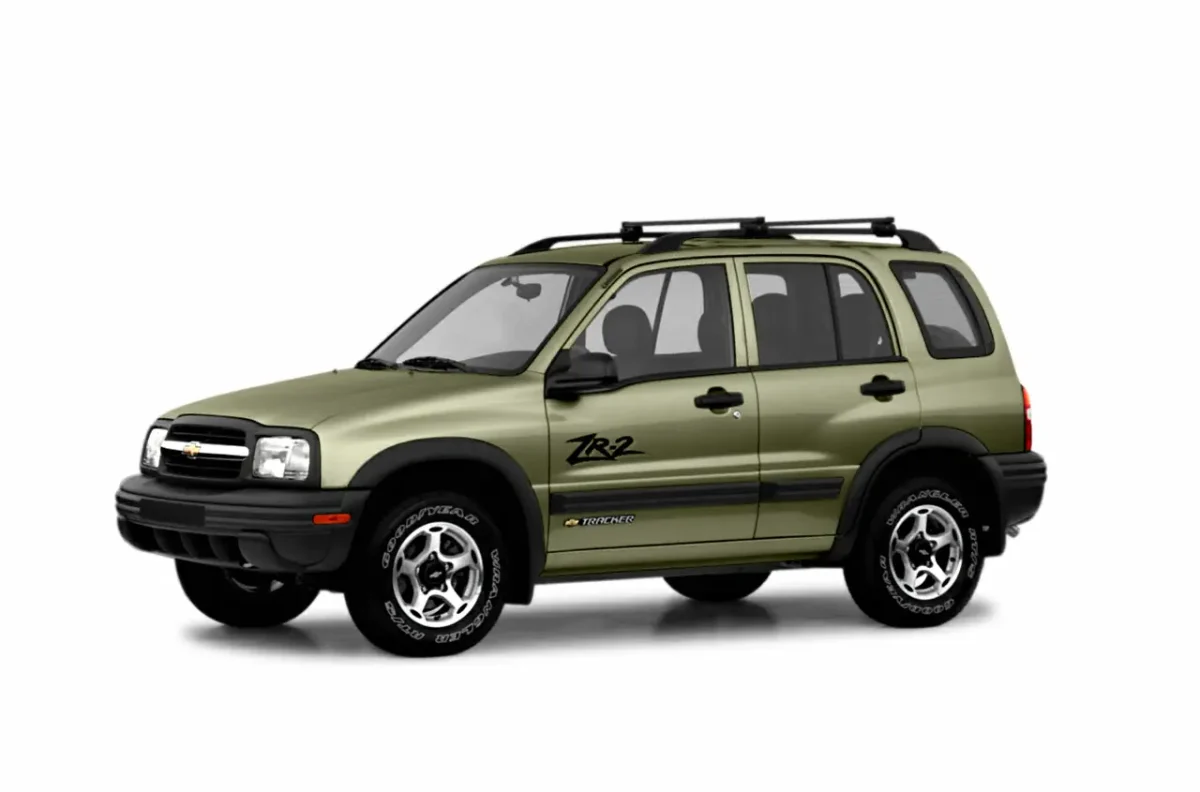
The 1999–2004 Chevrolet Tracker sits in an odd spot in the SUV world. Small body. Real truck drivetrain. Separate transfer case. Old-school layout. No crossover nonsense yet.
I’ve worked on a lot of these. Suzuki engineering under a Chevrolet badge, same bones as the Grand Vitara. The driveline itself is simple — and simple usually means durable. But it also means when something wears out, you hear it immediately. Clunks. Pops. Grinding when you try to grab 4-Low. Stuff like that.
Two transmissions show up in this generation. The GM 03-72LE automatic and the Suzuki M59 five-speed manual. Both mounted longitudinally. Both feeding either rear-wheel drive or a part-time four-wheel drive setup through a two-speed transfer case.
The funny part? Most people walk into the shop convinced their transmission is dying. Nine times out of ten the tranny isn’t the problem. The noise is coming from the front differential, the transfer case linkage, or the front axle engagement system acting ridiculous after twenty years of use.
So when we talk about “transmission problems” on this platform, you really have to include the entire driveline. The gearbox, the transfer case, the differential, the actuators. They all work together. And when one piece gets sloppy, the whole system starts complaining.
Which Transmissions It Uses
03-72LE (3L30)
- 4-speed automatic transmission
- Longitudinal drivetrain layout
- Rear-wheel drive and part-time four-wheel drive configurations
- Used with the 2.0L L34 inline-four and 2.5L V6
- Installed from 1999 through 2004
The 03-72LE — also called the 3L30 — is a light truck automatic GM used in a bunch of smaller rear-drive vehicles back then. Old design. Hydraulic controls. Nothing fancy inside.
In my experience this tranny is pretty tough. Not bulletproof, but far from fragile. If someone actually changes the fluid once in a while, these units regularly push past 180,000 miles (290,000 km) before anything serious happens.
What kills them? Heat and neglected fluid. Same story as almost every automatic transmission ever built.
M59
- 5-speed manual transmission
- Longitudinal drivetrain layout
- Rear-wheel drive and part-time four-wheel drive configurations
- Mainly paired with the 2.0L L34 inline-four
- Installed from 1999 through 2004
The M59 manual gearbox comes straight from Suzuki’s off-road parts bin. It’s simple. Mechanical. Not over-engineered. That’s good.
I’ve seen dozens of these with over 200,000 miles (322,000 km) on the original transmission. The clutch wears out long before the gears do. Unless someone runs it dry or drives like a maniac, the M59 rarely lunches gears.
There were no other transmission options for the North American Chevrolet Tracker during this generation. Two gearboxes. That’s it.
Main Failure Patterns
This is where things get interesting.
Most “transmission problems” reported by owners are actually driveline issues somewhere downstream of the gearbox. That’s why a proper inspection matters. Guessing gets expensive fast.
Front Differential Clunking in 4WD
This one shows up a lot. Early production trucks especially.
GM issued service bulletin 01-04-19-003 after enough customers complained about a loud clunk or popping noise coming from the front axle while turning in four-wheel drive.
You feel it during slow turns — parking lots, gravel roads, snowy driveways. Wheel turned, throttle applied, then bang… clunk… bang. Sounds like something just snapped inside the drivetrain.
Inside the differential, components in the differential case start jumping against each other under load. The result is a sharp pop that travels straight through the chassis. Drivers panic. They think the transmission just grenaded.
It didn’t.
The repair procedure in the bulletin replaces the differential case along with related bearings and components in the front axle assembly. Once that updated hardware goes in, the problem usually disappears.
Now here’s the real-world part. By the time these trucks hit 150,000 miles (241,000 km), most front differentials already show wear anyway. So today the repair often turns into a full axle rebuild.
Transfer Case Shift Effort
Another issue that confused owners for years — transfer case shifting.
You grab the lever, try to move from 2H into 4H, and it feels like the lever is welded in place. Ridiculous effort required. Sometimes it grinds a little when going toward 4L.
GM addressed this through service bulletin 00-04-21-002.
Inside the transfer case there’s a synchronizer assembly that helps mesh the gears during range changes. Over time the blocking ring and hub wear down. The result is stiff shifts or partial engagement.
The service repair replaces the synchronizer hub assembly and related components. Once fixed, the transfer case usually shifts smoothly again.
Fluid maintenance matters here. Dirty transfer case oil turns the inside of that case into a grinding paste. Shavings everywhere.
4WD Engagement System Problems
Then there’s the actuator system. Small parts. Big annoyance.
The Tracker’s part-time four-wheel drive relies on electrical components and an actuator to engage the front axle. After fifteen or twenty years those parts start acting tired.
Symptoms show up like this:
- 4WD light never turns on
- Front wheels refuse to pull
- System engages randomly
I’ve seen owners replace transfer cases chasing this problem. Total waste of money. Many times the culprit is just a failed actuator or switch.
Old wiring doesn’t help either. Twenty years of heat cycles and road salt make connectors ugly.
High-Mileage Wear Inside the 03-72LE
The automatic transmission itself rarely fails early. When it does wear out, the symptoms build slowly.
First thing drivers notice is delayed engagement when shifting into Drive. Then soft shifts. Sometimes a little shudder from the torque converter at highway speed.
Those are classic clutch wear signs. Nothing dramatic. Just years of friction material slowly wearing down.
I’ve seen plenty of these transmissions run past 180,000 miles (290,000 km) before needing a rebuild. That’s pretty respectable for a light-duty four-speed automatic.
Typical Repair Costs
Parts are still fairly affordable. Labor is what adds up.
| Repair Type | Parts Cost (USD) | Labor Cost (USD) | Total Cost (USD) | Service Context |
|---|---|---|---|---|
| Front differential overhaul | $350 – $700 | $400 – $800 | $750 – $1,500 | Service Bay Benchmark |
| Transfer case internal repair | $250 – $600 | $500 – $900 | $750 – $1,500 | Service Bay Benchmark |
| Front axle actuator replacement | $120 – $250 | $150 – $350 | $270 – $600 | Industry Estimate |
| 03-72LE transmission rebuild | $1,400 – $2,200 | $1,200 – $1,800 | $2,600 – $4,000 | Service Bay Benchmark |
| M59 clutch replacement | $850 – $1,050 | $500 – $800 | $1,350 – $1,850 | Industry Estimate |
Compared to modern SUVs, the repair bills here are almost refreshing. No crazy electronics. No sealed lifetime transmissions. Just mechanical parts that can actually be rebuilt.
Best and Worst Years
| Model Year | Transmission Options | Primary Driveline Concerns | Service Trend |
|---|---|---|---|
| 1999 | 03-72LE, M59 | Front differential noise covered by TSB | Most early production complaints |
| 2000 | 03-72LE, M59 | Transfer case shift effort reports | Moderate service rate |
| 2001 | 03-72LE, M59 | Typical driveline wear | Average reliability |
| 2002 | 03-72LE, M59 | Age-related maintenance | Stable service history |
| 2003 | 03-72LE, M59 | Higher mileage transmission service | Low systemic issues |
| 2004 | 03-72LE, M59 | End-of-generation maturity | Lowest complaint volume |
Early trucks had more driveline complaints simply because those TSB issues hadn’t been sorted yet.
Warning Signs & Early Detection
Buying one of these used? Listen carefully during the test drive.
- Popping noise when turning in 4WD
- Transfer case lever that feels stuck
- 4WD system refusing to engage
- Driveline vibration at highway speeds
- Delayed automatic transmission engagement
A good inspection checks transfer case engagement, differential play, and fluid condition. Takes a technician maybe thirty minutes. That half hour can save thousands.
When to Walk Away
Sometimes the drivetrain is just worn out.
- Front differential making constant noise
- Transfer case refusing to enter 4-Low
- 4WD system completely dead
- Transmission slipping while the driveline clunks
Stack a few of those together and the repair bill climbs quickly. These trucks aren’t expensive vehicles, so a badly worn driveline can exceed the value of the whole thing.
Ownership Reality
Factory maintenance schedules always look neat on paper. Real life is messier.
| Topic | OEM Guidance | Real-World Outcome | Cost Impact |
|---|---|---|---|
| Automatic transmission fluid | Long service intervals | Changing fluid every 40,000–60,000 miles (64,000–97,000 km) keeps the 03-72LE healthy | Prevents clutch wear and valve body problems |
| Transfer case fluid | Often ignored | Dirty fluid accelerates synchronizer wear | Leads to expensive shift repairs |
| Part-time 4WD operation | Designed for loose surfaces only | Many drivers use it on dry pavement | Driveline binding damages differentials |
| Electrical actuators | No replacement interval | Most fail after 15–20 years | Cheap parts can disable the entire 4WD system |
I’ve lost count of how many vehicles came in with drivetrain complaints caused by owners driving around in 4H on dry asphalt. The system isn’t designed for that. It binds the driveline and beats up the gears.
Lawsuits, Complaints & Regulatory History
No major class-action lawsuits targeted the transmission or drivetrain on the 1999–2004 Chevrolet Tracker.
Two General Motors service bulletins addressed driveline concerns during production:
- GM Service Bulletin 01-04-19-003 — front axle clunk during 4WD turns
- GM Service Bulletin 00-04-21-002 — excessive transfer case shift effort
NHTSA complaint data shows scattered reports of drivetrain noise, vibration, and shifting problems. The volume never triggered a federal investigation or recall campaign.
Most complaints line up with wear patterns you’d expect from a small truck that’s been on the road for two decades.
Bottom Line
The second-generation Chevrolet Tracker uses a drivetrain that’s old-school in the best way.
The 03-72LE automatic and the M59 manual transmissions are both durable units when the fluid gets changed and the vehicle isn’t abused. They aren’t ticking time bombs. They’re just simple gearboxes doing their job.
Most drivetrain trouble comes from outside the transmission — the front differential, the transfer case, the actuator system. Fix those problems early and the rest of the driveline usually keeps going for years.
I’ve seen plenty of these little SUVs cross 200,000 miles (322,000 km) with the original transmission still shifting fine. Keep the fluids fresh, don’t force the transfer case, and don’t drive around in 4WD on dry pavement.
Do that, and this platform holds up better than most people expect.


