

Ford Taurus gen 5 2000–2007 Transmission Reliability Under Real Ownership
Overview
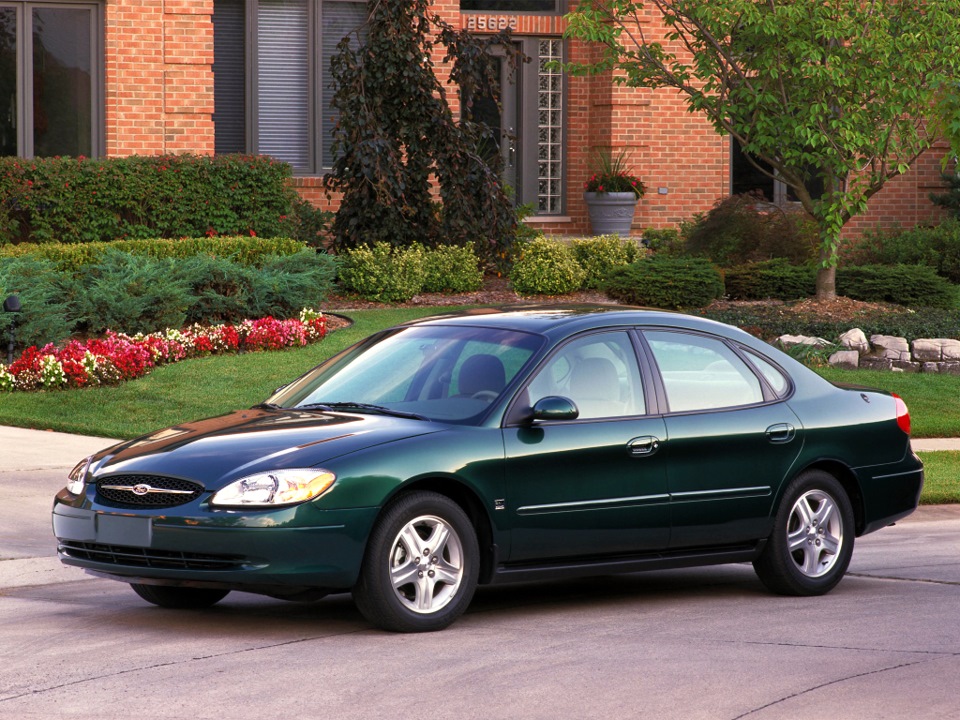
The 2000–2007 Ford Taurus. Fifth generation. Fleet special. Grocery getter. Rental car survivor.
And under the hood? One transmission choice. Just one. The AX4N, later called the 4F50N. That’s it. No manual. No CVT experiment. No AWD hardware. Just a front-wheel-drive 4-speed automatic bolted to a 3.0L Vulcan or Duratec V6 and sent out into the world to survive soccer practice and summer heat.
I’ve worked on these since they were new. I’ve seen dozens of them cross 200,000 miles. I’ve also seen plenty get towed in at 110,000 with a burnt smell so strong you could taste it.
There was no federal recall for internal transmission failure on this generation. No safety campaign covering slipping clutches or torque converter shudder. Owners were on their own once the basic 3-year / 36,000-mile warranty expired. NHTSA complaint data shows clusters in early years—slipping, harsh shifting, loss of drive—but it never crossed the line into a mandated recall.
This isn’t a ticking time bomb by design. It’s a heat-sensitive, maintenance-sensitive transmission. Treat it right and it survives. Ignore it and it grenades.
Which Transmissions It Uses
AX4N / 4F50N
- Official Code: AX4N (renamed 4F50N)
- Gear Count: 4-speed
- Drive Layout: FWD
- Engine Pairing: 3.0L Vulcan V6 (OHV), 3.0L Duratec V6 (DOHC)
- Platform Years: 2000–2007
No alternatives. No secret variants. No late-cycle swap. Every U.S. Taurus in this generation uses this transmission family.
It’s a hydraulic planetary unit with electronic solenoid control and a lock-up torque converter. Torque capacity lines up with the 3.0L engines putting out roughly 180–200 lb-ft (244–271 Nm). That’s within spec. But there isn’t a massive safety margin baked in. When fluid breaks down, pressures wander. When pressures wander, clutches slip. And once they slip, the damage snowballs.
Main Failure Patterns
Torque Converter Clutch Slip – P1744
This one shows up again and again. Early 2000–2003 cars especially.
Customer complaint: “It shudders at 45 mph.” Or, “The RPM jumps around on the highway.”
Scan it. You’ll often find P1744. That’s torque converter clutch performance.
What’s happening? The TCC lining starts to wear. The valve body bores get sloppy. Apply pressure isn’t stable anymore. The converter can’t hold steady lockup, so it hunts, grabs, slips, grabs again. You feel it as a vibration between 40–55 mph (64–88 km/h).
I’ve torn these down. Once the lining starts shedding material, the fluid fills with clutch dust. That debris circulates through the pump and solenoids. It’s not a clean failure. It’s a messy failure.
On units past 100,000 miles (160,000 km), a converter problem often means the whole tranny is already tired. Replacing just the converter can turn into a band-aid fix if clutch packs are already thin.
Harsh 1–2 or 2–3 Shifts
This platform is known for firm shifts. Some are normal. Some are ridiculous.
Common causes:
- Accumulator piston wear
- Separator plate wear around checkballs
- Valve body bore wear
- Line pressure drift
Ford released technical service bulletins addressing shift quality in early production years. Calibrations were updated. Valve body refinements were made. It helped.
But here’s what I’ve seen in real shops: rebuilt units slapped together without correcting separator plate wear. Or wrong valve body parts installed. The result? Tire-chirping 1–2 shifts that feel impressive for about a week, then start chewing up internal components.
Loss of Drive / Forward Clutch Failure
This is the “it won’t move” scenario.
You put it in Drive. Nothing. Or it creeps, then slips like it’s on ice.
Forward clutch wear is the usual suspect. Heat is the killer. City driving. Stop-and-go. Summer temps above 95°F (35°C). Fluid that hasn’t been changed since the Bush administration.
When friction material gets cooked, it doesn’t recover. No additive. No miracle bottle. Once the clutches are glazed, they’re done.
Delayed Engagement
Shift from Park to Drive. Wait. Count to two. Then it clunks in.
I see this more often past 120,000 miles (193,000 km).
- Internal seals harden
- Pump efficiency drops
- Valve body leaks pressure internally
Cold mornings make it worse. Fluid thickens. Pressure builds slower. Owners think it’s “just old age.” Sometimes it is. Sometimes it’s the warning before full failure.
Axle Seal Leakage
Simple issue. Still important.
The integrated differential uses radial lip seals at the axle outputs. Past 120,000 miles, seepage is common. It starts as a damp area. Then it turns into a drip. Then fluid level drops and shift quality starts acting strange.
I’ve seen people rebuild a transmission that was low on fluid for months because of a $20 seal.
Typical Repair Costs
Let’s talk money. Because that’s what hurts.
| Repair Type | Parts (USD) | Labor (USD) | Total (USD) | Mileage Context |
|---|---|---|---|---|
| Fluid & Filter Service (Approx. 7 Quarts / 6.6 Liters) | $60–$120 | $120–$250 | $180–$370 | Preventive service |
| Valve Body Replacement | $350–$700 | $600–$1,000 | $950–$1,700 | 80k–140k miles |
| Torque Converter Replacement | $250–$500 | $1,000–$1,600 | $1,250–$2,100 | 100k–160k miles |
| Complete Rebuild | $1,200–$2,000 | $1,500–$2,500 | $2,700–$4,500 | 120k–180k miles |
| Remanufactured Transmission Installed | $2,300–$3,500 | $1,200–$2,000 | $3,500–$5,500 | Total failure scenario |
Those numbers are Service Bay Benchmarks across independent U.S. shops. Dealer pricing can run higher.
And here’s the hard truth: once you see heavy clutch shavings in the pan, you’re past the valve-body-only stage. You’re in rebuild territory.
Best and Worst Years
| Model Year | NHTSA Complaint Clustering | Dominant Issue | Relative Risk |
|---|---|---|---|
| 2000 | Elevated | Harsh shifting, early wear | High |
| 2001 | Elevated | TCC slip reports | High |
| 2002 | Moderate | Shift flare | Medium |
| 2003 | Moderate–Elevated | Loss of drive complaints | Medium-High |
| 2004–2007 | Lower | Age-related wear | Medium |
Later years benefited from calibration tweaks and production refinements. They’re not bulletproof. They’re just less noisy in the complaint data.
Warning Signs & Early Detection
- RPM flare during 3–4 shift
- Harsh Park-to-Drive engagement
- Shudder at steady cruise near 45 mph (72 km/h)
- Burnt-smelling fluid
- Delayed reverse engagement
When I inspect one of these for a buyer, I don’t just drive it around the block. I let it warm up fully. I monitor converter lockup. I scan for pending codes. I check line pressure if something feels off. And I always, always drop the pan if there’s doubt.
If the magnet looks like a hedgehog covered in metal fuzz, the tranny is tired. Simple.
When to Walk Away
- Confirmed clutch shavings in the pan
- Persistent TCC codes after fluid service
- No forward or reverse engagement
- Severe flare under light throttle
At that point, you’re budgeting for a rebuild. If the car itself isn’t worth $3,000–$4,000, the math doesn’t work.
Ownership Reality
Ford calls the fluid service interval “extended.” Some people interpret that as lifetime fluid. That’s a joke.
| Topic | OEM Guidance | Real-World Outcome | Cost Consequence |
|---|---|---|---|
| Fluid Service Interval | Extended interval under normal duty | Fluid darkens by 30k–40k miles | Earlier rebuild risk if ignored |
| Heat Management | Standard cooling only | Urban heat cycling accelerates wear | Converter and clutch failure |
| Warranty Coverage | 3yr / 36k miles | Most failures beyond 90k miles | Owner-funded repairs |
| Partial Repair Strategy | Component replacement possible | Band-aid fixes common | Repeat labor bills |
In my experience, fluid every 30,000 miles (48,000 km) is cheap insurance. I’ve seen well-maintained units cross 180,000 miles (290,000 km). I’ve also seen neglected ones lunch gears before 130,000.
This transmission doesn’t forgive laziness.
Lawsuits, Complaints & Regulatory History
No verified class action specific to AX4N or 4F50N internal failure in this generation.
NHTSA complaints cluster around slipping, harsh shifting, and loss of propulsion. They never escalated into a safety recall or mandated fix. Regulators treated it as wear-related durability degradation, not a sudden catastrophic safety defect.
Translation? Owners paid the bill.
Bottom Line
The 2000–2007 Taurus drivetrain is simple and honest. No exotic tech. No dual-clutch drama. Just a 4-speed automatic that demands clean fluid and decent cooling.
Take care of it, and it’ll serve. Ignore it, and it becomes expensive fast.
I don’t call it fragile. I call it maintenance-sensitive. And that’s a big difference.


