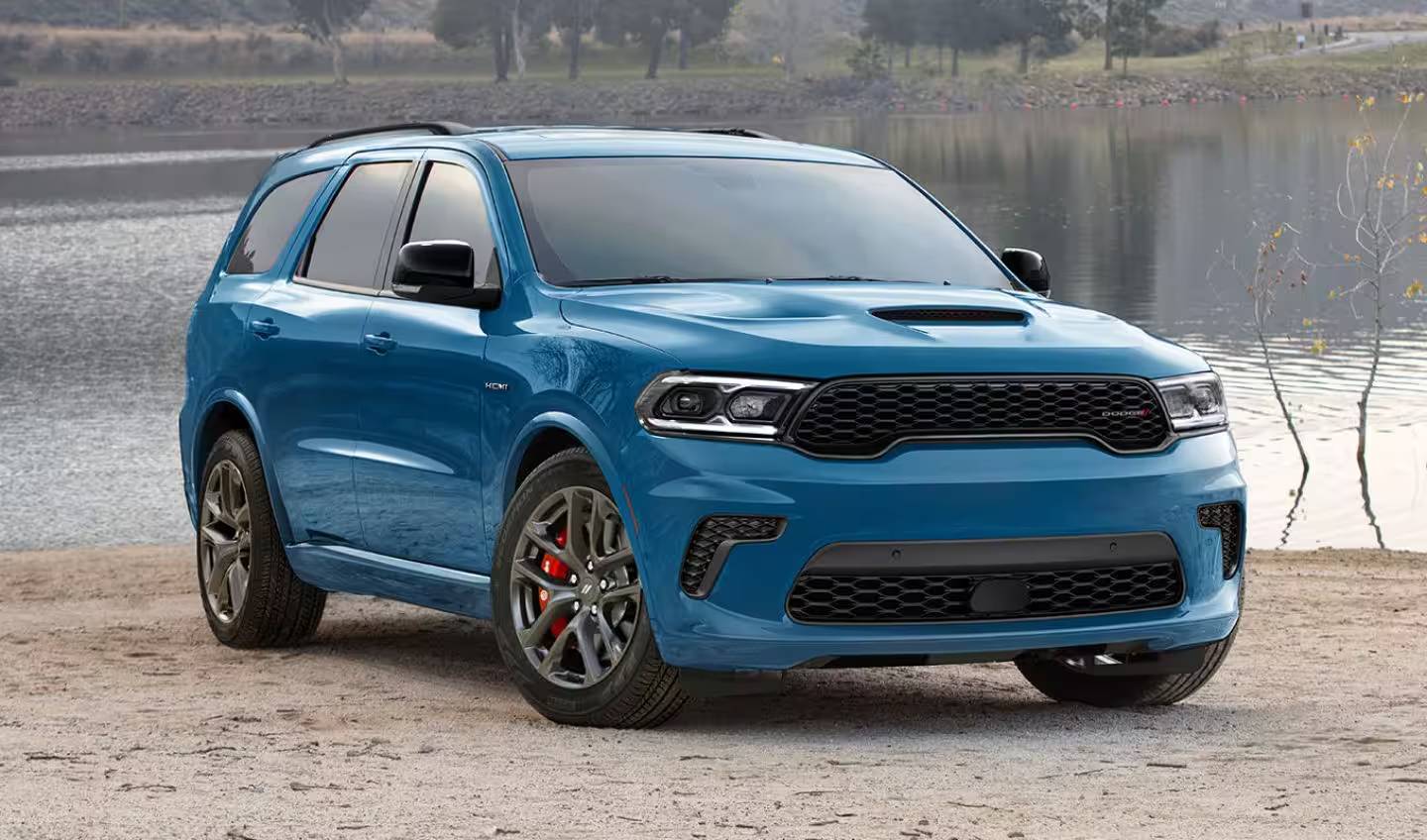
Dodge Durango gen 3 2011–present Transmission Failures Seen in Real Service Bays
Overview
The third-generation Dodge Durango is one of those SUVs that can fool people. Big body. Strong engines. Good tow ratings. Feels stout on the road. So buyers assume the transmission and driveline side must be just as simple and bulletproof. It is not that simple.
I’ve seen a lot of these in real service bays. The basic story is this: the actual gearboxes in this platform, especially the ZF-based eight-speeds, are usually better than the internet rumor mill says they are. The messy part is everything wrapped around them. Shift modules. Park mechanisms. Differential recalls. Transfer case behavior on early trucks. And then you get the usual owner confusion where a software problem gets mistaken for a grenaded tranny, or a real driveline defect gets brushed off as “just how they shift.” That gets expensive fast.
There are also three regulatory items you cannot bury if you’re talking about this platform honestly. Recall T55 / NHTSA 17V-541 covers certain 2017 rear-wheel-drive Durangos with rear halfshafts that may be too short for the application. Recall U43 / NHTSA 18V-280 covers certain 2018 vehicles with an incorrect transmission park rod. Recall W22 / NHTSA 20V-183 covers certain 2019 vehicles with front differential pinion gears that were not hardened correctly. Those are not little footnotes. They matter. A lot.
So if you own one, or you’re shopping one, the first rule is simple: check the VIN for open recalls before you start guessing. Before you buy a warranty. Before you pay for a fluid service. Before you start talking yourself into a project truck because the price looks cheap.
Which Transmissions It Uses
| Transmission Code | Gear Count | Drive Layout | Engine Pairing | Production Years |
|---|---|---|---|---|
| W5A580 | 5-speed | RWD / AWD | 3.6L Pentastar V6 | 2011-2013 |
| 545RFE | 5-speed | RWD / AWD | 5.7L HEMI V8 | 2011 |
| 65RFE | 6-speed | RWD / AWD | 5.7L HEMI V8 | 2012-2013 |
| 845RE | 8-speed | RWD / AWD | 3.6L Pentastar V6 | 2014-2018 |
| 850RE | 8-speed | RWD / AWD | 3.6L Pentastar V6 | 2018 build-dependent, 2019-present verified in later production |
| 8HP70 | 8-speed | RWD / AWD | 5.7L HEMI V8 / 6.4L HEMI V8 | 2014-present |
| 8HP95 | 8-speed | AWD | 6.2L Supercharged HEMI V8 | 2021-present |
That lineup matters because people lump all Durangos together and that’s where bad advice starts. The early trucks are a different animal. A 2011 V6 with a W5A580 is not the same ownership experience as a later V6 with an 850RE, and neither one behaves like a Hellcat with an 8HP95.
The V8 path is pretty straightforward. The 5.7L starts with the 545RFE in 2011, moves to the 65RFE for 2012 and 2013, then lands on the 8HP70 from 2014 forward. The 6.4L uses the 8HP70. The 6.2L supercharged setup uses the 8HP95.
The V6 side is where people get lazy and just say “eight-speed.” No. It starts with the W5A580 through 2013, then the 845RE in 2014. Later production moves into the 850RE, with that 2018 period needing careful wording because factory and recall documentation show overlapping build-dependent usage. That matters when you’re ordering parts, checking TSB applicability, or trying to decode what a shop actually installed.
No verified alternative transmissions used in the U.S.-market WD generation were identified beyond those codes. So if somebody tells you their U.S. third-gen Durango came with some mystery alternative box, I’d want paperwork before I believed a word of it.
Main Failure Patterns
Electronic shifter faults on early eight-speed models
This is one of the first things I bring up, because owners panic when the truck will not come out of Park and they assume the whole tranny is dead. Usually it isn’t.
TSB 08-072-14 covers certain 2014 Durango vehicles built on or before June 13, 2014, equipped with the DFD 8HP70 or DFL 845RE, where the vehicle may not shift out of Park. In the shop, this usually points to the electronic shifter module, not a cooked clutch pack or lunching gears deep inside the case. Different problem. Different bill.
The symptoms are annoying and dramatic. You hit the brake, twist the knob or move the shifter, nothing happens. Maybe you cycle the key and it wakes up. Maybe it doesn’t. Maybe there are DTCs tied to the shifter module. I’ve seen owners throw batteries at these, or blame the PCM, or let some quick-lube place slap on a band-aid fix idea because they do not want to hear “module failure.”
The fix path in the bulletin is narrower than most people think: confirm the fault, replace the electronic shifter, clear codes, verify operation. That is still a real repair. It just is not the same as a failed transmission assembly.
Shift quality complaints on the 845RE, 850RE, and 8HP70
This is the big one in day-to-day life. Not catastrophic failure. Complaint traffic.
TSB 21-027-15 Rev. C and TSB 21-030-16 both deal with transmission control module programming for shift quality and engagement behavior. Later, TSB 21-035-22 covers 2020 V6 trucks with the 850RE and talks about clunking or loud popping from underneath during startup or remote start, plus rough or erratic shifts.
In my experience, this platform generates a ton of owner anxiety because the ZF-based boxes do not always feel like old-school lazy automatics. They can feel abrupt. They can feel busy. They can do a weird garage shift. They can have an odd bump when cold. Sometimes that is normal behavior pushed too far by software. Sometimes it needs a flash. Sometimes the owner has been driving a worn-out older SUV for ten years and thinks every crisp shift is a failure event.
That does not mean you ignore it. A harsh or inconsistent shift pattern still deserves a proper scan and road test. But I’ve seen plenty of these where the fix was updated calibration and relearn work, not a rebuild and not a replacement. A bad diagnosis here is how people spend thousands for no reason.
Front differential failure on affected 2019 vehicles
This one is ugly.
Recall W22 / NHTSA 20V-183 covers certain 2019 Durango vehicles where the front axle differential pinion gears were not hardened correctly. If those teeth wear away enough, the vehicle can lose motive power. On the affected configuration, because the single-speed transfer case differential is open, it can also lose PARK function while stationary. That is not a nuisance. That is a safety problem.
The early clue is usually noise. Whine. Grind. Sometimes a rough, metallic complaint that gets brushed off as tire noise by somebody who does not know what they are hearing. Then the unit gets opened up and you see shavings, tooth damage, the whole mess. At that point the conversation changes from “maybe fluid” to “this differential is done.”
And this is where people go wrong on used lots. They hear a noise from the front end on a 2019 AWD example, the seller says it just needs a wheel bearing, and nobody checks recall completion. Ridiculous. If that VIN falls in the affected range and the repair history is murky, I assume risk first and optimism second.
Rear halfshaft disengagement on affected 2017 rear-wheel-drive trucks
Another nasty one. Small population. Serious consequences.
Recall T55 / NHTSA 17V-541 states that certain 2017 rear-wheel-drive Durangos may have rear axle halfshafts that are too short for the intended application. If a halfshaft disengages from the rear differential, the vehicle can lose motive power. FCA also instructed dealers to inspect the rear differential side gears and replace the rear differential if the splines were damaged.
That last part matters. This is not just “swap an axle and move on.” If the disengagement chewed up the side gear splines, now you’re into a deeper driveline repair. I’ve seen problems like this turn from one-part jobs into a bigger parts pile in a hurry.
A lot of buyers miss the point because the affected population is small. Small does not mean harmless. It just means the defect is narrow. If your VIN is in it, the odds discussion is over. You either verify the remedy or you live with a ticking time bomb that was already serious enough to trigger a federal recall.
Incorrect park rod on certain 2018 vehicles
This is one of those failures that sounds obscure until you picture the truck rolling away.
Recall U43 / NHTSA 18V-280 covers certain 2018 vehicles that may have an incorrect park rod inside the transmission. The indicator can show PARK while the mechanical park mechanism is not fully engaged. So the driver thinks the vehicle is secure. It may not be.
That is a true internal transmission assembly defect. Not a software mood. Not a worn shifter bushing. Real mechanical wrong-part-inside-the-unit stuff. Still, and this matters, it is VIN-specific. I would not label every 2018 Durango as bad because of it. I would label every 2018 Durango as needing a VIN check because of it. Different statement.
Early 2011 AWD transfer case behavior
The 2011 trucks had their own flavor of drama.
TSB 21-004-13 covers vehicles built before May 2, 2011, equipped with the two-speed on-demand transfer case, and it addresses transfer case operational enhancements through a Drivetrain Control Module flash. The bulletin describes moan or groan at low speed, binding, surge, shudder, and “Service 4WD” messages.
In real life, early AWD complaints like this get misdiagnosed all the time. Tires. Wheel bearings. Front diff. Bad transfer case. Some of those guesses are just shots in the dark. The bulletin tells you there was a control-strategy issue on early production units, and that matters because software and hardware problems do not sound the same in the wallet.
I would not call every early AWD truck junk because of this. I would say the early-build ones deserve a smarter road test, especially at low speed, on turns, and under light throttle where the groan and binding complaints show up.

Typical Repair Costs
| Repair | Cost Basis | Parts | Labor | Total |
|---|---|---|---|---|
| Electronic shifter module replacement | Service Bay Benchmark | $300-$450 | $120-$250 | $420-$700 |
| TCM software update and drive adaptation work | Service Bay Benchmark | $0-$50 | $150-$300 | $150-$350 |
| Front differential replacement | Industry Estimate | $700-$1,500 | $700-$1,300 | $1,400-$2,800 |
| Rear halfshaft replacement, both sides | Industry Estimate | $1,200-$1,800 | $300-$700 | $1,500-$2,500 |
| Rear differential replacement | Industry Estimate | $1,200-$2,400 | $700-$1,300 | $1,900-$3,700 |
| 8HP-family transmission replacement | Service Bay Benchmark | $4,500-$7,000 | $1,200-$2,000 | $5,700-$9,000 |
Let’s talk money, because this is where internet advice gets silly.
An electronic shifter repair is annoying, but it is still a lot cheaper than a full gearbox job. A software flash is cheaper again, assuming the shop actually knows how to diagnose the complaint instead of reading one code and panicking. Front differential replacement is where the numbers start to hurt. Rear axle and rear differential work can pile up too, especially if the original defect was ignored and the damaged parts took friends with them on the way out.
And yes, a full 8HP-family replacement can land in the $5,700 to $9,000 range in U.S. service conditions. That’s real money. But I do not like seeing people jump straight to that number just because the truck shifted weird one cold morning. A lot of these get over-condemned by shops that do not know the product, or by owners who read one forum thread and decide the tranny is toast.
The expensive failures on this platform are usually real when they happen. They just are not always the first thing people think they are.
Best and Worst Years
| Year / Configuration | Primary Transmission | Main Risk | Risk Level |
|---|---|---|---|
| 2011 AWD with two-speed transfer case | W5A580 / 545RFE | Early transfer case control behavior covered by TSB 21-004-13 | Medium |
| 2014 early-build V6 / V8 | 845RE / 8HP70 | Electronic shifter no-shift-out-of-Park condition | Medium |
| 2017 RWD recall population | 8HP-family depending engine | Rear halfshaft disengagement recall T55 | High for affected VINs |
| 2018 recall population | 845RE / 850RE / 8HP70 depending build | Incorrect park rod recall U43 | High for affected VINs |
| 2019 recall population | 850RE in affected V6 AWD pattern | Front differential recall W22 | High for affected VINs |
| 2020-present mainstream production | 850RE / 8HP70 / 8HP95 | Mostly software behavior and normal wear patterns | Low to Medium |
If I’m ranking these as a used buyer, I care more about the VIN, repair history, and driveline behavior than the calendar year by itself. Still, some trends are obvious.
The 2011 AWD trucks deserve caution because of the early transfer case behavior bulletin. The 2014 early-build eight-speed trucks deserve caution because of the electronic shifter issue. The 2017, 2018, and 2019 recall populations deserve hard scrutiny because each one has a specific, ugly defect tied to actual safety consequences.
The later mainstream production trucks are usually the safer place to shop. Not perfect. No vehicle is. But once you get beyond those narrower recall-driven problem groups, the platform settles down into a more ordinary pattern of software complaints, fluid age, and wear-related service decisions instead of outright defect drama.
I’ve seen dozens of these. The “best year” question is usually really a “which VIN dodged the nonsense and got maintained right” question.
Warning Signs & Early Detection
| Warning Sign | Likely Area | What It Can Mean | Inspection Priority |
|---|---|---|---|
| Stuck in Park | Electronic shifter / control logic | TSB 08-072-14 type failure on early eight-speed trucks | Immediate |
| Grinding or gear whine from front driveline | Front differential | Possible W22-related wear on affected 2019 vehicles | Immediate |
| Vehicle indicates PARK but can move | Transmission park mechanism | Possible U43-related park rod defect | Immediate |
| Harsh or erratic shifting with no hard failure | TCM calibration | Software update may apply | High |
| Binding or groan in low-speed turns on early AWD | Transfer case / DCTM strategy | TSB 21-004-13 pattern | High |
Most of the time the truck tells on itself if you know what to listen for.
A front differential starting to go bad does not usually whisper forever. It starts talking. A park rod issue is even worse because the cluster may lie to you while the mechanical parts do something else. A shifter module fault can strand the vehicle in Park and make the owner think the whole drivetrain has checked out. Different sounds. Different feel. Different diagnosis.
On a used inspection, I want a full scan of every relevant module. I want the truck driven cold and hot. I want to see if reverse engagement is clean. I want to know whether it holds PARK on an incline. I want recall completion proof. If the seller gets weird about any of that, I pay attention.
And fluid condition still matters. Sure. Dirty fluid is not a magic answer to every complaint, but on high-mileage eight-speed trucks it tells a story. Burnt smell, metallic glitter, dark fluid, those are clues. Not verdicts. Clues. Good techs know the difference.
When to Walk Away
Easy one. Walk away when the seller cannot prove recall completion on a VIN that lands in T55, U43, or W22 territory.
Walk away when the truck says PARK and then moves. Walk away when a 2019 AWD example has front driveline noise and nobody can document the differential recall. Walk away when the seller says “they all do that” about grinding, shudder, or a no-shift-out-of-Park problem. They do not all do that. That line gets used to unload bad vehicles on frustrated buyers.
I’m also cautious with neglected high-mileage eight-speed trucks. Not because every one of them is doomed. Because the ownership math gets ugly when a vehicle has vague shift complaints, zero service history, no scan data, and a seller who thinks topping off fluids counts as maintenance. That is how people end up financing a cheap SUV and then buying a transmission, a diff, or both.
Some of these are still great buys. Some are money pits wearing decent paint. The trick is not confusing the two.
Ownership Reality
| Topic | OEM / Regulatory Position | Real-World Outcome | Cost Consequence |
|---|---|---|---|
| Shift complaints | Often addressed by TSB software updates | Many owner complaints are calibration-related, not broken hard parts | Usually diagnostic and programming cost, not replacement cost |
| Recall-driven driveline defects | VIN-specific safety campaigns | Affected trucks can have severe PARK or motive-power loss risk | Very high if the defect is ignored and coverage is missed |
| Transmission “lifetime” expectations | No broad safety action for routine wear | High-mileage durability depends heavily on service quality | Delayed maintenance can push ownership toward valve body or unit replacement |
| Warranty timing | Powertrain coverage is finite | Many used buyers encounter these trucks after warranty age-out | Full driveline repairs shift directly to owner budget |
This is where the brochure version of ownership and real life split apart.
The official side gives you recall campaigns, software bulletins, warranty periods, and a nice tidy story. The real-world side is messier. A truck can be “within design intent” on paper and still drive like garbage because the calibration is off, the fluid is tired, the adaptations are messy, or the driveline has been ignored for 100,000 miles. A truck can also scare the owner with a harsh shift and still be mechanically fine. Both happen. A lot.
In my experience, the ZF-based units in this platform reward good maintenance and punish neglect. No, I’m not saying every one needs a rebuild if you miss a service window. I’m saying that once mileage stacks up, the difference between a cared-for unit and a neglected one gets obvious. Shift quality changes. Apply feel changes. Heat history starts to matter. The line between “quirky” and “worn out” gets thinner.
The big myth is that people think there is one simple rule. There isn’t. Some owners baby these trucks and still get caught by a recall issue that had nothing to do with maintenance. Others ignore everything and get lucky for years. That happens too. But as a buyer or owner making decisions with your own money, luck is a terrible maintenance plan.
Lawsuits, Complaints & Regulatory History
No verified class action specific to WD-generation Durango transmission failure was established from the official sources reviewed here, so the smartest way to read this platform is through the regulatory trail itself.
And that trail tells a pretty clear story. You have VIN-specific safety recalls for rear halfshafts, for an incorrect park rod, and for front differential pinion gears. You also have multiple TSBs aimed at shift behavior, shifter function, and driveline control updates. That points to a platform with real documented problem areas, yes, but not one broad meltdown where every transmission in every year is doomed to grenade.
NHTSA Preliminary Evaluation PE15-030 centered on the 2014-2015 Jeep Grand Cherokee as the subject vehicle, with Durango listed as a peer vehicle in the information request. That matters because it frames the concern around FCA’s electronic shifter environment and PARK logic, not around some Durango-only internal transmission defect. Important distinction.
Complaint clustering on these trucks usually falls into a few buckets. Early no-shift-out-of-Park problems. Recall-defined PARK or driveline hardware risks on narrow production groups. Shift quality complaints on eight-speed models where owners hate the feel or think a calibration quirk means the tranny is dying. Sometimes they are right. Many times they are not.
That is why a serious inspection beats internet folklore every single time. A complaint record tells you there is smoke. It does not always tell you what’s actually burning.
Bottom Line
The Dodge Durango third generation is not a platform I would dismiss over the transmission alone. I would not call it fragile. I would not call it carefree either.
The verified problem areas are clear: early electronic shifter faults on some 2014 eight-speed trucks, a limited 2017 rear halfshaft recall group, a limited 2018 park-rod recall group, a 2019 front differential recall group, plus recurring software-related shift complaints on the ZF-based units. That is the real picture. Not the exaggerated forum version where every hard 2-3 shift means the tranny is about to explode, and not the seller version where every noise is “normal.”
If you own one, start with the VIN, the scan data, and the driveline behavior. If you are buying one, give more weight to recall completion, hot-and-cold operation, and service history than to whatever badge or trim package is making you emotional. In the current market, a clean later-production truck with documented recall completion is usually a much better bet than a cheaper earlier one with mystery noises and zero records.
That’s the truth from the bay floor. These can be solid. They can also get expensive in a hurry when the wrong VIN lands in your driveway and nobody did their homework.