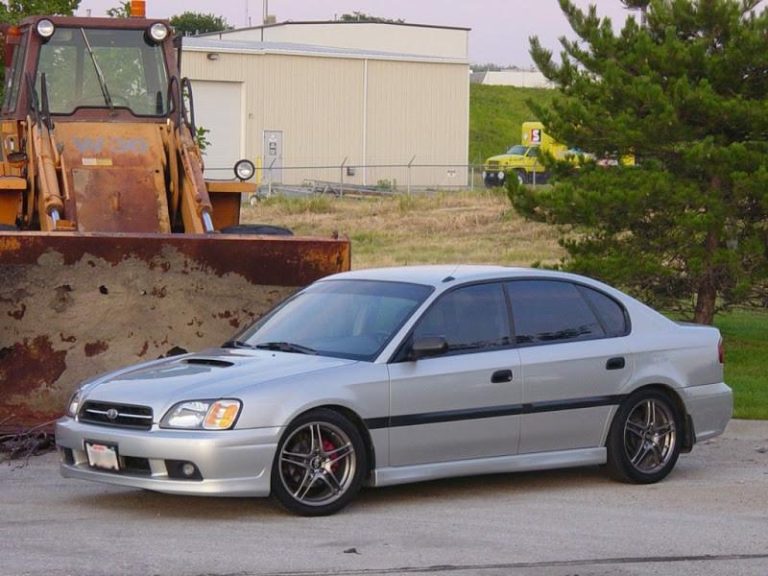
Subaru Impreza gen 2 2002–2007 Transmission Reliability Under Real Ownership
Overview
The 2002–2007 Subaru Impreza is one of those cars where the tranny and the rest of the driveline are tied together so tightly that owners will swear the problem is “just a diff” or “just the transmission,” then you get it in the air and realize the whole setup has been living a hard life. Front differential built into the transaxle. Rear differential out back. AWD system that does not tolerate laziness. That is the big picture.
I’ve seen dozens of these. Some are still tight, still honest, still drive the way a Subaru should. Others are a mess. Mixed tires. Burnt fluid. Old gear oil. A used transmission slapped in three years ago with no paperwork and a rear diff that sounds like a subway tunnel.
Inside this generation, the drivetrain story splits three ways. The mainstream cars got the 5-speed manual. WRX STI got the stronger 6-speed manual. Automatic cars used the 4EAT family. No CVT. No DCT. No mystery box alternatives hiding in certain trims. If you are shopping one of these cars in the U.S., that is the field.
There is also one transmission-related safety item that needs to be up front, right here, not buried later. Certain 2002 Impreza models were covered by NHTSA recall 02V282000, Subaru campaign WWK-94, because of an improperly manufactured parking rod in the automatic transmission. Shift it into Park, think the car is secure, and there was a real risk the mechanism would not fully hold the vehicle. That is not trivia. That is a rollaway risk. Any 2002 automatic car should get a VIN recall check before money changes hands.
Past that, the documented trouble spots are pretty clear. On 4EAT cars, AWD bind and harsh engagement. On 5-speed manuals, gear pop-out and center differential trouble. On STI models, the transmission itself is far tougher, but the driveline still wants correct fluid, correct tires, correct service. Skip that stuff and you are just feeding an expensive machine bad habits.
Which Transmissions It Uses
| Transmission model code | Gear count | Drive layout | Engine pairing | Production years | Status |
|---|---|---|---|---|---|
| TY754 family | 5 | AWD | 2.5L naturally aspirated, 2.0L turbo WRX, later 2.5L turbo WRX | 2002–2007 | Field Observation |
| TY856 family | 6 | AWD | WRX STI turbo models | 2004–2007 | Field Observation |
| TZ1A / TV1A 4EAT family | 4 | AWD | Naturally aspirated and turbo automatic applications | 2002–2007 | Field Observation |
Here is the clean version. Mainstream Impreza models used a fully synchromeshed 5-forward manual. WRX STI used a fully synchromeshed 6-forward manual. Automatic models used the 4EAT family, and on these cars Subaru treats the automatic transmission fluid and the front differential gear oil as separate service items. That matters more than people think.
The code families above are the ones used in Subaru parts practice, transmission rebuild work, and service-bay identification. The exact suffix-by-suffix matrix for every trim is not fully published in the owner literature, so I am keeping those family-code entries labeled as Field Observation. That is the honest way to do it. What is confirmed is the transmission architecture. What is not confirmed in the owner docs is every last suffix split across every trim.
No verified alternative transmissions were used in this generation. No CVT. No dual-clutch. No secret late-production exception. If somebody tells you otherwise, they are mixing this car up with a newer Subaru.
Main Failure Patterns
4EAT automatic cars
This is where a lot of owners get burned. The 4EAT itself is not some fragile disaster, but the AWD side of it can get ugly when the transfer clutch system starts acting up. Subaru service material documents binding, crabbing, and harsh engagement symptoms. In the real world, owners call it torque bind. Tight parking lot turns. Car feels like it is fighting itself. Little hop. Little scrub. Sometimes a bigger shudder. It is not normal.
I’ve had people tell me, dead serious, “they all do that.” No. They do not.
Subaru service history for this drivetrain includes bulletin references tied to transfer clutch replacement and TCU code 45 with AWD harsh engagement. That gives this problem real factory footing. It is not just chatter from old forums. When these cars start binding on turns, the usual suspects are the transfer clutch pack, the AWD control side, or both. Keep driving it long enough and what might have been a contained repair turns into a bigger bill.
What it feels like
- Binding on low-speed turns
- Hopping or “crabbing” in parking maneuvers
- Harsh engagement going into Drive or Reverse
- Odd driveline resistance after the car is fully warm
And yes, tire mismatch makes it worse. Subaru was very clear on tire matching for these AWD cars. Same brand, same construction, same size, same tread pattern, same wear level across all four corners. People ignore that because four tires are expensive. Then the driveline starts complaining. Then they keep driving it. Then the tranny comes out.
5-speed manual cars
The non-STI 5-speed is the weak link in this generation once you add abuse, extra boost, repeated hard launches, or just years of rough shifting and bad service. Even on stock-ish cars, Subaru’s own service-publication trail shows recognized issues with popping out of 3rd gear, first-driven-gear parts supersession, and manual-transmission center differential damage.
That pop-out complaint matters. A lot. If the car jumps out of gear, you are not dealing with some cute linkage issue nine times out of ten. You are usually looking at internal wear. Hub wear. Gear wear. Messy failure. Metal moving around where it should not. Shavings in the oil if you catch it early enough to inspect before it fully lunches gears.
I have seen buyers convince themselves they can “just live with it.” They cannot. Not for long.
Typical manual warning signs
- Pops out of 3rd under load or decel
- Occasional jump out of gear when the drivetrain unloads
- Grinding that gets worse as the oil warms up
- Whine that was not there 5,000 Miles (8,047 km) ago
Once a TY754 5-speed starts doing this, you either rebuild it, replace it, or keep driving until it grenades harder and drags the repair bill up with it.
Center differential sensitivity
This one gets missed all the time because drivers focus on the transmission case and forget the center differential is right there in the conversation. Subaru service-network material recognizes manual-transmission center differential damage as a real issue. On these cars, mismatched tires, strange towing history, chronic driveline windup, and abuse can all push the center diff into a bad place.
The symptom set can be confusing. Binding. Tight-turn resistance. Weird scrub. Sometimes owners blame the rear diff. Sometimes they blame axles. Sometimes they blame “Subaru AWD.” That is how money gets wasted.
A center diff problem on a manual car is not a cheap nuisance. It is usually tranny-out work, and once you are that far in, the shop often finds more. Bad bearings. Worn synchros. Shavings stuck to the drain plug. The usual old-Subaru party.
WRX STI 6-speed cars
The TY856 6-speed is the adult in the room. Much stronger. Better reputation for a reason. In my experience, it takes a lot more abuse to hurt one of these than it takes to wipe out a non-STI 5-speed. That does not mean it is bulletproof. Nothing is.
STI owner documentation confirms the 6-speed manual and the mechanical limited-slip rear differential. Subaru also notes that rear differential vibration or noise in turns can occur as part of the limited-slip setup. That is a detail buyers need to understand, because not every rear-end noise on an STI means the diff is dying. Severity matters. Pattern matters. Fluid condition matters. A little mechanical chatter from the LSD is one thing. A roaring bearing or chunked gearset is something else entirely.
I still inspect these hard. The transmission may be stronger, but the average STI has not lived an easy life. A lot of them spent their younger years being driven like they owed somebody money.
Tire mismatch and fluid neglect
This deserves its own callout because it shows up across all configurations. Subaru’s guidance on matching tires is strict for a reason, and owners ignore it constantly. Two new tires on the front, two half-bald tires on the rear, brand mismatch, weird tread-depth spread, different rolling diameters. That is how you turn a decent AWD Subaru into a ticking time bomb.
Fluid neglect is the other classic mistake. Manual cars need the correct gear oil. Automatic cars need ATF service and separate attention to the front differential and rear differential. People treat the drivetrain like it has one common bath of fluid somewhere. It does not.
By the time some of these cars hit high mileage, the service history is so patchy it looks fictional.

Typical Repair Costs
| Repair item | Cost basis | Typical U.S. cost | What usually drives the bill |
|---|---|---|---|
| 4EAT transfer-clutch / AWD bind repair | Service Bay Benchmark | $900–$2,000 | Transfer clutch access, solenoid-related diagnosis, fluid service, road-test confirmation |
| 4EAT replacement transmission | Service Bay Benchmark | $2,500–$4,500 | Used/reman unit pricing, AWD setup, cooler and fluid work |
| TY754 5-speed manual rebuild | Service Bay Benchmark | $2,500–$4,500 | Gear damage, hub/synchro parts, teardown labor, bearing replacement |
| TY754 used replacement | Service Bay Benchmark | $1,500–$3,000 | Availability, unknown donor condition, clutch and seal add-ons |
| Center differential repair on manual car | Service Bay Benchmark | $1,000–$2,500 | Unit choice, internal damage spread, labor overlap with transmission removal |
| WRX STI 6-speed transmission replacement or rebuild | Service Bay Benchmark | $4,000–$8,000 | Higher unit value, specialist labor, differential-related parts |
| Rear differential replacement | Service Bay Benchmark | $800–$2,000 | Ratio matching, used-unit quality, seals and fluid |
This is where the romance dies.
Once you are inside one of these drivetrains, the price climbs fast. The labor is real. The parts bill is real. And with old Subarus, the first quote is not always the final quote, because teardown tends to uncover the stuff nobody wanted to hear. Burnt viscous unit. Worn bearings. Chipped gear teeth. Contaminated fluid. Axle seals starting to leak. Somebody already did a band-aid fix five years ago and now you get to pay for that too.
These are Service Bay Benchmark numbers, not factory published consumer repair tables. Subaru does not hand owners a neat chart showing how much it costs when a 5-speed starts popping out of gear. Shops see it. Shops quote it. Owners flinch.
I’ll put it bluntly. A cheap Impreza with a bad tranny is usually not cheap.
Best and Worst Years
| Configuration | Transmission/driveline risk view | Why |
|---|---|---|
| 2002 automatic cars within recall build range | Higher regulatory risk | Subject to recall 02V282000 / WWK-94 for parking-rod defect; recall completion must be verified by VIN |
| 2002–2007 4EAT cars | Moderate platform risk | Documented AWD bind / harsh-engagement service history in Subaru publications |
| 2002–2007 non-STI 5-speed manual cars | Moderate to high use-dependent risk | Subaru service publications recognize pop-out and center-differential issues; condition is heavily affected by prior use |
| 2004–2007 WRX STI 6-speed cars | Lower transmission risk | No comparable OEM record here of systemic 6MT failure on this generation; still requires proper fluid and tire discipline |
I do not like fake “best year, worst year” rankings when the records do not support them. This platform does not break down that cleanly. The better way to look at it is by configuration.
If you are staring at a 2002 automatic car, the recall issue puts it in a different bucket immediately. Verify it. Do not assume.
If you are looking at a normal 5-speed car, especially a WRX that has clearly had a loud life, the risk depends more on use history than on the badge year stamped on the trunk.
And if you are shopping an STI, the stronger 6-speed is a real advantage. Still, I would take a well-kept normal car over a hammered STI every single time. A strong gearbox cannot save a neglected driveline.
Warning Signs & Early Detection
| Symptom | Most relevant configuration | What it can indicate | Data basis |
|---|---|---|---|
| Binding, hopping, or “crabbing” on tight turns | 4EAT AWD | Transfer-clutch or AWD-control fault | OEM service documentation |
| Harsh engagement from Reverse to Drive or when coming to a stop | 4EAT AWD | AWD control / TCM-related issue | OEM service documentation |
| Pops out of 3rd gear | 5-speed manual | Internal gear/hub wear requiring transmission-level repair | OEM service publication history |
| Persistent tire mismatch or uneven tread depth across the car | All AWD configurations | Elevated risk to center differential or transfer-clutch system | OEM owner guidance |
| Rear differential noise on STI during turns | WRX STI | May be normal mechanical LSD behavior; still needs inspection if severe | OEM owner guidance |
The road test tells you a lot with these cars. Tight circles in a parking lot. Slow turns after the drivetrain is fully warm. Backing up, then pulling forward. Listening for scrub, resistance, harsh apply, weird chatter. On manual cars, load the gears. Decel in gear. Light throttle, then lift. Feel for pop-out, feel for slop, listen for whine.
I would also want to see all four tires in person. Not just “same size.” Same actual condition. Same wear. Same brand and construction if possible, because Subaru spelled out that requirement for a reason. Too many buyers take the seller’s word for it, then six months later they are trying to figure out why the driveline feels angry.
A scan tool on 4EAT cars is worth the time. So is getting the car on a lift. Check for leaks. Check for axle-seal mess. Check the rear diff. Check the front diff service history if the automatic car even has one. A pre-purchase inspection on this platform is not overkill. It is cheap insurance.
When to Walk Away
Walk away from a 4EAT car that binds badly on turns unless the price already assumes you are going to be into transfer-clutch or transmission work. If the seller says, “it just needs fluid,” that is seller language. Maybe it does. Maybe it does not. I would not bet on the cheap answer.
Walk away from a 5-speed that pops out of gear. I do not care if it only does it in 3rd. I do not care if it only does it “once in a while.” That is how people talk themselves into buying somebody else’s internal wear problem.
Walk away from any AWD Impreza sitting on mismatched tires. Simple. That one issue alone can turn the rest of the driveline into a future argument with your bank account.
And on early 2002 automatic cars, if recall 02V282000 / WWK-94 cannot be verified by VIN, I would stop right there until it is verified. No reason to guess.
There is another one. Walk away from cars with a vague transmission swap story. “The previous owner had it done.” “My buddy installed it.” “I think it came from a WRX.” That kind of history turns into a ridiculous amount of diagnosis once the car does something weird.
Ownership Reality
| Topic | OEM guidance or record | Real-world outcome | Consequence |
|---|---|---|---|
| Tire replacement | All four tires must match and Subaru recommends replacing all four at the same time | Cars bought with mixed tires often develop AWD complaints | Center differential or transfer-clutch stress |
| Automatic AWD behavior | Subaru documented binding, crabbing, and harsh engagement diagnostic paths on 4EAT AWD systems | Owners often drive through early symptoms too long | Repair moves from fluid/diagnosis level to transmission-level work |
| Manual transmission issues | Subaru service publications recognize pop-out and center-differential topics | Many used cars are sold after the first symptoms appear | Buyer inherits internal wear |
| Warranty timing | Powertrain coverage was 5 years or 60,000 Miles (96,561 km) | Many driveline complaints show up on much older used cars | Owner pays full repair cost |
| Fluid and driveline inspections | OEM documentation provides separate service points for ATF, front differential oil, manual transmission oil, and rear differential oil | Older cars are often maintained as if the drivetrain has only one shared fluid service need | Important clues are missed during pre-purchase inspection |
This is the part that separates the nice old Subaru from the exhausting one.
OEM guidance is stricter than a lot of owners remember. Separate service points. Strict tire matching. Actual drivetrain-specific inspection logic. Real-world ownership, on the other hand, is full of shortcuts. Two tires instead of four. Gear oil changed “at some point.” Automatic car serviced like the front differential does not exist. A code cleared and forgotten. A noise ignored until it becomes normal.
I have seen people buy these because the cars feel sturdy, and they are, but only when somebody kept up with the details. Neglect is expensive on this platform. More expensive than many buyers expect. The AWD system is great when everything matches and the fluids are right. When it is neglected, the whole thing gets petty and expensive.
And the factory powertrain warranty is ancient history for almost every car left on the road now. So this is not about what Subaru would have paid for years ago. This is about what you will pay if the driveline is already tired.
Lawsuits, Complaints & Regulatory History
The verified safety action in scope is recall 02V282000, Subaru campaign WWK-94, on certain 2002 Impreza automatic cars built from June 1, 2001 through September 30, 2002. The issue was the parking rod in the automatic transmission. If that rod was improperly manufactured, the park mechanism might not hold the vehicle correctly. Put plainly, the car could roll.
That is the big regulatory item here, and owners or buyers should check recall completion by VIN. No guesswork. No “the seller thinks it was done.” Verify it.
Beyond that, what shows up in the service record is a pattern of drivetrain issues recognized inside Subaru’s own technical material. AWD bind and harsh engagement on 4EAT cars. Gear pop-out topics on 5-speed manuals. Center differential damage on manuals. Those are real service themes. They tell you where the weak spots live, even if they do not add up to some giant public legal circus.
I did not carry over any lawsuit talk that could not be tied back to official or court-grade documentation. Too much noise gets repeated around older performance Subarus. The useful part is the service pattern, not the rumor mill.
Complaint history also needs context. These cars are old. Many have had multiple owners, multiple tire sets, multiple mechanics, and sometimes multiple trannies. So when you see driveline complaints cluster around AWD bind, gear disengagement, or rear driveline noise, that lines up with what techs have seen for years. It does not automatically prove a fresh defect trend. It shows where the platform gets hurt.
Bottom Line
The 2002–2007 Impreza is not a one-note transmission problem car. It is an AWD drivetrain car with very specific pressure points.
On 4EAT models, the known headache is AWD bind and harsh engagement tied to the transfer-clutch side of the system. On non-STI manual cars, the real concern is the 5-speed and its history of pop-out and center-differential trouble. On STI models, the 6-speed is the strong option, but strong does not mean ignored maintenance gets a free pass.
In my experience, the best examples are still great to drive. Light. mechanical. honest. The bad ones are a money pit in disguise.
If you own one, keep the tires matched, keep the fluids right, and pay attention when the driveline starts talking. If you are buying one, road test it hard enough to expose bind, check the VIN for the 2002 automatic recall, and do not rationalize a gearbox that is already showing its teeth. A Subaru like this can be durable. It can also be a ticking time bomb. The difference is usually maintenance history, not luck.