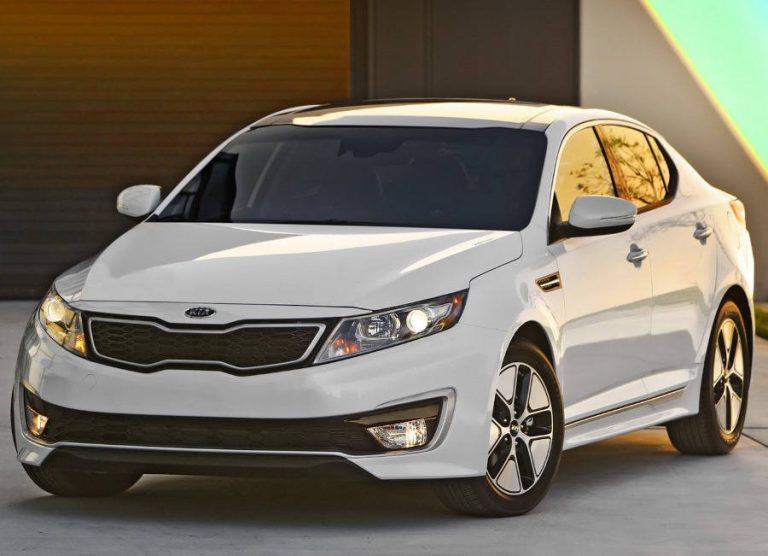
Is the Kia Optima gen 4 2016–2020 Transmission a Reliability Risk?
Overview
The 2016–2020 Kia Optima. I’ve had plenty of them on lifts.
This generation is simple on paper. Front-wheel drive only. No transfer case. No rear diff. No AWD trickery hiding underneath. What you’re dealing with is a front transaxle and a pair of CV axles. That’s it.
But simple doesn’t always mean trouble-free.
The big regulatory issue right out of the gate is NHTSA Recall 16V705 (Kia Campaign SC139). Early-build 2016 models with the 2.4L engine and A6MF2 transmission had a right front axle shaft that could crack at the outer stub. Under load, it could snap. When it snaps, you don’t creep home. You lose drive. I’ve seen one come in on a flatbed.
Build range was November 13, 2015 through April 23, 2016. If you’re shopping one, you check the VIN. No excuses. Recall completion should be documented. If it’s not, you walk or you negotiate hard.
Outside of that axle issue, the story splits in two directions. One path is the conventional 6-speed automatic. Solid. Predictable. The other is the 7-speed dry dual-clutch. That one’s a different animal.
Which Transmissions It Uses
A6MF2
- 6 forward gears
- Hydraulic torque-converter automatic
- FWD layout
- Paired with 2.4L GDI (Theta II) and 2.0L T-GDI
- Used 2016–2020
This is the traditional setup. Planetaries, clutch packs, valve body, torque converter. Nothing exotic. I’ve rebuilt variants of this family for years.
D7UF1 (7-Speed Dry Dual-Clutch)
- 7 forward gears
- Dry dual-clutch design
- FWD layout
- Paired with 1.6L T-GDI (Gamma)
- Used 2016–2020
This one acts like an automated manual with two computer-controlled clutches. No torque converter to cushion anything. You feel everything. Every heat cycle. Every bad traffic jam.
A6MF2H (Hybrid Variant)
- 6 forward gears
- Hybrid-integrated automatic with motor-generator between engine and gearbox
- FWD layout
- Paired with 2.0L Atkinson-cycle hybrid system
- Used 2016–2020 Hybrid models
Hybrid units are rarer in the bays, but when they do fail, they’re expensive. More on that later.
No AWD options. No alternative gearboxes in the US market. That’s your lineup.
Main Failure Patterns
D7UF1 Clutch Judder
This is the headline problem. I’ve seen dozens of these.
Customer complaint is always the same: “It shudders when I take off.” They think it’s a bad engine mount. It’s not. It’s the clutch pack starting to glaze.
- Shudder below 5 mph (8 km/h)
- Rough creep in traffic
- No steering wheel shake
- Feels worse hot
Kia issued TSB TRA083 for clutch judder diagnostics and replacement procedures. Then TRA098 rolled out upgraded clutch control logic under Upgrade Event #541. TRA085 covers actuator rod adjustment when you replace the clutch assembly.
Software helps. It’s a band-aid fix when the friction material is already cooked.
In my experience, urban drivers are the hardest hit. Stoplight to stoplight, summer heat, 95°F (35°C) ambient, trans case heat soaking under the hood. Dry clutch systems hate that. They were happier in European highway cycles. Here? They suffer.
Field observation: I usually see glazing start somewhere between 30,000 and 70,000 miles (48,000–113,000 km). Highway commuters sometimes go much longer. City drivers, rideshare cars, delivery drivers? They’re in earlier.
And yes, I’ve seen repeat clutch jobs within 50,000 miles (80,000 km). That’s not random. That’s usage pattern.
Harsh 2–1 Downshift – A6MF2
Different issue. Different personality.
2018 model year cars with the A6MF2 had complaints about a harsh 2–1 downshift. You’re rolling to a stop and it gives you a little bump. Not violent. Just annoying.
Kia issued TSB TRA088 to recalibrate the transmission control logic. I’ve done the update. It works. This isn’t a gearset lunching itself. It’s calibration. Once flashed, most of them behave.
No metal shavings. No burnt fluid. Just software.
Right Front Axle Shaft Crack – Early 2016
Back to that recall.
This wasn’t wear. This wasn’t abuse. It was a manufacturing defect in a specific production window. The outer stub could crack. Under torque load, especially taking off from a stop, it could separate.
When it goes, you’re not limping home. You’re calling a tow truck.
Post-recall replacements have not shown a pattern of repeat failure in the field. Once it’s done, it’s done.
A6MF2 Fluid Degradation
Kia doesn’t push aggressive fluid service intervals for normal driving.
I do.
Automatic transmission fluid breaks down. Heat oxidizes it. I’ve pulled pans on 90,000-mile (145,000 km) units that never had a service and the fluid is dark, smells burnt, clutch material suspended in it. Not catastrophic yet. But heading there.
Service Bay Benchmark: fluid exchange around 60,000 miles (96,000 km) keeps the A6MF2 healthier long term. Less converter shudder. Better shift quality. Fewer adaptive complaints.
Ignore it long enough and you start seeing delayed engagement into Drive, soft shifts, or torque converter chatter.
A6MF2H Hybrid Clutch Wear
The hybrid uses a wet clutch between engine and motor-generator. It’s more complex. More expensive. Less common.
Fleet cars over 120,000 miles (193,000 km) start showing wear in that coupling. Not widespread, but when it happens, the repair bill isn’t pretty. Transmission removal, hybrid integration steps, special procedures.
This isn’t a ticking time bomb. Just something to know.

Typical Repair Costs
Let’s talk money. Because that’s what people really want to know.
| Repair Type | Parts (USD) | Labor (USD) | Total (USD) |
|---|---|---|---|
| D7UF1 Software Update | $0–$150 | $120–$200 | $120–$350 |
| D7UF1 Clutch Assembly Replacement | $900–$1,600 | $1,200–$1,800 | $2,100–$3,400 |
| A6MF2 Rebuild | $1,200–$2,000 | $1,800–$2,800 | $3,000–$4,800 |
| Reman Transmission Replacement | $2,800–$4,000 | $1,500–$2,200 | $4,300–$6,200 |
| Front Axle Shaft Replacement | $200–$700 | $200–$500 | $400–$1,200 |
DCT clutch jobs aren’t cheap. Subframe comes down. Calibration afterward. It’s labor-heavy. If you’re out of warranty, it stings.
Best and Worst Years
| Model Year | Configuration | Transmission | Relative Risk | Main Issue |
|---|---|---|---|---|
| 2016 (Early Build) | 2.4L | A6MF2 | Medium | Axle recall exposure |
| 2016–2017 | 1.6T | D7UF1 | High | Clutch judder frequency |
| 2018 | 2.4L / 2.0T | A6MF2 | Low–Medium | Calibration update required |
| 2019–2020 | 1.6T | D7UF1 | Medium–High | Improved software, same hardware |
If you want the safer bet long term, the A6MF2 setup behind the 2.4L or 2.0T is the calmer choice. Less drama. More predictable wear.
Warning Signs & Early Detection
You don’t need a lab coat. You need to pay attention.
- Shudder pulling away from a stop
- Jerky creeping in traffic
- Harsh 2–1 bump
- Delayed engagement into Drive
- Clicking or sudden loss of drive on early 2016 2.4L builds
On a pre-purchase inspection, I scan the TCU for calibration updates tied to TRA083, TRA088, and TRA098. I look at clutch adaptation values. I road test it in traffic, not just around the block. And I verify recall status on that 2016 axle issue.
If it shudders hot, worse than cold, you’re probably looking at clutch wear, not just software.
When to Walk Away
Here’s where I get blunt.
- 1.6T with documented repeat clutch replacements
- D7UF1 still shuddering after updated software
- 2016 2.4L with no proof of recall repair
- DCT car over 100,000 miles (160,000 km) with zero service records
A single clutch replacement isn’t a death sentence. Two in short order? That’s chronic heat damage. That’s the owner’s driving pattern colliding with a dry-clutch design.
Some of these cars are fine. Some are money pits. You can usually tell which is which after a proper test drive.
Ownership Reality
This is where brochure language meets the real world.
| Topic | OEM Guidance | Real-World Outcome | Financial Impact |
|---|---|---|---|
| Transmission Fluid (A6MF2) | Extended interval under normal service | Oxidation by 60k–80k miles in hot climates | Premature wear if ignored |
| D7UF1 Drive Feel | Judder described as characteristic | Progressive clutch glazing in urban traffic | $2,100–$3,400 repair exposure |
| Powertrain Warranty | 10yr/100k miles original owner | 5yr/60k miles typical for second owner | Out-of-pocket clutch repair common |
| Software Updates | Improvement campaigns issued | Reduces symptoms, doesn’t reverse wear | Mechanical repair still possible |
I’ve seen owners assume “lifetime fluid” means forever. It doesn’t. Fluid breaks down. Clutches wear. Computers adapt until they can’t anymore.
Urban driving is hard on the D7UF1. Heat, creep, repeat. Over and over.
Lawsuits, Complaints & Regulatory History
From a regulatory standpoint, Recall 16V705 is the main safety-related driveline action for this generation.
NHTSA complaint data shows clustering around hesitation and shudder in 1.6T DCT-equipped vehicles. These are driveability complaints. Annoying. Sometimes expensive. They are not widespread sudden-loss-of-drive events tied to a safety recall.
Kia addressed the DCT concerns through technical service bulletins rather than a recall campaign. That tells you how regulators categorized it.
No confirmed US recall specific to D7UF1 clutch judder has been issued.
Bottom Line
Two personalities. One chassis.
The A6MF2-equipped 2.4L and 2.0T models are steady when maintained. Change the fluid. Don’t abuse it. They’ll usually go the distance without grenading.
The D7UF1 behind the 1.6T is more sensitive. It can be fine. Or it can be a recurring expense if driven hard in traffic-heavy environments.
If you’re buying one, inspect it like you mean it. Verify recalls. Drive it hot. Scan it. Budget realistically.
From where I stand, wrench in hand, the conventional automatic is the safer long-term bet. The dry dual-clutch? It demands a little more respect — and sometimes a thicker wallet.