
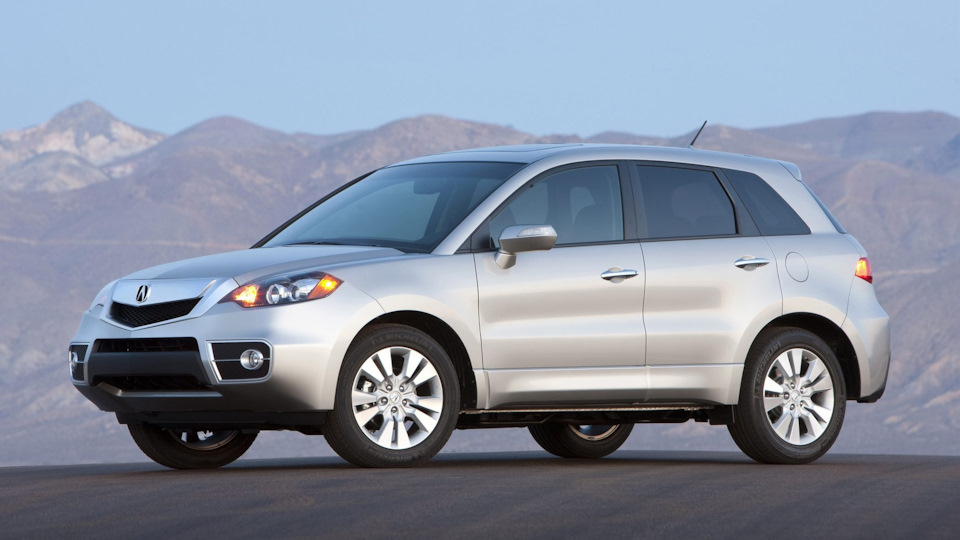
Acura RDX gen 1 2007–2012 Transmission Failures Seen in Real Service Bays
Overview
One transmission. That’s it.
The 2007–2012 Acura RDX came one way in the United States: turbocharged K23A1 2.3L four-cylinder, SH-AWD, and a 5-speed automatic. No manual. No CVT experiment. No surprise mid-cycle swap. Acura picked a setup and stuck with it.
I’ve worked on these since they were new. Back when they were still under factory warranty and owners were confused about rear differential noises. The core transmission itself? Not a ticking time bomb. The real headaches usually live in the driveline pieces hanging off the sides.
This platform uses a conventional torque converter automatic, mounted up front, with an integrated power take-off unit feeding a prop shaft to the SH-AWD rear differential. Electronically controlled clutch packs in the rear handle torque vectoring. Sounds exotic. It isn’t. It’s just Honda engineering layered with electronics.
When maintained, it behaves. When ignored, it gets expensive fast.
Which Transmissions It Uses
| Transmission Code | Gear Count | Drive Layout | Engine Pairing | Production Years | Alternatives Offered |
|---|---|---|---|---|---|
| BWEA | 5-speed | AWD (SH-AWD) | K23A1 2.3L Turbo I4 | 2007–2012 | None |
No verified alternative transmissions were used in the US market during this generation.
The BWEA unit is a hydraulic 5-speed automatic with a torque converter and electronically controlled solenoids. No dual clutches. No rubber-band CVT feel. Old-school planetary gearsets and clutch packs. It’s a traditional Honda transaxle architecture, just bolted to a turbo motor that makes decent torque for its size.
Gear ratios and core hardware stayed the same through the entire run. If you’re shopping year to year hoping one version is “the good one,” you won’t find a mechanical redesign. Condition matters more than badge year.
Main Failure Patterns
Front CV Axle Wear
This is the most common driveline complaint. By a mile.
Owners describe it as a vibration under acceleration. Steering wheel shake. Sometimes a subtle shudder at 40–60 mph (64–96 km/h). Occasionally clicking when turning tight in a parking lot.
I’ve seen dozens of these come in with inner CV joints worn out. The turbo torque loads the inner tripod joint harder than a naturally aspirated Honda would. Add winter salt, cracked boots, grease slung everywhere — now you’ve got a messy failure.
Field Observation shows most axle replacements happen between 80,000–140,000 miles (129,000–225,000 km). Some earlier in heavy salt states. Boot splits are common. Once the grease leaves, the joint chews itself up. You’ll find metallic shavings packed inside what used to be lubricant.
Actual axle fracture? Rare. But I’ve seen it. Usually corrosion at the splines plus long-term vibration that was ignored.
Rear Differential Clutch Chatter (SH-AWD)
This one confuses people.
The rear differential uses electronically controlled clutch packs. It requires Acura Dual Pump Fluid II. Not generic gear oil. Not something slapped on from the quick-lube shelf.
When the fluid gets old, tight turns start to feel wrong. Groaning. Binding. A sort of low-speed shudder like the rear wheels are fighting each other. Customers swear the transmission is dying. It isn’t.
Service Bay Benchmark says fluid every 30,000–40,000 miles (48,000–64,000 km) keeps these quiet. The Maintenance Minder sometimes stretches that longer depending on driving style. In my experience, boost-heavy urban driving cooks that fluid faster than people realize.
If you catch it early, fluid service fixes it. Ignore it past 150,000 miles (241,000 km), and now the clutch packs are worn. At that point, you’re pricing a full rear differential. That’s not cheap.
Transmission Fluid Breakdown and Shift Issues
The BWEA tranny is sturdy, but it hates heat.
Sustained fluid temps above 220°F (104°C) oxidize the ATF faster than owners expect. Turbo load. Stop-and-go traffic. Summer heat. You get the picture.
Symptoms show up slowly:
- 2–3 shift flare
- Delayed engagement in Drive
- Occasional harsh downshift
Most of the time, a proper fluid exchange with the correct Honda/Acura ATF smooths it out. Leave it long enough and solenoid screens clog with debris. Pressure control starts wandering. Then people think the tranny is grenaded. Usually it isn’t. It’s just neglected.
Torque Converter Clutch Shudder
Light throttle. 35–50 mph (56–80 km/h). A faint rumble.
This is converter clutch chatter. Not a broken converter. Fluid degradation is the usual culprit. Fresh fluid often clears it. If it comes back immediately, then we start looking deeper.
Transfer Assembly (PTU)
The front power take-off unit is simple. Small. Holds about 0.45 quarts (0.43 liters) of hypoid gear oil.
That tiny capacity is both good and bad. Good because service is cheap. Bad because neglect shows up fast. Dirty fluid. Whine under load. I don’t see these failing often, but when they do, it’s because nobody touched the oil for 150,000 miles and the fluid looked like metallic paint.

Typical Repair Costs
| Repair Type | Parts (USD) | Labor (USD) | Total (USD) | Source Basis |
|---|---|---|---|---|
| Front CV Axle Replacement (per side) | $150–$400 | $250–$450 | $400–$850 | Industry Estimate |
| Rear Differential Fluid Service | $40–$80 | $120–$200 | $160–$280 | Service Bay Benchmark |
| Rear Differential Replacement | $1,800–$2,800 | $600–$1,000 | $2,400–$3,800 | Industry Estimate |
| Shift Solenoid Service | $150–$400 | $300–$600 | $450–$1,000 | Industry Estimate |
| Remanufactured Transmission Replacement | $2,500–$4,000 | $1,200–$2,000 | $3,700–$6,000 | Industry Estimate |
I’ve rarely seen a completely stock, properly maintained BWEA unit need full replacement under 180,000 miles (290,000 km). When I do, it’s almost always fluid neglect or repeated overheating.
Best and Worst Years
| Model Year | Transmission | Design Changes | Primary Driveline Concern | Projected Risk Rating |
|---|---|---|---|---|
| 2007 | BWEA 5-speed AWD | Initial production year | Rear diff fluid neglect | Medium |
| 2008 | BWEA 5-speed AWD | No mechanical changes | Axle vibration at mileage | Medium |
| 2009 | BWEA 5-speed AWD | No mechanical changes | Wear-related axle service | Medium-Low |
| 2010 | BWEA 5-speed AWD | No mechanical changes | Fluid-related shudder | Medium-Low |
| 2011 | BWEA 5-speed AWD | No mechanical changes | High-mileage wear | Medium-Low |
| 2012 | BWEA 5-speed AWD | Final production year | Age-related driveline wear | Medium |
There was no magic year. No hidden upgrade. Risk tracks mileage and maintenance, not model year.
Warning Signs & Early Detection
- Acceleration vibration at highway speeds
- Clicking in tight turns
- Rear binding during parking maneuvers
- Shift flare between gears
- Light throttle shudder
On a lift, I check CV boots first. Then inner joint play. Then I sample rear diff fluid. If it smells burnt or looks glittery, we’re not just doing a band-aid fix. I also scan for stored transmission codes even if the dash is clean. These units will log pressure irregularities before the driver feels anything dramatic.
When to Walk Away
Persistent rear binding after proper fluid service? Walk.
Metal debris in the differential oil? Walk faster.
Transmission slipping under load, especially hot? That’s internal clutch wear. That bill climbs quickly.
If you see repeated axle replacements within short intervals, I start asking why. Cheap aftermarket shafts slapped on repeatedly can create a cycle of vibration and premature wear.
Ownership Reality
| OEM Maintenance Approach | Real-World Outcome | Cost Consequence |
|---|---|---|
| Maintenance Minder determines service timing | Fluid stays in service longer than ideal under boost-heavy driving | Accelerated clutch and solenoid wear |
| Rear differential serviced at reminder | Drivers ignore early binding symptoms | Clutch pack damage |
| No routine axle inspection requirement | Boot cracks missed in winter climates | Joint destruction and vibration |
| Transmission considered long-life fluid by some owners | Fluid exchange delayed past 60k–80k miles | Shift quality degradation |
I tell owners this: the drivetrain isn’t fragile. It’s maintenance sensitive. There’s a difference.
Change fluids early. Inspect boots. Don’t ignore small shudders. Do that and these routinely cross 200,000 miles (321,000 km). Ignore it, and the repair bills stack up in a ridiculous hurry.
Lawsuits, Complaints & Regulatory History
No federal recall has been issued for the 2007–2012 Acura RDX addressing the BWEA transmission or SH-AWD rear differential as a design defect.
NHTSA complaint clustering centers on axle vibration, driveline shudder, and occasional axle breakage. No ODI engineering analysis has resulted in a transmission-related recall.
No verified class action litigation targets this specific transmission or AWD system.
So this isn’t a scandal platform. It’s a maintenance platform.
Bottom Line
The first-gen RDX drivetrain isn’t garbage. It isn’t bulletproof either.
The 5-speed BWEA automatic holds up well when serviced. The weak spots are wear items — CV axles and SH-AWD clutch fluid discipline.
Keep fresh fluid in it. Watch for vibration. Don’t treat shudder like background noise.
Do that, and this setup will serve you for years without lunching gears or grenading itself. Ignore it, and it turns into a very expensive lesson in preventative maintenance.


