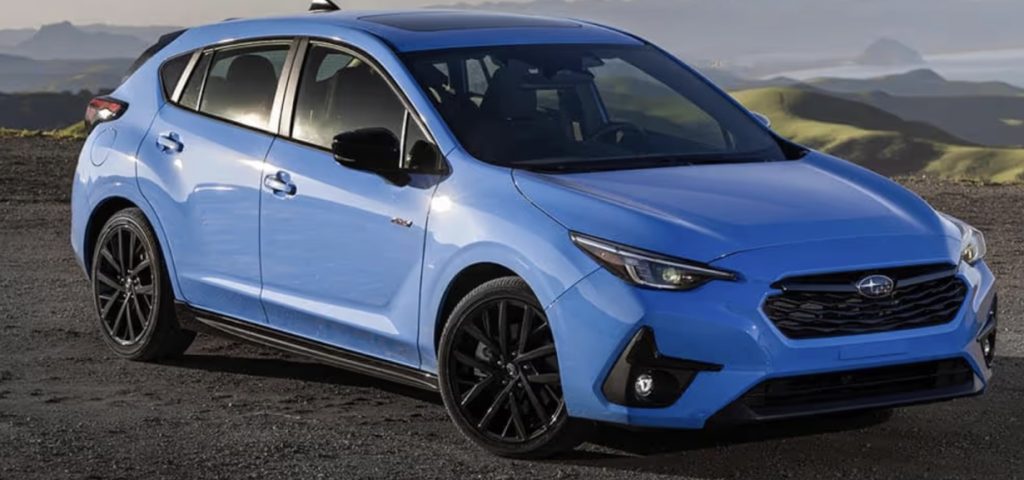
Transmission Issues, Recalls, and Complaints on the Subaru Impreza gen 6 2024–present CVT
Overview
This generation of Impreza is simple. Almost too simple. One transmission, one AWD layout, no alternatives. Subaru went all-in on the Lineartronic CVT here, and if you’ve worked on Subarus long enough, you already know what that means.
Everything runs through that CVT. Power comes in, gets routed through an integrated front diff, then out through the axles and into the rear via the AWD coupling. Clean on paper. In the real world? It means if one piece starts acting up, the whole system feels it.
And right out of the gate, there’s already a recall on the driveline. That’s never a great sign on a brand-new platform.
Which Transmissions It Uses
| Transmission Code | Type | Gears | Drive Layout | Engine Pairing | Years | Notes |
|---|---|---|---|---|---|---|
| TR580 (Lineartronic CVT family) | Chain-driven CVT | Continuously variable | Full-time AWD | 2.0L FB20D / 2.5L FB25D | 2024–present | Integrated front differential; electronically controlled AWD clutch system |
That’s it. No backup option. No “upgrade” transmission. No traditional automatic hiding in a base trim. Every single one uses the TR580.
I’ve worked on this CVT family for years. It’s not junk out of the box—but it is sensitive. Fluid condition matters. Heat matters. Driving habits matter. Ignore those, and it turns into a very expensive lesson.
Main Failure Patterns
Front Driveshaft Failure (Recall 23V-754)
Let’s start with the big one. Subaru already had to issue recall 23V-754 for early 2024 builds. That’s fast.
The problem is in the front driveshaft outer race. Manufacturing issue. Cooling process wasn’t right. Metal ends up brittle in spots.
And when that happens, it cracks. Then it breaks. Not slowly either.
- Outer race fractures internally
- Joint loses integrity
- Driveshaft can separate
- You lose drive power. Instantly.
I’ve seen similar failures before. Car comes in on a tow truck, customer says “it just stopped moving.” No warning. No noise buildup. Just dead drivetrain.
There’s also a rollaway risk when parked. That’s not theoretical—that’s why it’s a recall.
Rear Hub Bearing Issues (TSB 03-96-25)
This one is more subtle. And more common long-term.
Subaru put out TSB 03-96-25 for rear hub assemblies. Water gets in. Bearings don’t like water. Simple as that.
- Low humming at speed
- Gets louder over time
- Eventually turns into grinding
In the shop, we don’t even debate this anymore. If you hear that noise on these, it’s almost always the hub.
Subaru updated the design—better seals, different grease, harder internals. That tells you everything. The original setup wasn’t holding up.
CVT Behavior Over Time
No recall on the CVT itself. No official failure campaign. That’s the current state.
But I’m not going to pretend this transmission is bulletproof. I’ve seen too many TR580 units over the years.
- Service Bay Benchmark: fluid breaks down faster than people expect
- Field Observation: valve bodies get sensitive when fluid degrades
- Industry Estimate: internal wear shows up past 80,000 miles (129,000 km)
What happens inside? Pressure instability. Belt slip. Heat buildup. Sometimes you get shavings in the pan—tiny metallic glitter, which is never good news.
Once that starts, it doesn’t heal. CVTs don’t “bounce back.” They just keep wearing until the whole unit is tired.

Typical Repair Costs
| Component | Failure Type | Repair Type | Typical Cost (USD) |
|---|---|---|---|
| Front driveshaft (recall) | Outer race defect | Replacement | $0 if recall is completed |
| Front driveshaft | CV joint failure | Axle replacement | $400–$900 per side |
| Rear hub assembly | Bearing contamination | Replacement | $450–$900 per wheel |
| CVT valve body | Pressure control issues | Replacement | $1,200–$2,200 |
| CVT complete unit | Internal wear | Replacement | $6,000–$9,000 |
| Rear differential | Bearing wear | Rebuild or replacement | $1,500–$3,000 |
Here’s the reality—CVTs don’t get rebuilt much outside specialty shops. Most places just swap them. That’s why the price jumps so fast.
And once the tranny starts slipping or whining, you’re usually past the cheap fix stage.
Best and Worst Years
| Model Year | Risk Level | Notes |
|---|---|---|
| 2024 (early builds) | Higher risk | Includes driveshaft recall units |
| 2024 (later builds) | Moderate | Recall addressed, hub issue still present |
| 2025+ | Projected lower | Still too new for long-term CVT data |
First-year cars always carry some baggage. That’s just reality in this industry.
Warning Signs & Early Detection
| Symptom | Likely Cause | What It Means |
|---|---|---|
| Clicking in turns | CV joint damage | Axle is on its way out |
| Sudden no movement | Driveshaft failure | Stop. Tow it. |
| Rear humming noise | Hub bearing failure | Will get worse quickly |
| Shudder on acceleration | CVT pressure issue | Early tranny wear |
| Delayed engagement | Hydraulic control problem | Valve body or worse |
| Whining under load | Internal wear | Possible CVT damage starting |
If you catch issues early, you might get away with a band-aid fix. Ignore them, and the bill jumps fast.
When to Walk Away
Some cars you fix. Some you don’t touch. This one falls into both categories depending on condition.
- Recall not done? Walk.
- Rear end humming already? Walk.
- CVT acting weird under 50k miles? Walk.
- No service history at all? Big red flag.
- Uneven tire wear on AWD? That drivetrain’s been stressed.
I’ve seen buyers ignore these signs and regret it within months.
Ownership Reality
| Category | OEM Guidance | Real-World Outcome | Result |
|---|---|---|---|
| CVT fluid | Condition-based service | Service Bay Benchmark: fluid degrades over time | Wear builds up internally |
| AWD system | Automatic operation | Field Observation: hates mismatched tires | Extra load on drivetrain |
| Hub assemblies | No maintenance | Confirmed water intrusion issue | Noise and replacement costs |
| Transmission repair | Replace if needed | Industry Estimate: limited rebuild options | High cost repairs |
| Warranty | 5 yr / 60,000 mi | Field Observation: failures can happen later | Owner pays out of pocket |
Manufacturers love the phrase “lifetime fluid.” In my experience, that’s a joke. Fluid is cheap. Transmissions aren’t.
Lawsuits, Complaints & Regulatory History
No class-action cases tied specifically to this generation’s transmission or driveline. At least not yet.
What we do have:
- Recall 23V-754 – front driveshaft failure risk
- TSB 03-96-25 – rear hub bearing contamination
No active NHTSA investigations on the CVT itself. Still early in the lifecycle. These things take time to show up in the data.
If complaint clusters start building later, it’ll likely follow the same pattern seen on older Subaru CVTs—gradual, then suddenly everywhere.
Bottom Line
This drivetrain isn’t terrible. But it’s not forgiving either.
You’ve got a single CVT handling everything, tied into an AWD system that depends on every component playing nice. When one part goes, the rest feel it.
The recall tells you early production had issues. The TSB tells you there are already durability concerns. The rest? That’ll show up with mileage.
Take care of it, and it’ll probably treat you fine. Ignore it, skip maintenance, run mismatched tires—this thing turns into a ticking time bomb.